How a Vertical Machining Center for Hardware Parts Improves Finish Quality
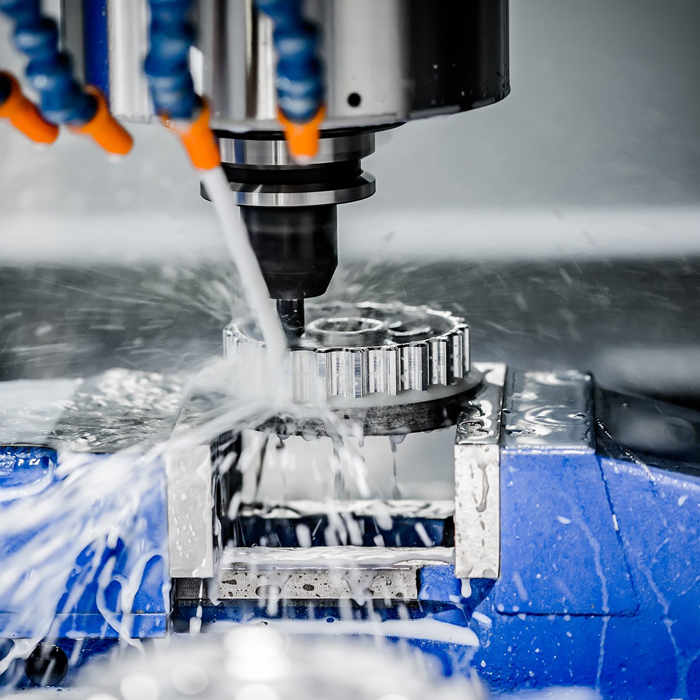
A Vertical Machining Center for Hardware Parts is a computer-numerically controlled (CNC) machine tool designed for the high-precision milling, drilling, and tapping of small to medium-sized metal components. Its defining characteristic is the vertical orientation of its spindle, which allows for efficient chip evacuation and easy workpiece setup. For manufacturers of hardware—from fasteners and brackets to complex fittings and enclosures—these machines address the persistent challenge of producing parts at scale without sacrificing surface finish or dimensional accuracy. They are engineered to perform multiple operations in a single setup, which reduces handling time and minimizes the potential for error stacking across different processes, directly impacting the quality and consistency of the final product.
Types of Vertical Machining Centers
While all VMCs share a vertical spindle, their design and capabilities vary to suit different production needs. The most common distinction is between 3-axis, 4-axis, and 5-axis machines. A standard 3-axis VMC moves the tool along the X, Y, and Z linear axes, which is sufficient for a wide range of hardware parts. A 4-axis machine adds a rotary axis (A-axis), allowing the workpiece to be rotated for machining on different faces without re-clamping. This is ideal for parts with features on multiple sides. A 5-axis VMC offers two additional rotary axes, enabling complex contouring and the ability to machine five sides of a part in a single clamping. This capability is essential for intricate hardware components found in aerospace or medical devices. Another design difference is the machine frame, with C-frame machines being common for general-purpose work and bridge-style or gantry machines offering greater rigidity for heavy-duty cutting.
Key Machine Features for Superior Hardware Finishing
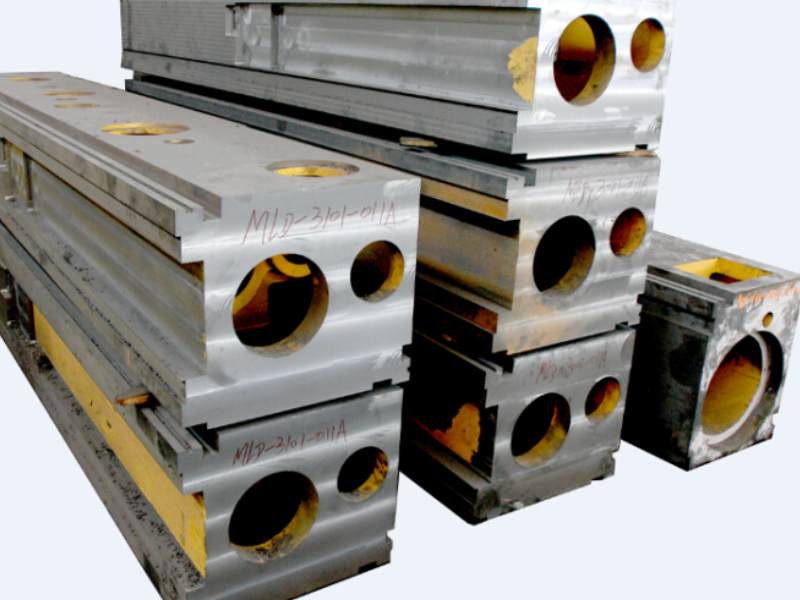
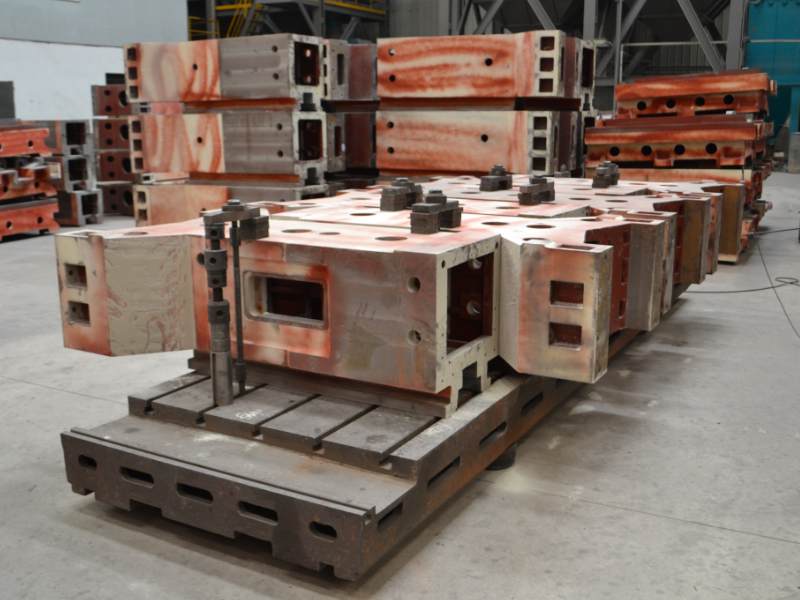
The final quality of a machined hardware part is a direct result of the machine's construction and technology. A machine's ability to hold tight tolerances and produce a fine surface finish depends on its structural integrity and the precision of its components. At MAKCNC, we build our machines with high-strength cast iron bodies, such as resin sand castings, which undergo an aging treatment. This process relieves internal stresses in the metal, ensuring the machine frame maintains its geometric accuracy and rigidity over years of operation. Furthermore, the core drive components, including the ball screws and linear guideways, are high-precision parts sourced from established manufacturers in Taiwan and Germany. This focus on foundational quality means the machine can absorb cutting vibrations and translate control signals into smooth, accurate tool movement. For applications in industries like mold making, our advanced control systems integrate technologies like intelligent feed-forward control and quadrant glitch compensation to solve common finish defects such as corner over-cutting, quadrant lines, and tool chatter marks.
Critical Toolpath Strategies to Eliminate Burrs
A perfect hardware part has sharp, clean edges, but achieving this requires more than just a capable machine—it demands intelligent programming. A burr is the small ridge of material that forms on the edge of a workpiece during machining. Preventing it is far more efficient than removing it later. Adjusting your CAM toolpaths is the most effective way to produce burr-free parts directly from the VMC. This not only saves time on secondary deburring operations but also improves part consistency and safety.
Follow these action-focused guidelines to adjust your toolpaths for burr prevention:
-
Control Tool Entry and Exit: How a cutter enters and leaves the material is a primary cause of burrs. The goal is to avoid abrupt, perpendicular movements at the part edge.
- Action: Use an "arc" or "tangential" entry/exit path instead of a straight-line approach. Program the tool to roll onto and off of the cutting surface smoothly.
- Reasoning: A rolling entry minimizes the lateral force spike as the tool engages the material, reducing the tendency for metal to be pushed aside rather than sheared cleanly.
- When to Use: Always apply this for finishing passes on external contours and profiles.
-
Optimize Cutter Direction (Climb vs. Conventional Milling): The direction of tool rotation relative to its feed direction significantly impacts chip formation and edge quality.
- Action: Use climb milling for finishing passes whenever possible. In climb milling, the cutter rotates in the same direction as the feed.
- Reasoning: Climb milling produces a thinner chip on exit, which is less likely to form a large burr. It also tends to push the workpiece down against the fixture, improving stability.
- Limitation: Avoid climb milling on older machines with backlash in the lead screws, as it can pull the table and cause inconsistent cuts. On modern VMCs with high-precision ball screws, this is the preferred method.
-
Implement a Dedicated Finishing Pass: Trying to rough and finish in a single pass is a common source of poor edge quality.
- Action: Program a separate, light finishing pass. Leave a small amount of stock (e.g., 0.1-0.2 mm) from the roughing operation and remove it with a dedicated finishing toolpath at a higher RPM and controlled feed rate.
- Reasoning: The roughing pass endures the highest cutting forces, causing tool deflection and wear. The finishing pass, with its minimal material removal, can focus solely on achieving the final dimension and surface finish with a sharp, clean edge.
Common Mistakes in Burr Prevention
Even with the right strategies, small errors can undermine your efforts. Here is a checklist of common mistakes to avoid when programming a Vertical Machining Center for Hardware Parts.
| Mistake | Why It Causes Burrs | Correction |
|---|---|---|
| Using a dull or worn cutting tool for finishing. | A dull tool ploughs and pushes material instead of shearing it, leading to significant burr formation. | Dedicate sharp, fresh cutters for finishing passes. Implement a tool life management schedule. |
| Excessive depth of cut on the final pass. | A heavy finishing pass increases cutting forces and tool pressure, deforming the edge of the part. | Keep the finishing pass depth of cut very light (e.g., under 0.2mm) to ensure a clean shearing action. |
| Stopping or dwelling the tool on a finished edge. | The tool's rotation will burnish or push material at the point of contact, creating a localized burr or mark. | Ensure the toolpath keeps the cutter in continuous motion across all finished surfaces and exits away from the part. |
| Ignoring workpiece rigidity and clamping. | If the workpiece can vibrate or deflect, the tool cannot make a clean, consistent cut, resulting in burrs and chatter. | Use proper fixturing to support the workpiece fully, especially thin walls or unsupported features. |
Applications in Hardware Manufacturing
The versatility of a Vertical Machining Center for Hardware Parts makes it a cornerstone in many industries. In consumer electronics, VMCs produce aluminum and steel chassis, heat sinks, and small brackets with high aesthetic and functional requirements. For the automotive sector, they machine engine components, transmission parts, and suspension brackets that demand high strength and reliability. In construction and furniture, they are used to create custom hinges, lock components, and decorative fittings. The ability of a single machine to handle diverse materials—from aluminum and brass to stainless steel and titanium—and execute multiple operations like face milling, pocketing, slotting, drilling, and tapping makes it an invaluable asset for any job shop or manufacturer producing multi-variety, small-batch hardware.
Factors Influencing VMC Investment and Pricing
The price of a vertical machining center is not a single number but a range influenced by several key factors. The primary driver is the machine's size and travel capacity (X, Y, Z axes), as larger machines require more material and more powerful components. The second factor is capability; a 5-axis machine will cost significantly more than a 3-axis model due to its mechanical complexity and advanced control system. Other important considerations include the spindle speed and power, the type of tool changer (drum-style vs. side-mount), and the inclusion of features like through-spindle coolant or probing systems. When evaluating cost, buyers should also consider long-term value, including the machine's build quality, the brand reputation of its core components, and the availability of technical support and service. A lower initial price may lead to higher lifetime costs if the machine lacks durability or is difficult to service.
MAKCNC: Your Professional VMC Supplier
Since our establishment in 2016, MAKCNC has been dedicated to manufacturing high-performance CNC machinery. Our ISO 9001:2015 certified facility operates multiple production lines, ensuring we can deliver a reliable vertical cnc machining center mv1160 within a typical lead time of one to six months. We understand the needs of modern manufacturing, which is why we have no rigid minimum order quantity; you can procure a single machine. However, bulk orders often qualify for more favorable commercial terms regarding price, delivery, or after-sales support. We stand behind our equipment with a standard 12-month warranty after acceptance, along with lifetime paid service options. Our mature after-sales network is committed to an 8-hour response time and 48-hour on-site service to address any operational issues, minimizing your downtime.
Frequently Asked Questions
What is the typical warranty and support for a MAKCNC VMC?
Our standard warranty covers the entire machine for 12 months after final site acceptance. We also offer extended warranties, such as a three-year free warranty for specific tender projects. All customers benefit from our lifetime paid service program and our responsive support network, which aims to respond to service requests within 8 hours and have a technician on-site within 48 hours to resolve any faults.
Is there a minimum order quantity for purchasing a machine?
No, there is no strict MOQ. We support businesses of all sizes, and you can purchase a single machine. That said, placing a larger order for multiple units can provide access to better commercial terms, including potential benefits in pricing and service agreements.
What materials are MAKCNC machines built from?
The main body structures of our machines are made from high-strength cast iron, processed with thermal aging to ensure long-term stability and precision. Key motion components like ball screws and linear guides are sourced from reputable high-precision brands in Taiwan or Germany to ensure optimal performance and durability.
If you are looking for a reliable Vertical Machining Center for Hardware Parts, please contact our team to discuss your specific application and receive a detailed quote.