What an Imported Vertical CNC Machine Center for Aluminum Really Costs
A Vertical CNC Machine Center for Aluminum is a specialized machine tool designed for the high-speed milling, drilling, tapping, and finishing of aluminum and its alloys. The initial quote for the machine is a critical starting point, but it's only one component of the total investment. For international buyers, overlooking variables like freight, import duties, installation, and long-term maintenance can turn a seemingly good price into a significant budget overrun. Understanding the complete financial picture before issuing a purchase order is essential for a profitable acquisition.
What Exactly is a Vertical CNC Machine Center for Aluminum?
At its core, this is a machine where the spindle axis is oriented vertically. This configuration is ideal for parts where most of the work is done on the top surface, such as in mold making, plate work, and producing complex 3D contours. For aluminum, the "specialization" comes from features optimized for soft metal machining. This isn't just about raw power; it's about precision at high speeds. Key specifications to define when sourcing a machine include:
- High Spindle Speed: Aluminum allows for much higher cutting speeds than steel. A machine designed for aluminum typically features a spindle capable of running at 10,000 RPM or higher to achieve optimal material removal rates and surface finishes.
- Fast Rapids and Feed Rates: To complement the high spindle speed, the machine's axes must be able to move quickly. High rapid traverse rates reduce non-cutting time, shortening cycle times significantly.
- Efficient Chip Management: High-speed aluminum machining produces a large volume of chips. An effective system with steep-angled internal guarding and high-volume coolant flush or a chip conveyor is necessary to prevent chip buildup that can damage the part or tooling.
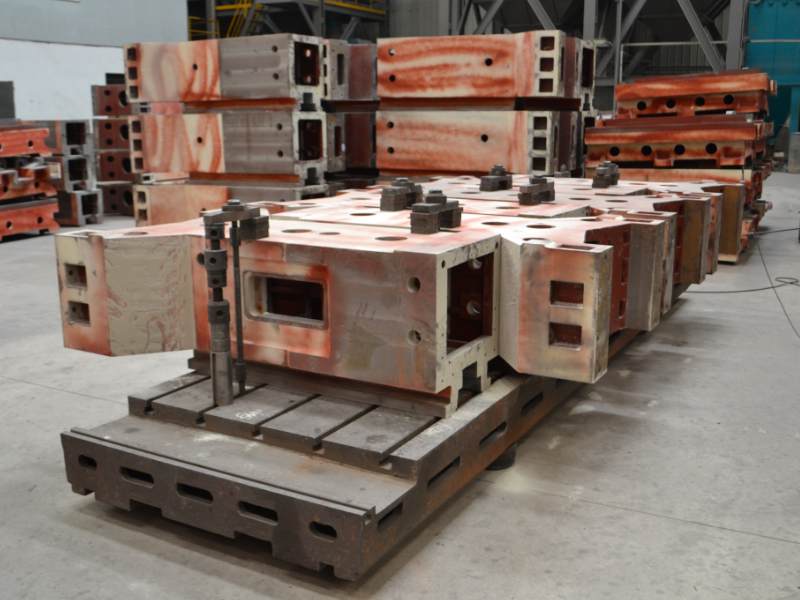
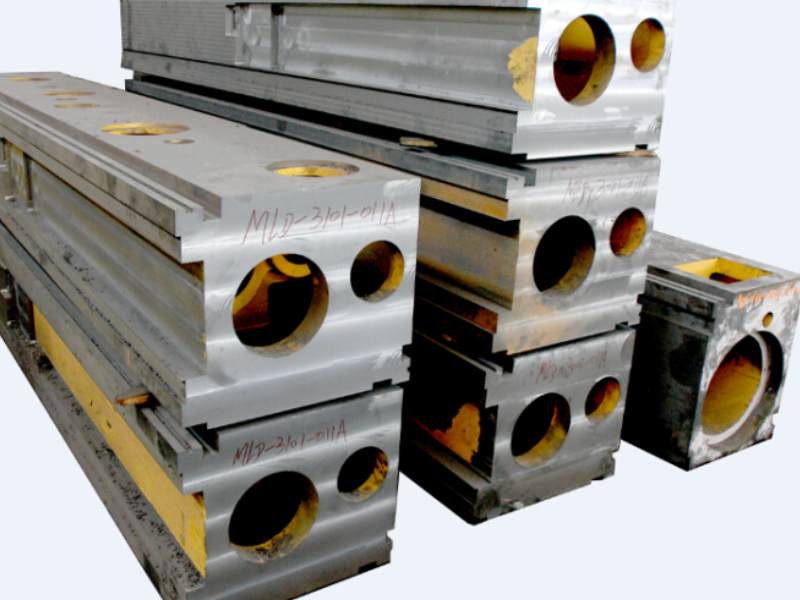
- Rigid Machine Structure: While aluminum is a soft material, maintaining accuracy during aggressive, high-speed cutting requires a stable machine frame. Our machine bodies are built from high-strength cast iron, such as resin sand castings, which undergo an aging treatment to ensure long-term rigidity and precision.
Key Features That Impact Aluminum Machining Quality
The final quality of a machined aluminum part is a direct result of the machine's construction and control technology. Two identical-looking machines can produce vastly different results based on their internal components and software. When evaluating a Vertical CNC Machine Center for Aluminum, focus on how its features solve common machining problems.
For industries like mold making, where surface finish is paramount, specific system technologies are vital. Our advanced control integrations include intelligent feed-forward algorithms and quadrant glitch compensation. These features directly address and prevent common defects:
- Over-cutting Marks: Caused by the tool path not perfectly following the intended contour, especially in sharp corners. Smart controls anticipate these changes and adjust motion to eliminate gouging.
- Quadrant Glitches (象限痕): These small marks or ridges appear when a machine changes direction between two axes (e.g., from X to Y movement in a circular path). Compensation technology smooths this transition for a flawless surface.
- Chatter Marks (振刀纹): Vibration during cutting creates a poor, wavy surface finish. A rigid machine base made from aged cast iron, combined with high-precision core components like Taiwanese or German-made ball screws and linear guides, dampens vibration and ensures stability even during aggressive cuts.
Additionally, for shops handling diverse, small-batch production, the ability to perform multi-sided machining in a single clamping is a major efficiency gain. This capability reduces setup time, minimizes operator error, and improves the geometric accuracy between different features on a part.
Calculating the 5-Year Landed Cost of Your CNC Machine
The machine's price on the proforma invoice is just the start. A true budget must account for every cost from the factory door to your shop floor, plus operational expenses over time. Using a 5-year landed-cost model helps you compare offers accurately and avoid surprises. Below is a framework to guide your calculations, separating confirmed costs from estimates that require your input.
| Cost Category | Type | Description & Notes |
|---|---|---|
| Machine Base Price | Confirmed | The price of the standard machine configuration as quoted by the supplier. |
| Options & Accessories | Confirmed | Cost for high-speed spindle upgrades, 4th/5th axis, through-spindle coolant, tooling packages, etc. These should be itemized on your quote. |
| Freight & Insurance | Estimated | Ocean freight cost (LCL or FCL) to your nearest port. This varies greatly by route and season. Always request a quote based on specific Incoterms like FOB or CIF. |
| Import Duty & Taxes | Estimated | Calculated as a percentage of the machine's value. You must check your country's specific tariff codes and rates for machine tools. |
| Port & Customs Fees | Estimated | Includes charges for customs brokerage, port handling, and other administrative fees. Your freight forwarder can provide an estimate. |
| Inland Transportation | Estimated | Cost to transport the machine from the port to your facility. This often requires specialized trucking. |
| Installation & Commissioning | Variable | May be included in the price or quoted separately. Clarify if this includes technician travel and living expenses. |
| 5-Year Maintenance | Projected | Budget for coolants, lubricants, filters, and common wear items. A well-maintained machine has lower long-term costs. We provide lifetime paid service to support your machine's entire lifecycle. |
Common Mistakes During Installation and Use
A successful import process extends beyond purchase to proper installation and operation. Avoiding these common errors ensures your machine performs to its specified accuracy from day one and maintains it for years.
Here is a checklist of critical points to manage before your machine arrives:
- Ignoring Foundation Requirements: A high-precision machine needs a stable foundation. Check the manufacturer's specifications for concrete thickness, reinforcement, and levelness. A poor foundation is a primary source of vibration and accuracy issues.
- Incorrect Power & Air Supply: Verify the machine's voltage, phase, and power consumption requirements. Ensure you have a dedicated circuit with proper grounding. Similarly, confirm the required air pressure (PSI/Bar) and volume (CFM/LPM) for tool changers and other pneumatic systems.
- Underestimating Rigging Needs: Moving a multi-ton machine from the truck to its final position requires professional riggers and equipment (e.g., heavy-duty forklifts, cranes). Plan this step in advance to avoid costly delays and safety hazards.
- Neglecting Initial Maintenance Training: Ensure your operators and maintenance staff understand the daily, weekly, and monthly checks required. This includes checking lubrication levels, cleaning filters, and inspecting coolant concentration. Proper care is the best way to protect your investment. A model like the vertical cnc machining center mv1160 requires consistent upkeep for optimal performance.
MAKCNC: Your ISO 9001-Certified Partner for CNC Machining Centers
Established in 2016, MAKCNC operates multiple production lines from our ISO 9001:2015 certified facility. We understand the needs of international buyers and have structured our business to support them effectively. We offer flexible purchasing options with no hard minimum order quantity—you can procure a single machine. For clients purchasing multiple units, we can provide more advantageous commercial terms on pricing, delivery, or after-sales service. With typical lead times of one to six months and a stock of sample machines, we can accommodate both standard and urgent project timelines. Our commitment to quality is backed by a standard 12-month warranty after acceptance and a dedicated after-sales network promising an 8-hour response and 48-hour on-site arrival for troubleshooting. Explore the full range of our professional cnc machining center solution.
Frequently Asked Questions
What is the typical warranty for a MAKCNC machine?
Our standard warranty is 12 months for the entire machine, effective after final site acceptance. We also provide lifetime paid technical support and service. For specific government or industrial tenders requiring longer coverage, we have the flexibility to offer extended terms, such as a three-year free warranty.
Do you have a minimum order quantity (MOQ)?
No, we do not have a rigid MOQ. We support businesses of all sizes and you can purchase a single machine. However, placing a bulk order for multiple machines often allows us to offer better commercial terms regarding price, delivery schedule, or after-sales support packages.
What brand are the core transmission components?
To ensure high precision and long-term reliability, we prioritize quality in our core components. The main drive parts, such as ball screws and linear guideways, are sourced from reputable high-precision brands based in Taiwan or Germany. This focus on system synergy helps deliver optimal overall machine performance.
If you are looking for a reliable supplier for a Vertical CNC Machine Center for Aluminum, contact our technical team to discuss your project requirements and receive a detailed quote.