How to Audit a Horizontal Machining Center Manufacturer Before Placing Your Order
A Horizontal Machining Center Manufacturer can quote you a beautiful spec sheet, and still fail to deliver the machine that sheet describes. That's the risk nobody mentions until the container arrives and the spindle runout is double what was promised. Buyers who skip the verification stage regret it during commissioning — not during negotiation, when it's still cheap to walk away. This guide covers what to check, why each item matters, and how to read the paperwork before you sign a purchase order.
What Is a Horizontal Machining Center and Why Verification Matters More Here
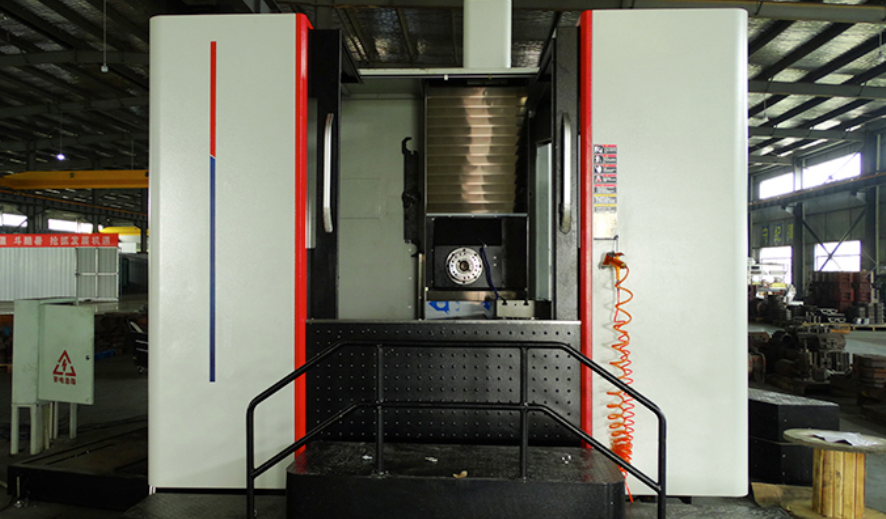
A horizontal machining center (HMC) is a CNC machine tool where the spindle axis runs parallel to the worktable, allowing multi-face machining in one setup — often through a pallet changer or rotary index table. Compared to vertical machines, HMCs carry heavier castings, more complex chip evacuation systems, and tighter thermal stability requirements because they're built for continuous, unattended production runs. This complexity is exactly why supplier verification matters more for HMCs than for simpler machine tools. A vertical mill with a bent column is obvious on inspection. A horizontal center with a marginal spindle bearing or an undersized ballscrew won't show its weakness until month three of production, after the tolerance drifts on batch 400.
Factory Acceptance Testing, Spindle Runout Records, and Export Documentation — What They Reveal
This is the section most RFQs skip, and it's the one that actually protects your capital. Three documents tell you whether a manufacturer can hold the specification they quoted, not just claim it.
Factory Acceptance Testing (FAT)
FAT is a documented run of the machine under load, at the buyer's site or the factory, before shipment. Ask for the FAT protocol used on your specific model — not a generic brochure. A real FAT record includes cutting tests, positioning accuracy per axis (measured against a standard such as ISO 230), and a signed data sheet with date, serial number, and operator. If a supplier can only offer a "we tested it, it's fine" verbal assurance, that's a red flag. The risk: without FAT data, you have no baseline to compare against if the machine underperforms after installation, and no leverage for a warranty claim.
Spindle Runout Records
Spindle runout is the wobble at the tool holder interface, measured in microns with a dial indicator or laser system. For mold and die work — where "over-cut marks, quadrant marks, and chatter lines" are the common failure symptoms — spindle runout directly determines surface finish and tool life. Ask for the actual runout figure recorded at final inspection, not the design tolerance from the catalog. The risk here: two machines can share the same spec sheet number, but the one with poor runout control will chew through cutters twice as fast and leave visible marks on finished cavities.
Export Documentation
Export paperwork — packing list, certificate of origin, commercial invoice, and any compliance certificates relevant to your country — tells you whether the manufacturer has actually shipped machines internationally before, or whether you'd be their first export customer. A manufacturer with a clean export history usually has established freight partners, correct HS codes, and packaging standards suited to ocean transit. Mistakes here cause customs delays, unexpected duties, or damage claims that nobody wants to own.
| Document | What It Proves | Risk If Missing |
|---|---|---|
| FAT report with signed data | Machine met spec before leaving the factory | No baseline for warranty disputes |
| Spindle runout log | Actual precision, not catalog claim | Poor surface finish, short tool life |
| Export/customs paperwork sample | Manufacturer has real export experience | Shipping delays, customs rejection, damage |
Types of Horizontal Machining Centers and How That Affects Your Audit Checklist
Not every HMC is built the same way, and your audit questions should shift depending on the configuration you're buying.
- Pallet-changer HMCs — built for high-volume, repeat-part production. Ask specifically about pallet indexing accuracy and repeatability after thousands of cycles.
- Fixed-table HMCs — simpler, lower cost, suited to lower-volume or larger single-part jobs. Verify table load capacity against your heaviest fixture weight.
- Twin-pallet or multi-pallet systems — designed for lights-out or multi-shift operation. Confirm the control system's job-queue software and how it's licensed for export.
If you're also comparing vertical options for lighter work, our vertical CNC machining center MV1380 and the vertical CNC machining center MV970 cover smaller envelope parts where a horizontal platform would be overkill.
Features That Separate a Reliable HMC From a Marginal One
Frame construction and drive components matter more than the control panel's touchscreen size. Machines built on high-strength cast iron — resin-sand castings that have gone through stress-relief aging — hold geometric accuracy over years, not just during the first inspection. Core transmission parts, specifically ballscrews and linear guides, sourced from established Taiwanese or German brands, tend to hold repeatability better than unbranded substitutes, provided the whole drivetrain is properly matched and tuned. For mold-industry work specifically, look for systems with intelligent feed-forward control and quadrant-protrusion compensation — these directly address the chatter and quadrant-mark problems mentioned earlier. Machines with this capability can often complete multi-face machining in a single clamping, which matters a lot if you run small-batch, high-mix production.
Horizontal Machining Center Application by Industry
HMCs are common wherever parts need multiple faces machined with tight repeatability: automotive housings, hydraulic manifolds, mold bases, and aerospace brackets. Mold and die shops benefit specifically from the anti-chatter and compensation features noted above, since cavity surfaces are unforgiving of vibration marks. Job shops running mixed small-batch orders benefit from one-setup, multi-face capability because it cuts fixture changes and re-referencing errors. If your production mix includes both turning and multi-face milling, it's worth comparing an HMC against a CNC lathing machine or a CNC inclined bed lathe to see which better matches your part geometry before committing capital to one platform.
Horizontal Machining Center Price and What Actually Moves It
Price ranges widely based on table size, pallet configuration, spindle speed range, and control brand. Rather than quote a fixed number that won't hold across regions, here's what actually drives the quote up or down:
- Pallet system — twin-pallet or automatic pallet changers add cost but cut idle time on multi-part runs.
- Spindle spec — higher torque and higher RPM spindles cost more and matter mainly for hard-metal or high-material-removal jobs.
- Control brand — established CNC control brands carry a premium over lesser-known alternatives, but they simplify operator training and spare-parts sourcing.
- Order volume — there's no hard minimum order quantity; a single unit can be purchased. Multi-unit orders typically unlock better commercial terms on price, lead time, or after-sales support.
- Customization — non-standard table sizes, fixtures, or automation interfaces add engineering time and cost.
Typical lead times run one to six months depending on configuration and whether the unit is a stock machine or built to order — always confirm this against the specific model, not a general company average.
Horizontal Machining Center User Guide and Common Sourcing Mistakes
Before installation, buyers should confirm foundation requirements, power specification, and compressed air supply match the machine's datasheet — not assumptions carried over from a previous vertical mill. During commissioning, run a test part matching your actual tolerance requirement, not just the manufacturer's demo part, since demo parts are chosen to flatter the machine.
Common mistakes we see in the audit stage:
- Accepting a spec sheet without asking for the actual FAT or runout data behind it.
- Assuming a low quoted price includes freight, installation, and operator training — confirm each line item separately.
- Skipping a factory video call or third-party inspection because the manufacturer "looks established" online.
- Not confirming warranty terms in writing — standard coverage is typically 12 months after final acceptance, with paid lifetime service afterward; some tender projects negotiate longer, such as three-year free warranty terms.
- Ignoring after-sales response commitments — a mature service network should specify response time (commonly within 8 hours) and on-site arrival (commonly within 48 hours).
Choosing a Horizontal Machining Center Manufacturer
MAKCNC has been manufacturing CNC lathes and machining centers since 2016, operating multiple production lines with stock machines available for faster delivery. Our facility is ISO9001:2015 certified, and our machines are built on high-strength cast iron frames that undergo stress-relief aging for long-term rigidity. Core components — ballscrews and linear guides — are sourced from established Taiwanese and German brands, matched through system-level tuning to get the most out of the whole drivetrain. For mold-industry customers, our systems integrate feed-forward control and quadrant compensation to reduce chatter and quadrant marks, and support one-setup multi-face machining for small-batch, high-mix orders. Standard warranty runs 12 months from final acceptance with paid lifetime service available afterward, and our service network targets an 8-hour response with 48-hour on-site arrival. You can browse our horizontal CNC machining center lineup, or review our customized CNC machines and machining centers if your part geometry needs a non-standard configuration. You can also see our broader work at global CNC machinery cases and learn more about MAKCNC as a manufacturer.
FAQ of Horizontal Machining Center Sourcing
What's the minimum order quantity for an HMC?
There is no hard minimum — a single machine can be purchased. Larger orders typically qualify for better pricing, lead time, or service terms.
How long does delivery usually take?
Lead times generally run one to six months depending on configuration and whether the machine is available from stock or built to order.
What warranty should I expect?
Standard coverage is 12 months from final acceptance, with paid lifetime service available afterward. Some tender-based projects negotiate extended terms, such as three-year free warranty.
How do I confirm the manufacturer's precision claims before shipment?
Request the signed FAT report and the recorded spindle runout figures for your specific serial number — not the catalog tolerance. Cross-check these against an independent measurement if the order value justifies a third-party inspection.
What should I check in the export documentation?
Confirm the manufacturer has handled prior international shipments — check packing standards, HS code accuracy, and certificate of origin — to avoid customs delays or transit damage.
If you're evaluating a professional CNC machining center solution for your production line, feel free to contact us for the latest specifications and a quotation tailored to your part requirements.