What Buyers Should Know Before Ordering a Vertical CNC Machine Center for Aluminum
A Vertical CNC Machine Center for Aluminum is the single machine decision that determines whether an aluminum parts order ships on schedule or gets stuck reworking chatter marks and blown tolerances. Buyers who skip the spec-matching step often discover the mismatch only after the first production batch — by then, the RFQ is signed, the deposit is paid, and the fix means either accepting scrap rates or renegotiating with the supplier. Before you send drawings out for quotation, it pays to translate your part geometry into machine requirements that a supplier's proposal can actually be checked against.
What Is a Vertical CNC Machine Center for Aluminum?
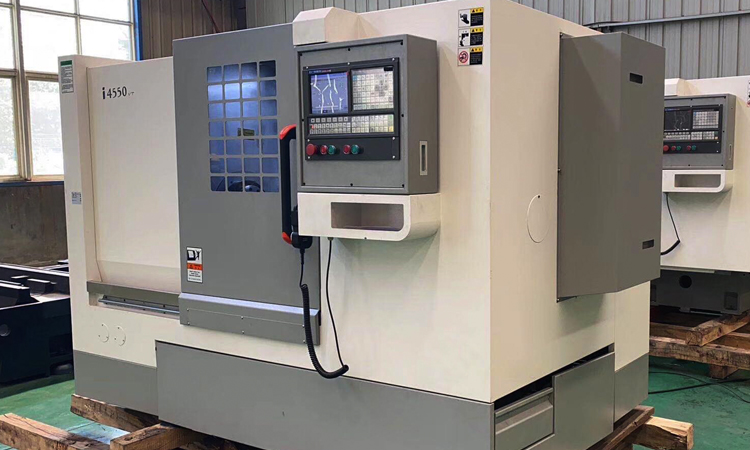
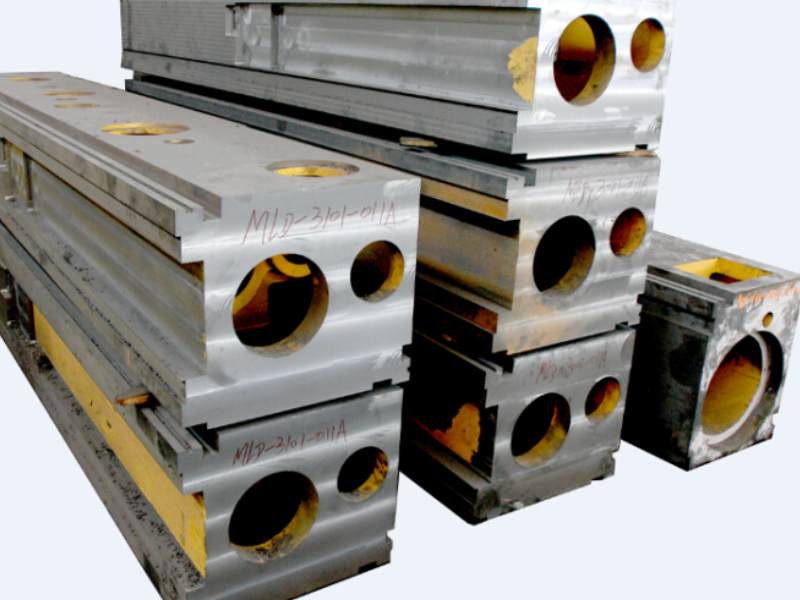
A vertical CNC machine center for aluminum is a vertical-spindle machining center configured — through spindle speed range, tool magazine capacity, coolant delivery, and structural rigidity — to cut aluminum alloys efficiently and hold tight tolerances on thin-wall or pocketed geometries. Unlike a general-purpose steel-cutting center, an aluminum-optimized configuration usually runs higher spindle RPM, faster rapid traverse, and stronger air-blast or flood coolant systems to clear soft, stringy chips before they re-cut the surface. The frame itself, typically a high-strength cast iron structure that has gone through stress-relief aging treatment, keeps geometric accuracy stable through years of continuous cutting cycles.
Types of Vertical CNC Machine Centers for Aluminum
Not every vertical center is built the same way, and the differences matter more for aluminum than for steel because aluminum work is often thin-wall, high-speed, and volume-sensitive. Common configurations include:
- Standard 3-axis vertical centers — suited to flat plates, brackets, and simple pocketed housings with moderate depth-to-wall ratios.
- High-speed vertical centers — spindle speeds above 10,000 RPM, aimed at thin-wall enclosures, heat sinks, and aerospace-style pocketed structures where surface finish and dimensional stability both matter.
- 4-axis / 5-axis capable vertical centers — for parts needing multiple face access in one setup, reducing fixture changes on complex housings.
- Compact vertical centers — smaller footprint models such as the vertical CNC machining center MV970, appropriate for small to mid-size aluminum parts in job-shop or multi-variety, low-volume production.
Features of a Vertical CNC Machine Center for Aluminum
Key features that separate an aluminum-ready machine from a generic one include high-precision ball screws and linear guides — often Taiwan or German-branded components — that maintain repeatability over long production runs. Advanced control systems with smart feed-forward and quadrant-transition compensation directly address the chatter marks, quadrant scars, and tool-mark ridges that show up on softer, faster-cut aluminum surfaces far more visibly than on steel. Many vertical centers also support one-setup, multi-face machining, which cuts fixture time significantly for multi-variety, small-batch orders. Structural mass and vibration damping remain important too, since thin aluminum walls transmit vibration more readily than dense steel stock.
Part-Feature to Machine-Spec Matching Matrix
This is the step most buyers skip, and it's the one that causes the most post-purchase regret. A machine spec sheet full of impressive numbers means little if those numbers don't match your actual part geometry and volume. Use the matrix below to translate your drawing into requirements you can hold a supplier's proposal against.
| Part Characteristic | Risk If Mismatched | Recommended Machine Requirement |
|---|---|---|
| Large part envelope (over 800mm) | Table overhang causes deflection, poor flatness on large faces | Larger travel vertical center, e.g. vertical CNC machining center MV1380, higher axis rigidity |
| Thin wall (under 1.5mm) | Vibration, wall deformation, dimensional drift after unclamping | High spindle speed (10,000+ RPM), fast acceleration to reduce dwell-induced heat |
| Deep pocket (depth over 5x tool diameter) | Chip re-cutting, tool deflection, poor surface finish at pocket floor | High-pressure through-spindle coolant, strong chip auger, rigid toolholding |
| High production volume (multi-shift runs) | Toolchanger delay and tool wear stack up into major cycle-time loss | Fast toolchanger (under 2 seconds swap), extended tool magazine capacity |
| Multi-face features in one part | Repeated setups introduce stacked positional error | 4-axis or one-setup multi-face machining capability |
| Small, high-precision parts (under 300mm) | Overspending on a machine too large for the part, wasted floor space | Compact center such as MV970 or MV1160 |
Why this matters: a machine spec'd for thin-wall consumer electronics housings will underperform on a heavy structural aluminum bracket, and vice versa. Matching pocket depth to coolant pressure alone prevents a large share of the "burnt chip" and re-cut surface complaints we see referenced in machining forums and supplier troubleshooting guides. This matrix does not replace a sample-part trial — it narrows your shortlist before you spend time and freight on test parts.
Vertical CNC Machine Center for Aluminum Applications
Aluminum vertical machining centers are used across automotive components, aerospace brackets, mold and die inserts, consumer electronics enclosures, and hydraulic or pneumatic fittings. In mold-making specifically, the combination of feed-forward control and quadrant compensation addresses persistent problems like tool marks at direction changes — a common complaint on cavity and core surfaces that require polishing afterward. For multi-variety, small-batch manufacturers, one-setup multi-face machining reduces the labor and error tied to repeated fixturing, which matters most when running dozens of different part numbers per month rather than one part at high volume.
Vertical CNC Machine Center for Aluminum Price
Pricing varies with table size, spindle speed range, toolchanger capacity, control brand, and axis configuration (3-axis versus 4/5-axis). Buyers should also budget for tooling, fixturing, and coolant system upgrades separately from the base machine quote. There is no fixed minimum order quantity — a single unit can be purchased — though bulk orders of multiple machines typically receive better terms on price, lead time, or after-sales service. Lead times for standard configurations generally run from one to six months depending on customization level and current production scheduling. Getting two or three comparable quotes against the same spec sheet, rather than comparing headline prices alone, is the most reliable way to avoid under-speccing a machine for your actual part mix.
Vertical CNC Machine Center User Guide
A short pre-installation and commissioning checklist reduces early-stage downtime:
- Confirm foundation flatness and load rating match the machine's weight and footprint before delivery.
- Verify power supply specifications (voltage, phase, amperage) against the machine's electrical requirements.
- Run a warm-up cycle before first production use — thermal stabilization affects positional accuracy, especially on high-speed spindles.
- Test coolant pressure and chip evacuation on a sample part before committing to a full production batch.
- Schedule ball screw and guideway lubrication checks according to the supplier's maintenance interval, not a generic default.
Common mistakes at this stage include skipping the warm-up cycle to save time, undersizing the electrical supply, and running a full batch before validating chip evacuation on the actual part geometry rather than a test block.
Vertical CNC Machine Center for Aluminum Supplier
MAKCNC has been manufacturing CNC lathes and machining centers since 2016, operating multiple production lines with sample machines kept in stock for faster evaluation and delivery. Our facility is ISO9001:2015 certified, and machine bodies are built from high-strength cast iron (including resin-sand castings) that undergo aging treatment for long-term rigidity. Core transmission components — ball screws and linear guides — are sourced from established Taiwan or German brands, and our control systems integrate feed-forward and quadrant-compensation technology to address chatter marks and quadrant scarring common in aluminum and mold work. Standard warranty covers 12 months after acceptance, with lifetime paid service available afterward; select tender projects can be arranged with extended warranty terms. Our after-sales network targets an 8-hour response and 48-hour on-site arrival for service issues. Explore our CNC lathing machine range or review customized CNC machines and machining centers if your part mix needs a non-standard configuration. You can also browse global CNC machinery cases or learn more about MAKCNC as a manufacturer.
FAQ of Vertical CNC Machine Center for Aluminum
What spindle speed is best for aluminum machining?
It depends on wall thickness and tool diameter, but high-speed configurations above 10,000 RPM are common for thin-wall aluminum parts to reduce heat buildup and finish marks. Thicker structural parts can run lower speeds with heavier depth of cut.
Can one machine handle both aluminum and steel parts?
Yes, but with trade-offs. A machine tuned purely for aluminum's high-speed, light-cut profile may not carry the torque needed for heavy steel roughing. If your shop runs mixed materials, discuss dual-purpose spindle and drive configurations with your supplier before ordering.
How does toolchanger speed affect production cost?
On high-volume runs with frequent tool swaps, a toolchanger that's a second or two slower per cycle compounds into meaningful lost machine hours over a production month. This matters far less on low-volume, few-tool-change jobs.
Is a 4-axis machine necessary for aluminum parts?
Only if your part has features on multiple faces that would otherwise require repeated fixturing. For single-face or simple pocketed parts, a 3-axis vertical center is usually sufficient and more cost-effective.
What causes chatter marks on aluminum surfaces?
Chatter usually comes from insufficient rigidity, incorrect spindle speed for the tool and material combination, or lack of vibration compensation in the control system. Feed-forward and quadrant-transition compensation, built into more advanced control systems, directly reduce this.
If you're comparing suppliers for a vertical CNC machining center MV1270 or another configuration, feel free to send your part drawings to MAKCNC for a spec-matched quotation and selection advice.