When a Pallet Pool Outperforms a Two-Pallet Horizontal Machining Center
Choosing the right level of automation for your production floor is a critical decision. A standard two-pallet Horizontal Machining Center with Pallet Changer is a powerful tool for boosting spindle uptime by allowing an operator to set up a new job while the machine is cutting. But as production demands grow in complexity and volume, the question arises: is a two-pallet system enough, or is it time to invest in a multi-pallet pool? This choice directly impacts throughput, labor allocation, and your ability to adapt to a changing mix of jobs.
Understanding the trade-offs between a standard Automatic Pallet Changer (APC) and a larger pallet storage system is key to maximizing your return on investment. It's not simply about adding more pallets; it's about matching the automation strategy to your specific manufacturing goals, whether that's long periods of unattended operation, efficient handling of high-mix, low-volume work, or a combination of both.
Two-Pallet APC vs. Multi-Pallet Pool: A Direct Comparison
The decision between a standard two-pallet configuration and a multi-pallet pool hinges on five key operational factors. While both systems aim to reduce idle time, they serve different production strategies. A two-pallet system offers a significant efficiency gain over a single-table machine, but a pallet pool fundamentally changes how you can schedule work and manage operator time, enabling true "lights-out" manufacturing.
Use the following table to evaluate which system best aligns with your shop's needs. This is not just a list of features but a guide to making a strategic choice based on your specific production environment.
| Decision Factor | Standard Two-Pallet APC | Multi-Pallet Pool (6+ Pallets) |
|---|---|---|
| Unattended Runtime | Limited to the cycle time of one pallet. Ideal for parts with long machining times where the operator has ample time to load/unload the second pallet. | Enables extended unattended or lights-out operation. The machine can run for many hours or an entire shift without operator intervention, cycling through multiple jobs. |
| Job Mix Suitability | Best for lower part variety or longer production runs of the same part. Constant changeovers on a two-pallet system can still create bottlenecks. | Excellent for high-mix, low-volume (HMLV) production. Each pallet can be dedicated to a different job, allowing the machine to run a diverse schedule automatically. |
| Fixture Count & Cost | Requires a minimum of two fixtures. Fixture cost is relatively low, but they must be changed frequently for different jobs. | Requires a unique fixture for each pallet/job. The upfront investment in fixtures is higher, but it allows you to keep recurring jobs set up and ready to run. |
| Operator Workload | Reduces operator idle time significantly. The operator is still tied to the machine's cycle, needing to service the pallet changer regularly. One operator typically runs one or two machines. | Shifts the operator's role from loading/unloading to managing the cell. One operator can load a full queue of work and then tend to other tasks or machines, returning hours later. |
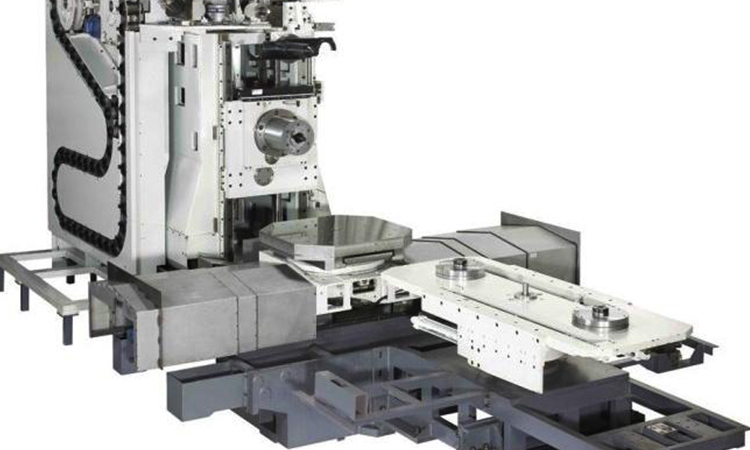
| Floor Space Demands | Compact footprint. A standard rotary two-pallet changer adds minimal floor space compared to the machine itself. | Requires significant additional floor space for the pallet storage system, guarding, and loading station. The facility layout must be planned accordingly. |
When to Choose Each System
- A two-pallet HMC is the right choice when: Your parts have long cycle times (e.g., 30+ minutes), you run a limited number of different parts per shift, and floor space is a primary concern.
- A multi-pallet pool is justified when: Your goal is extended unattended operation, you manage a high mix of complex parts with shorter cycle times, or you want to dedicate fixtures to repeat jobs to eliminate setup time completely.
Key Machine Characteristics for Reliable Palletized Operation
Whether you choose a two-pallet system or a full pallet pool, the underlying machine must be built for sustained precision and reliability. Automation exposes any weaknesses in a machine's design, as there is less opportunity for operator intervention. At MAKCNC, our horizontal cnc machining center models are engineered with features specifically for demanding, automated environments.
Key attributes include:
- High Structural Rigidity: The machine body is constructed from high-strength cast iron, such as resin sand castings. These structures undergo an aging treatment process to relieve internal stresses, ensuring long-term geometric stability and consistent accuracy across thousands of pallet changes.
- High-Precision Drive Components: Core transmission parts, including the ballscrews and linear guideways, are sourced from premier manufacturers in Taiwan and Germany. This focus on quality components minimizes backlash and ensures smooth, precise motion required for high-tolerance work.
- Advanced System Controls for Superior Finishes: For industries like mold making, precision is paramount. Our systems integrate technologies like intelligent feed-forward and quadrant glitch compensation. These features proactively manage the tool path to solve common machining defects such as over-cutting, quadrant marks, and chatter, which are critical for quality in unattended operations.
- Multi-Face Machining Capability: The inherent design of a horizontal machining center, combined with a B-axis rotary table, allows for the machining of multiple sides of a workpiece in a single clamping. This capability is amplified by a pallet changer, as complex, multi-sided parts can be completed without manual refixturing.
Common Mistakes When Specifying an Automated HMC
Investing in an automated system is a major decision. Avoiding common pitfalls during the specification process can save significant time and money. Here are frequent errors we help buyers navigate:
- Underestimating Tooling and Fixturing: A pallet pool is only as effective as the fixtures that hold the parts. The budget must account for not just the machine, but also a sufficient number of high-quality, repeatable fixtures and a tool magazine large enough to support all the jobs in the queue.
- Ignoring Facility Requirements: Multi-pallet pools have a large footprint and significant weight. Buyers must confirm that their floor space, foundation, and power supply are adequate before the machine arrives.
- Mismatching the System to the Job Mix: Buying a 12-pallet pool for two long-running parts is an inefficient use of capital. Conversely, trying to run 20 different short-cycle jobs on a two-pallet system creates an operator bottleneck. A thorough analysis of your part mix and production schedule is essential.
Your Partner for CNC Machining Solutions
Since our establishment in 2016, MAKCNC has focused on building reliable and precise CNC machines for the global market. Operating from our ISO 9001:2015 certified facility, we manage multiple production lines to ensure consistent quality and responsive lead times, which typically range from one to six months. We provide a professional cnc machining center solution, not just a machine. This includes support for both vertical and horizontal configurations tailored to your needs.
We understand that every production environment is different. That's why we offer flexible terms, with no rigid minimum order quantity—you can procure a single machine. For larger orders, we provide enhanced commercial terms on pricing, delivery, and service. All our machines come with a standard 12-month warranty after acceptance and are backed by lifetime paid service options. Our mature after-sales network is structured to provide an initial response within 8 hours and have a technician on-site within 48 hours to address any issues.
To determine the ideal pallet configuration for your production needs, contact our technical team to discuss your application and receive a detailed quote.