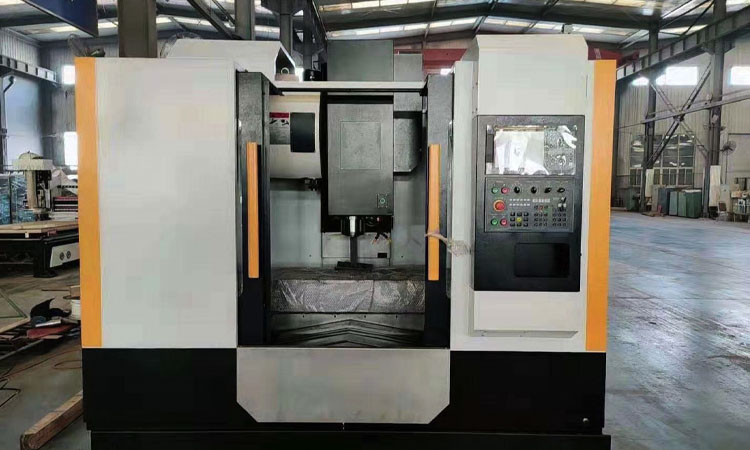
How to Estimate Your Fanuc System Slant Bed CNC Lathe Costs by Options
Placing an order for a new CNC machine without a clear breakdown of how optional components affect the price is a significant risk. You might overspend on features you don't need or, worse, miss an upgrade that could double your production efficiency. Before requesting a final quote, it's essential to understand the cost drivers behind the configuration of a Fanuc System Slant Bed CNC Lathe. This knowledge allows you to build a machine that precisely matches your application and budget, preventing costly specification errors.
What is a Fanuc System Slant Bed CNC Lathe?
A Fanuc System Slant Bed CNC Lathe is a high-precision turning machine tool designed for rigidity, accuracy, and efficient chip removal. The "slant bed" design refers to the machine's bed, which is angled (typically 30 to 45 degrees) relative to the floor. This design provides superior stability and allows gravity to assist in clearing chips and coolant away from the workpiece. The "Fanuc System" component refers to the Computer Numerical Control (CNC) system, one of the industry's most widely recognized and reliable controllers. At MAKCNC, our machine bodies are constructed from high-strength cast iron, such as resin sand castings, which undergo an aging treatment to ensure long-term precision and rigidity. This solid foundation supports the core transmission components—ball screws and linear guides—which are sourced from high-precision manufacturers in Taiwan or Germany to deliver optimal performance.
Types of Slant Bed CNC Lathes
While the core design principle remains the same, slant bed CNC lathes can be categorized based on several key characteristics that adapt them to different production needs. The most common distinctions are based on size, turret configuration, and the inclusion of live tooling. Understanding these types helps you narrow down the ideal machine for your specific parts and production volume.
- Compact vs. Large-Format Lathes: Size is often defined by the maximum turning diameter and length. Compact machines are suited for smaller, intricate parts common in electronics or medical device manufacturing. Large-format lathes are built for heavy-duty applications like automotive shafts or oil and gas components, offering larger chucks and more powerful spindles.
- Standard Turret vs. Live Tooling Turret: A standard turret holds static turning and boring tools. A lathe with a live tooling turret, often called a turn-mill center, has a turret that can mount and power rotary tools like end mills and drills. This allows for milling, drilling, and tapping operations on the workpiece in the same setup, a capability known as "done-in-one" machining.
- Two-Axis vs. Multi-Axis Lathes: A standard 2-axis (X and Z) lathe is the workhorse for most turning operations. Multi-axis machines can include a Y-axis for off-center milling, a C-axis for spindle positioning, and a sub-spindle for back-working operations. These machines drastically reduce the need for multiple setups, improving accuracy and cycle times for complex parts.
Core Features Driving Performance and Precision
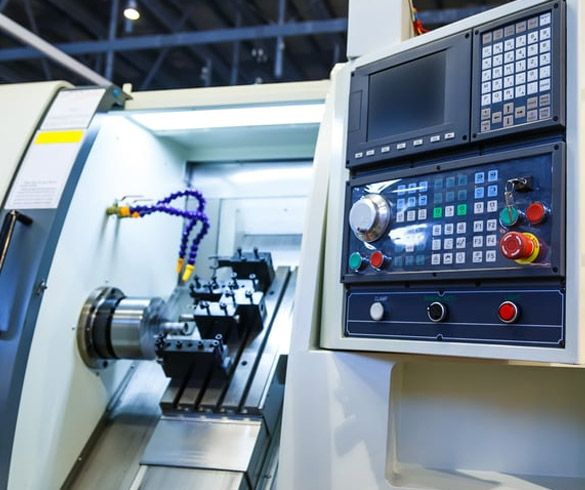
The performance of a Fanuc System Slant Bed CNC Lathe is not just about raw power; it's about the synergy between its mechanical structure and control system. Our machines are engineered to address common challenges in high-precision manufacturing, particularly for the mold industry. The integration of an advanced Fanuc control system with intelligent feed-forward technology and quadrant glitch compensation effectively resolves issues like over-cut marks, quadrant marks, and chatter marks. This results in superior surface finishes and dimensional accuracy. The rigid machine structure, built from stress-relieved cast iron, provides the necessary damping and stability to maintain these tolerances over years of operation. This construction, combined with high-precision drive components, enables the machine to perform complex, multi-face machining in a single clamping, which is ideal for multi-variety, small-batch production runs.
Common Applications in High-Precision Machining
The rigidity and accuracy of a slant bed CNC lathe make it suitable for a wide range of industries where tight tolerances are non-negotiable. Its ability to handle both simple and complex turning operations efficiently makes it a versatile asset in any machine shop. Key application areas include:
- Mold and Die Manufacturing: The machine's ability to eliminate common machining defects like chatter and quadrant marks is invaluable for producing high-quality molds that require excellent surface finishes.
- Automotive Components: From engine shafts and transmission parts to brake components, the lathe provides the repeatable accuracy needed for high-volume automotive production.
- Aerospace Parts: Machining tough alloys like Inconel and titanium requires a rigid machine structure. The slant bed design provides the stability needed to machine these demanding materials to exacting aerospace standards.
- Medical Devices: For small, intricate components like surgical instruments and implants, the precision and fine-finish capability of a well-built slant bed lathe are essential.
- General Machining: For job shops handling multi-variety, small-batch work, the machine's capacity for single-clamping, multi-face processing improves throughput and reduces setup time, increasing overall profitability.
How to Estimate Your Fanuc Slant Bed Lathe Cost
The final price of a Fanuc System Slant Bed CNC Lathe is not a single number; it's the sum of a base machine cost and the options you select. Understanding these cost variables allows you to build a machine perfectly suited to your needs without over-investing. The table below breaks down the primary factors that influence cost.
| Component / Option | Cost Impact | Selection Guide |
|---|---|---|
| Base Machine (Frame, Bed, Enclosure) | Confirmed Cost | This is the foundational price. It varies mainly by machine size (e.g., 8" chuck vs. 12" chuck) and maximum turning length. This is your starting point. |
| Fanuc Control Series (e.g., 0i-TF vs. 32i-B) | Significant Estimated Cost | The 0i-TF series is a powerful and cost-effective standard for most 2-axis turning. Upgrading to a more advanced series like the 32i-B adds features like faster processing and more complex multi-axis control, but at a higher price. Choose based on part complexity. |
| Spindle Power & Speed (kW, RPM) | Moderate Estimated Cost | A higher-power or higher-speed spindle is needed for heavy material removal or working with specific materials. This is an application-driven choice. Upgrading adds moderate cost. |
| Turret Type (Standard vs. Live Tooling) | High Estimated Cost | Upgrading from a standard VDI or BMT turret to one with live tooling (milling capability) is one of the largest cost drivers. However, it can eliminate the need for a separate milling machine, offering a strong return on investment for complex parts. |
| Automation (Bar Feeder, Parts Catcher) | Variable Estimated Cost | Adding a bar feeder for unattended operation or a parts catcher for finished component management can significantly increase throughput. The cost varies by the system's capacity and sophistication. |
| Shipping, Installation & Training | Unknown/Variable Cost | These costs are highly dependent on your location and the level of on-site support required. They are typically quoted separately from the machine itself. |
User Guide: Key Considerations Before Operation
Proper planning before your new machine arrives is just as important as the machine's specifications. A smooth installation and startup phase sets the foundation for profitable and safe operation. Use this checklist to prepare your facility and team.
- Foundation & Leveling: Does the machine require a special concrete foundation? Ensure the floor is level and capable of supporting the machine's weight without vibration. Check the manufacturer's pre-installation manual for specific requirements.
- Power & Air Supply: Confirm your facility's electrical service matches the machine's voltage and phase requirements. A dedicated circuit is often recommended. If the machine uses pneumatic components (like for an automatic door or parts catcher), ensure a clean, dry compressed air supply is available.
- Coolant Management: Plan for your coolant strategy. Will you use a standard flood coolant system? Do you need a high-pressure coolant system for deep-hole drilling? Where will you store and dispose of used coolant?
- Tooling & Workholding: The machine is only one part of the equation. Order the necessary chuck jaws, collets, turning tools, and boring bars ahead of time so you can begin production immediately after installation and training are complete.
- Operator Training: Even experienced operators benefit from training specific to a new machine and control system. Schedule this with your supplier to coincide with the machine's installation.

Your Fanuc System Slant Bed CNC Lathe Supplier
Founded in 2016, MAKCNC operates from an ISO9001:2015-certified facility with multiple production lines dedicated to building high-quality CNC machines. We maintain an inventory of sample machines, allowing for faster evaluation and delivery. Our standard lead time is between one and six months, depending on the machine's complexity and configuration. We understand that every customer has different needs, which is why we have no rigid minimum order quantity—a single machine can be procured. However, purchasing in volume may provide access to more favorable commercial terms regarding price, delivery, or after-sales service. Every machine includes a standard 12-month warranty after acceptance, with lifetime paid service available. For specific projects or tenders, longer warranty periods, such as three years, can be negotiated. Our mature after-sales network is committed to an 8-hour response time and having a technician on-site within 48 hours to address any issues.
Frequently Asked Questions (FAQ)
What is the minimum order quantity for a CNC lathe?
We do not have a strict minimum order quantity. You can purchase a single machine. However, we offer better commercial terms for bulk orders (multiple units) in areas like pricing, delivery schedules, or service packages.
What is the standard warranty and after-sales support?
Our standard warranty is 12 months for the entire machine, starting from the date of final acceptance. We also provide lifetime paid technical service. Our support network commits to responding to service requests within 8 hours and arriving on-site to handle faults within 48 hours.
What is the typical lead time for a new machine?
The lead time generally ranges from one to six months. This depends on the specific model, the level of customization required, and the current production schedule.
What brands of core components do you use?
To ensure high performance and long-term reliability, we use core transmission components like ball screws and linear guides from respected high-precision brands based in Taiwan or Germany.
If you are looking for a supplier of a high quality and durable cnc lathe, please contact us for the latest quote.