Choosing a Multi-axis CNC Slant Bed Lathe to Cut Setups
What is a Multi-axis CNC Slant Bed Lathe?
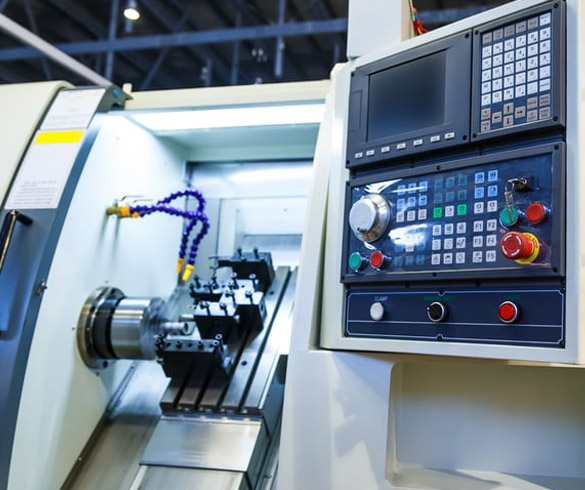
A Multi-axis CNC Slant Bed Lathe is an advanced machine tool designed for high-precision, multi-tasking machining. Unlike traditional 2-axis lathes, these machines incorporate additional axes, such as Y-axis, C-axis, and often a secondary spindle or live tooling, allowing for milling, drilling, and other complex operations to be performed in a single clamping. The "slant bed" design refers to the machine's guideways being positioned at an angle, typically 30, 45, or 60 degrees, which improves chip evacuation, enhances rigidity, and provides better access for tool changes and automation. This integration of multiple capabilities significantly reduces the need for secondary operations and part handling, directly impacting overall production efficiency and part accuracy for manufacturers evaluating such platforms. For more general information on these types of machines, you can consult Wikipedia on CNC lathes.
Key Benefits of Multi-Axis Integration: Reducing Setups
One of the primary advantages of a Multi-axis CNC Slant Bed Lathe lies in its ability to consolidate multiple machining operations into a single setup. This capability directly addresses common production bottlenecks such as excessive part handling, setup times, and the accumulation of errors from transferring workpieces between different machines. By combining turning, cross-drilling, milling, and even back-working operations within one machine cycle, manufacturers can achieve "done-in-one" machining, drastically improving throughput and part quality.
Consider the typical challenges faced in precision machining for industries requiring complex parts:
- Multiple Setups: A part requiring turning, drilling, and milling would traditionally move from a lathe to a milling machine, each transfer necessitating a new setup, re-fixturing, and re-zeroing.
- Accumulated Errors: Each time a part is moved and re-clamped, there's a risk of introducing new positional errors, impacting final part accuracy and consistency.
- Increased Lead Times: The cumulative time spent on setups and transfers adds significantly to the overall production lead time.
- Higher Labor Costs: More manual intervention for setups and transfers means higher labor costs per part.
A Multi-axis CNC Slant Bed Lathe mitigates these issues effectively. The table below illustrates how integrated capabilities directly eliminate specific secondary operation setups:
| Traditional Process (Multiple Machines) | Multi-axis Slant Bed Lathe (Single Setup) | Benefit of Integration | Applicable Scenario | Limits / When Not Suitable |
|---|---|---|---|---|
| Turning on a lathe, then transferring to a vertical mill for face milling. | Turning and face milling in one clamping using live tooling on the lathe. | Eliminates one machine transfer and setup, reducing handling errors. | Parts requiring radial or axial milling features after turning. | Not ideal for very large, heavy milling operations requiring high rigidity from a dedicated mill. |
| Turning on a lathe, then transferring to a drill press for off-center holes. | Turning and off-center drilling in one clamping using live tooling. | Removes a separate drilling operation and its associated setup. | Components with drilled holes perpendicular to the turning axis or in complex patterns. | Deep-hole drilling with very tight tolerance requirements might still benefit from specialized equipment. |
| Front-side turning on a lathe, then flipping and re-chucking for back-side operations on the same lathe or another. | Front-side and back-side machining using a main and sub-spindle in one machine (or Y-axis for complex back-side features). | Eliminates part flipping, re-chucking, and the associated setup/alignment. | Complex parts requiring features on both ends, especially for high-volume production. | Simpler parts with minimal back-side features may not justify the added machine complexity. |
| Multiple turning operations, then transferring to a 5-axis mill for complex contours. | Turning combined with complex contour milling (e.g., interpolated milling) using Y-axis and C-axis live tooling. | Reduces machine transfers and enhances geometric accuracy by maintaining datum in one setup. | Components with turned features and complex milled profiles (e.g., medical devices, aerospace parts). | Parts with extreme 5-axis simultaneous requirements that exceed the travel or power of the lathe's milling capabilities. |
This integration is particularly beneficial for multi-variety, small-batch production, where the setup time per batch can be a significant cost driver. The ability to complete multiple faces in a single clamping also helps address common challenges like "overcut marks, quadrant marks, and chatter marks" often encountered in high-precision mold machining, ensuring superior surface finish and dimensional accuracy.
Types of Multi-axis CNC Slant Bed Lathes
Multi-axis CNC Slant Bed Lathes come in various configurations, each designed to meet specific production demands. Understanding these types helps in selecting the most appropriate machine for a given application. The core differentiators usually revolve around the number of axes, the presence of a sub-spindle, and live tooling capabilities.
- Y-axis Lathes: These machines add a Y-axis movement to the standard X and Z axes. The Y-axis allows tools to move perpendicular to the turning axis, greatly expanding the machine's ability to perform off-center milling, drilling, and tapping operations without repositioning the workpiece. This is a fundamental step towards true "done-in-one" machining for parts with radial features.
- C-axis Lathes: A C-axis enables the main spindle to be precisely indexed and rotated, functioning like a rotary table. When combined with live tooling (driven tools), it allows for milling and drilling operations at any angle around the circumference of the part, effectively turning the lathe into a 3-axis machining center for rotational components.
- Sub-spindle Lathes: Also known as twin-spindle lathes, these machines feature a second spindle that can grip the part from the main spindle, allowing for back-side machining without manual intervention. This eliminates the need to flip the part and re-chuck it, saving significant time and improving accuracy by maintaining a single datum.
- Multi-turret Lathes: Some advanced configurations include multiple tool turrets that can work simultaneously on different areas of the same part or even on two different parts, further enhancing throughput.
- Swiss-type Lathes: While often compact and used for small, precise parts, modern Swiss-type lathes also incorporate multi-axis capabilities (Y, C, sub-spindle, multiple tools) to produce highly complex, miniature components in a single pass. Their defining feature is that the material stock moves through a guide bushing, providing superior rigidity for slender parts.
The combination of these features, such as a Y-axis with a sub-spindle and live tooling, defines the machine's overall versatility and capacity for complex, single-setup manufacturing. MAKCNC offers a range of CNC inclined bed lathe options that can be configured to meet diverse requirements.
Features of MAKCNC Multi-axis Slant Bed Lathes
MAKCNC's Multi-axis CNC Slant Bed Lathes are engineered to deliver precision, rigidity, and long-term performance, addressing the demanding requirements of modern manufacturing. Our design and manufacturing philosophy focuses on integrating robust mechanical components with advanced control technologies to ensure optimal machine performance.
- High-Strength Construction: The machine body is predominantly constructed from high-strength cast iron, such as resin sand castings. This material choice provides exceptional vibration damping properties and structural stability. Each casting undergoes an aging treatment process to relieve internal stresses, which is critical for maintaining long-term accuracy and rigidity throughout the machine's operational life. This foundational strength prevents deformation and ensures consistent machining results, even under heavy cutting loads.
- Precision Core Components: We prioritize the use of high-precision components for core transmission systems. Ball screws and guide rails, essential for accurate axis movement, are typically sourced from reputable Taiwanese or German brands. These components are selected for their precision, durability, and reliability, contributing directly to the machine's ability to achieve tight tolerances and superior surface finishes. The manufacturing process emphasizes system synergy, ensuring that all components work together seamlessly to deliver optimal overall machine performance.
- Advanced Control System Integration: For industries with high-precision processing needs, particularly in mold manufacturing, our machines integrate advanced system intelligence. This includes technologies like intelligent feedforward control and over-quadrant jump compensation. These features are specifically designed to effectively mitigate common machining challenges such as "overcut marks, quadrant marks, and chatter marks," which are critical for achieving flawless surface quality and dimensional accuracy in complex mold cavities.
- Versatility for Diverse Production: Our machines are built to handle a wide range of production scenarios. For multi-variety, small-batch production, they offer the capability to complete multi-face processing in a single clamping. This significantly reduces setup times and the risk of accumulated errors from part transfers, making them highly efficient for producing diverse components with varying geometries.
- Reliable After-Sales Support: We understand that machine uptime is crucial. MAKCNC provides a standard warranty of 12 months after machine acceptance. We also offer lifetime paid service for our equipment. Our mature after-sales network is structured to provide rapid support, with a commitment to respond within 8 hours and have technicians on-site within 48 hours to address any fault. For specific tender projects, we can also accommodate higher demands, such as a three-year free warranty.
These features collectively ensure that a MAKCNC Multi-axis CNC Slant Bed Lathe is a reliable and high-performing asset for any precision manufacturing operation.
Multi-axis CNC Slant Bed Lathe Applications
The versatility and precision of a Multi-axis CNC Slant Bed Lathe make it indispensable across a broad spectrum of industries where complex, high-tolerance parts are required. Its ability to perform multiple operations in a single setup is particularly valuable in sectors demanding efficiency and accuracy.
- Aerospace Industry: Manufacturing complex components like turbine blades, landing gear parts, and structural connectors often involves intricate geometries that require both turning and multi-axis milling. The machine's precision and rigidity are crucial for working with difficult-to-machine alloys.
- Automotive Industry: Production of engine components, transmission parts, crankshafts, camshafts, and specialized fittings benefits from the machine's ability to handle high-volume, multi-feature parts efficiently, reducing cycle times and ensuring consistent quality.
- Medical Device Manufacturing: Producing implants, surgical instruments, and prosthetic components demands extremely high precision, fine surface finishes, and the ability to machine intricate details from biocompatible materials. The "done-in-one" capability minimizes handling and contamination risks.
- Mold and Die Manufacturing: For creating injection molds, stamping dies, and intricate tooling, the machine's advanced control features (like intelligent feedforward and over-quadrant jump compensation) are critical. These eliminate common defects such as "overcut marks, quadrant marks, and chatter marks," ensuring superior mold surface quality.
- Oil & Gas Sector: Machining connectors, valves, and specialized fittings for exploration and production requires robust machines capable of handling tough materials and producing parts with precise threads and sealing surfaces.
- General Precision Engineering: Any industry requiring complex turned parts with secondary milling or drilling features, from hydraulics to robotics, can leverage these machines for improved efficiency and cost reduction. For example, producing a pump housing that requires turning, then drilling and tapping multiple ports at various angles.
These machines are especially suited for scenarios where reducing part transfers and maintaining a high level of accuracy across multiple operations is paramount. They excel in environments that benefit from flexible customized equipment solutions for diverse production needs.
Factors Influencing Multi-axis CNC Slant Bed Lathe Price
The investment required for a Multi-axis CNC Slant Bed Lathe can vary significantly based on several key factors. Understanding these elements is crucial for budgeting and making an informed purchasing decision. The price range typically reflects the machine's capabilities, specifications, and the level of technological sophistication.
- Number of Axes and Configuration: The more axes (e.g., Y-axis, C-axis, B-axis) and integrated features (e.g., sub-spindle, live tooling, multiple turrets), the higher the complexity and, consequently, the price. A basic 3-axis slant bed lathe will be less expensive than a 5-axis equivalent with a sub-spindle and advanced live tooling.
- Spindle Speed and Power: Higher spindle speeds (RPM) and greater motor power for both main and sub-spindles, as well as live tools, will impact the cost. Machines designed for heavy-duty cutting or very high-speed finishing will command a premium.
- Workpiece Capacity: The machine's maximum turning diameter, turning length, and bar capacity influence its size and construction, directly affecting the price. Larger machines with greater capacity require more material and more powerful components.
- Control System and Software: The brand and sophistication of the CNC control system (e.g., Fanuc, Siemens, Mitsubishi) play a significant role. Advanced features like conversational programming, real-time tool path simulation, and integrated automation capabilities add to the cost.
- Component Quality and Brand: As noted, MAKCNC uses high-precision Taiwanese or German components for critical parts like ball screws and guide rails. The quality and brand reputation of these core components contribute to the machine's reliability and precision, and thus its price.
- Automation and Accessories: Features like automatic tool changers, bar feeders, parts catchers, robotic loading/unloading systems, and high-pressure coolant systems add functionality and automation but also increase the overall investment.
- Precision and Rigidity: Machines built with heavier, aged cast iron beds and superior vibration damping for ultra-high precision applications (e.g., for mold making) will generally be more expensive due to the materials and meticulous manufacturing processes involved.
- Warranty and After-Sales Service: While MAKCNC offers a standard 12-month warranty and lifetime paid service, extended warranties (e.g., three years for specific tender projects) or specialized service contracts can also influence the total cost of ownership.
For budget planning, it's essential to define your specific machining needs and throughput requirements, as investing in features you don't utilize can inflate costs unnecessarily. Conversely, under-specifying can lead to limitations in production capabilities.
Selecting Your Multi-axis CNC Slant Bed Lathe: A Buyer's Guide
Choosing the right Multi-axis CNC Slant Bed Lathe requires careful consideration of your production needs, material types, and operational environment. A strategic selection ensures maximum efficiency and a strong return on investment. Use this checklist to guide your decision-making process.
| Criterion | Consideration | Why it Matters |
|---|---|---|
| Part Complexity | Does your part require turning, milling, drilling, and back-side operations? Are there off-center features or complex contours? | Determines the minimum number of axes (Y-axis, C-axis) and the necessity of a sub-spindle or live tooling. More complex parts benefit most from higher axis counts. |
| Production Volume | Are you producing high volumes of identical parts, or small batches of varied components? | High volume may justify faster automation (bar feeders, parts catchers) and advanced multi-turret systems. Small batches benefit from quick setup changeovers and multi-face machining in one clamping. |
| Material Types | What materials will you primarily machine (e.g., aluminum, stainless steel, superalloys)? | Dictates required spindle power, torque, machine rigidity, and coolant system capabilities. Harder materials require more robust machines. |
| Tolerance Requirements | What are the critical dimensions and surface finish requirements for your parts? | Influences the need for high-precision components (ball screws, guide rails), advanced thermal stability, and sophisticated control systems (e.g., intelligent feedforward for mold making). |
| Floor Space & Layout | How much space is available on your shop floor? How will the machine integrate into your existing workflow? | Consider machine footprint, chip conveyor placement, and accessibility for maintenance. A slant bed design often aids chip evacuation and accessibility. |
| Budget & ROI | What is your budget, and what is the expected return on investment from consolidating operations? | Balance initial cost with long-term savings from reduced setups, improved cycle times, lower labor costs, and enhanced part quality. Consider the 1-6 month lead time. |
| After-Sales Support | What level of service and warranty do you require? | Evaluate the supplier's warranty (e.g., MAKCNC's 12 months standard, 3 years for tenders), response times (8-hour response, 48-hour on-site), and availability of lifetime paid service. |
By systematically evaluating these points, you can narrow down your options and identify the Multi-axis CNC Slant Bed Lathe that best aligns with your operational goals. Do not hesitate to consult with experts to clarify specific technical requirements.
MAKCNC: Your Multi-axis CNC Slant Bed Lathe Supplier
As an ISO9001:2015-certified professional CNC lathing machine manufacturer, MAKCNC has been a trusted partner in precision manufacturing since our establishment in 2016. We specialize in providing high-quality and durable CNC Lathing Machine and CNC Machining Center solutions designed to meet the rigorous demands of global industries. Our multiple production lines and inventory of sample machines ensure a consistent supply and allow for efficient lead times, typically ranging from 1 to 6 months depending on customization and order volume.
Our commitment to quality is evident in every machine we produce. We utilize high-strength cast iron, aged to ensure long-term precision and rigidity. Critical transmission components, such as ball screws and guide rails, are sourced from leading Taiwanese or German brands, guaranteeing superior accuracy and operational longevity. For customers with no strict minimum order quantity, single unit purchases are welcome, though bulk orders often qualify for more favorable business terms regarding price, delivery, and after-sales service. Our mature after-sales network ensures prompt support, with an 8-hour response time and a 48-hour on-site fault resolution commitment, backed by a 12-month warranty and lifetime paid service.
Frequently Asked Questions About Multi-axis CNC Lathes
Here are answers to common questions regarding Multi-axis CNC Slant Bed Lathes, helping you better understand their capabilities and operational considerations.
- What is the main difference between a Multi-axis CNC Slant Bed Lathe and a traditional CNC lathe?
A traditional CNC lathe typically offers 2-axis (X and Z) turning capabilities. A Multi-axis CNC Slant Bed Lathe adds more axes (like Y and C) and often includes a sub-spindle or live tooling. This allows for milling, drilling, and back-side operations to be performed in a single setup, drastically reducing part handling and secondary operations. - Can these machines handle both small batches and high-volume production?
Yes, they are highly versatile. For small batches and multi-variety production, their "done-in-one" capability minimizes setup changes and errors. For high-volume production, the consolidation of operations leads to significantly reduced cycle times and higher throughput, making them very efficient. - What kind of accuracy can I expect from a MAKCNC Multi-axis Slant Bed Lathe?
Our machines are built with high-strength aged cast iron and precision components from Taiwan or Germany. We also integrate advanced control features like intelligent feedforward and over-quadrant jump compensation, specifically designed to address issues like "overcut marks, quadrant marks, and chatter marks." This focus ensures high precision suitable for demanding applications like mold making. - What is the typical lead time for a MAKCNC Multi-axis CNC Slant Bed Lathe?
Standard lead times for our machines generally range from 1 to 6 months. This can vary based on the specific configuration, level of customization, and current production schedule. We maintain an inventory of sample machines and multiple production lines to optimize delivery. - Is there a minimum order quantity (MOQ) for MAKCNC machines?
No, there is no strict minimum order quantity. You can purchase a single unit if that meets your needs. However, for bulk purchases (e.g., multiple machines), customers typically receive more favorable business terms regarding pricing, delivery schedules, and after-sales service packages.
If you are looking for a reliable Multi-axis CNC Slant Bed Lathe supplier, please feel free to contact us for the latest product quotation.
Author: MAKCNC Technical Team
Bio: The MAKCNC Technical Team comprises experienced engineers and machining experts dedicated to developing and supporting high-performance CNC Lathing Machines and Machining Centers. With a focus on precision, efficiency, and customer satisfaction, the team continually innovates to meet the evolving needs of the B2B manufacturing sector.