
Pick an Economical Vertical CNC Machining Center Without Losing Accuracy
What Is an Economical Vertical CNC Machining Center
Economical Vertical CNC Machining Center refers to a three-axis machine tool designed to mill, drill, bore, and tap workpieces while keeping purchase cost focused on the work a job shop or OEM actually produces. The spindle is mounted vertically above the table, while the machine moves the workpiece and cutting tool through programmed X, Y, and Z axes. An economical machine is not simply the lowest-priced option. It is a machine configured with the spindle, guideway, control, table capacity, and accuracy level needed for the parts you plan to produce, without paying for functions that will sit unused. For supplier shortlisting, buyers should define the parts first: material, largest workpiece, fixture arrangement, number of operations, required dimensional control, and daily production pattern. This turns an Economical Vertical CNC Machining Center from a catalog category into a sourcing decision based on production needs.
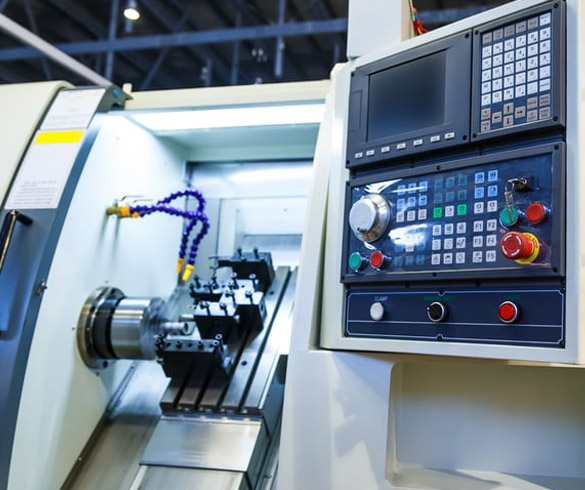
Types of Economical Vertical CNC Machining Center Options
Buyers commonly encounter several machine configurations under the Economical Vertical CNC Machining Center category. The best type depends on the part mix rather than the initial machine price. A compact VMC can fit smaller components and restricted floor space, but it may not suit large fixtures or parts needing extended travel. A medium-frame VMC can support broader general machining work, although it requires a larger investment and installation footprint. Three-axis models are the normal starting point for prismatic parts that can be machined from one or several setups. Machines with added rotary capability can reduce handling for multi-face work, but they are not automatically the economical choice for flat plates, brackets, and simple housings. Review the vertical CNC machining center MV970 alongside larger models only after comparing travel requirements, fixture dimensions, and the maximum part envelope.
| Machine Type | Best-Fit Work | Why It Can Be Economical | When It May Not Apply |
|---|---|---|---|
| Compact three-axis VMC | Small plates, brackets, simple precision components | Matches short travel needs and modest fixture sizes | Not suitable when the part or fixture needs a larger work area |
| Medium-frame three-axis VMC | Mixed job-shop work and larger OEM components | Offers wider part coverage without adding a rotary axis | Can add unnecessary cost for consistently small workpieces |
| Three-axis VMC with rotary preparation | Parts that may later need multiple faces machined | Allows future process development without buying every option now | Not needed for parts completed efficiently in one top-side setup |
| Horizontal machining center | Work requiring repeated multi-face machining | May reduce setups for certain production patterns | Usually not the first low-cost choice for straightforward three-axis work |
Match Spindle Guideway and Positioning Accuracy to Low-Cost Three-Axis Production
The practical action is to match spindle, guideway, and positioning-accuracy specifications to low-cost three-axis production work without paying for unnecessary options. This is the most useful filter when comparing an Economical Vertical CNC Machining Center from several suppliers. Do not accept broad descriptions such as “high precision” or “heavy duty” without asking how the quoted configuration supports your drawings. Spindle selection affects the available machining approach, guideway construction affects support under changing cutting loads, and positioning accuracy affects whether programmed coordinates can be repeated within your part-control plan. MAKCNC states that machine bodies commonly use high-strength cast iron, including resin-sand castings, with aging treatment intended to maintain long-term rigidity and accuracy. Core transmission components such as ballscrews and guideways commonly use high-precision components from Taiwan or Germany. These facts help frame questions, but the final decision still requires a model-specific specification sheet and acceptance criteria.
| Check Item | Why It Matters | Risk if Ignored | Best-Fit Sourcing Decision | Limit |
|---|---|---|---|---|
| Spindle configuration | It must suit the materials, tool sizes, and cutting methods in your planned jobs | Buying excessive spindle capability can increase cost without improving output; buying too little can restrict machining methods | Select the spindle around the actual part family and tool plan | A future product change may justify a different configuration |
| Guideway design and support | Guideways influence axis movement stability during machining | Unclear guideway information makes it harder to assess rigidity for fixtures and cutting loads | Request the guideway specification for the exact quoted model | Guideway selection alone does not determine finished-part quality |
| Positioning-accuracy specification | It connects programmed coordinates with drawing requirements | Comparing prices without this information can lead to unsuitable machine selection | Ask for positioning and repeatability documentation before final supplier ranking | Part accuracy also depends on tooling, setup, programming, temperature, and inspection |
| Unneeded options | Extra functions create cost, training, and maintenance obligations | The machine budget is spent on features that do not reduce setups or improve your parts | Approve options only when linked to a current process requirement | Some options may be justified by a documented future production plan |
For example, a buyer producing several varieties of aluminum and steel mounting plates may need drilling, tapping, pockets, profiles, and bore features from the top face. A properly selected Economical Vertical CNC Machining Center with three controlled axes can be a logical choice if the fixture allows these features to be reached in one setup. Adding a fourth axis simply because it appears on another supplier’s quotation may not improve the process. The limit is clear: if the drawing requires several side faces with demanding relationships, repeated manual repositioning can create more risk than a rotary solution. Advanced systems can also integrate intelligent feed-forward control and quadrant-jump compensation to address common issues such as overcut marks, quadrant marks, and chatter patterns. Ask whether these functions are included in the quoted system and how they apply to your process, rather than assuming they appear on every configuration.
Features That Support Accurate Daily Machining
An Economical Vertical CNC Machining Center should be assessed as a complete machine system, not as a list of isolated brand names. Machine structure, axis transmission, control functions, setup discipline, tooling condition, and operator practices all affect results. For mold-related high-accuracy machining requirements, intelligent feed-forward and quadrant-jump compensation can help address visible marks caused by axis direction changes or unstable cutting conditions. For mixed, small-batch production, the ability to complete multiple faces in one clamping can reduce handling and help control variation between setups. That does not mean every part should be processed in a single clamping. The approach fits parts where fixture access and tool reach support all required features. It does not fit components that need inaccessible surfaces, special inspection references, or operations that cannot be reached safely. Request a process discussion around your drawings before treating any feature as a guaranteed outcome.
- Cast-iron machine body: Suitable when buyers want to examine the machine’s structural basis for rigidity. It does not remove the need to evaluate the exact model and application.
- Aged castings: Relevant to buyers considering long-term stability. It should be discussed with the supplier as part of the full manufacturing and inspection process.
- High-precision ballscrews and guideways: Relevant to axis motion and machine construction. Confirm the component arrangement on the final quotation.
- Intelligent feed-forward and compensation functions: Relevant for processes sensitive to overcut, quadrant marks, or chatter patterns. Their benefit depends on programming, cutting conditions, and the actual workpiece.

Economical Vertical CNC Machining Center Applications
An Economical Vertical CNC Machining Center is typically appropriate for job shops and OEM production teams making prismatic components that benefit from repeatable three-axis milling operations. Typical work includes plates, brackets, blocks, mounting components, machine parts, simple housings, and mold-related work where the selected model and process meet the drawing requirements. The key sourcing question is not whether the machine can perform a long list of possible operations. Instead, ask whether it can complete your recurring operations with appropriate workholding, tool access, and inspection control. For low-volume, mixed production, a VMC may support efficient changes between different parts when the team prepares fixtures and programs carefully. For repetitive turned components, a CNC lathing machine may be the better production route. For parts needing multiple faces without repeated repositioning, compare the process against a horizontal CNC machining center before committing to a vertical model.
Economical Vertical CNC Machining Center Price Factors
The price of an Economical Vertical CNC Machining Center changes with machine size, spindle configuration, axis travel, guideway arrangement, control system, tooling package, optional equipment, inspection requirements, shipping terms, and after-sales expectations. A low initial quote can become less economical if it omits information needed for installation, acceptance, training, or service planning. Conversely, the highest quotation is not automatically the safest choice if it includes options unrelated to the part family. Compare each supplier on a like-for-like basis. Use one RFQ document, one set of drawings, one list of required accessories, and one expected acceptance method. MAKCNC indicates that a single machine can be purchased without a hard minimum order quantity. For multiple-machine purchases, commercial terms may be better in price, delivery, or after-sales service. This can suit buyers planning phased capacity expansion, but it should not force a multi-machine order before the production forecast supports it.
| Price Factor | Buyer Action | Why It Protects the Budget |
|---|---|---|
| Machine configuration | Request an itemized configuration list | Shows whether suppliers are quoting comparable machines |
| Options and accessories | Mark each item as required, preferred, or not needed | Prevents spending on unused equipment |
| Acceptance requirements | State the drawings, inspection method, and expected evidence | Reduces disagreement after production and delivery |
| Warranty and service | Confirm coverage, response process, and paid-service terms | Allows service cost and downtime risk to be considered early |
| Order quantity | Ask separately about one-machine and multi-machine commercial terms | Lets you compare immediate needs against planned expansion |
Economical Vertical CNC Machining Center User Guide for Supplier Shortlisting
Before requesting quotations for an Economical Vertical CNC Machining Center, prepare a short technical package that allows suppliers to quote the same requirement. Start with representative drawings, including toleranced features and surface requirements where applicable. Then identify the material, annual or monthly production pattern, largest part dimensions, estimated fixture arrangement, required operations, and preferred delivery terms. Next, ask the supplier to identify the proposed machine model, spindle configuration, guideway design, positioning-accuracy information, standard accessories, optional accessories, and acceptance process. Do not rely on a brochure image as proof that an accessory is included. Confirm it in the quotation. MAKCNC was established in 2016, operates multiple production lines, and has sample-machine inventory. The stated normal warranty is 12 months after complete-machine acceptance, with lifetime paid service available. Some tender projects may require a higher level of coverage, including three years of free warranty, so buyers should state tender conditions at the RFQ stage.
- Classify your parts: Separate recurring three-axis components from parts needing multiple-side access or turning operations.
- Define the working envelope: Include the part, fixture, clamps, tools, and safe access rather than the part size alone.
- Set acceptance evidence: Ask what inspection records and machine documentation will be provided for the ordered model.
- Compare like for like: Put each supplier’s spindle, guideway, control, options, warranty, and delivery proposal into one comparison sheet.
- Check service planning: MAKCNC states that its mature after-sales network typically responds within 8 hours and can arrive on site within 48 hours for fault handling. Confirm whether this arrangement applies to your destination and contract.
- Approve only needed options: Retain options that reduce setups, support the drawing, or meet a documented production plan.
Economical Vertical CNC Machining Center Supplier Selection
A supplier of an Economical Vertical CNC Machining Center should provide enough technical detail for buyers to make a defensible comparison before placing an order. Ask for the exact machine model, configuration, production lead time, inspection process, warranty terms, parts and service process, and commercial conditions. MAKCNC supplies CNC machining centers, CNC lathing machines, and CNC machines for B2B buyers. The company information states a production lead time of 1 to 6 months, while sample-machine inventory may be available. This should be treated as planning information rather than a fixed promise for every order, because configuration, order quantity, and destination can affect delivery. Buyers with unusual process requirements can also discuss customized CNC machines and machining centers from MAKCNC when a standard layout does not match the part and fixture plan. Supplier selection is strongest when technical requirements, commercial terms, acceptance expectations, and service needs are reviewed together.
FAQ of Economical Vertical CNC Machining Center
Is the lowest-priced VMC always the best economical option? No. The most economical choice is the one that meets the part requirement without unnecessary functions or later process restrictions. A lower purchase price may be suitable for simple three-axis parts, but it may not fit large fixtures, demanding inspection requirements, or multi-face work. Should buyers select options before sending drawings? Usually no. Send representative drawings first, then ask the supplier to explain which options support the planned process and which are not needed. Can one machine be ordered? Yes. MAKCNC states that there is no hard minimum order quantity and a single machine can be purchased. What should be confirmed before payment? Confirm the final model, written configuration, acceptance method, warranty, delivery arrangement, service scope, and any required documentation. These checks are more useful than comparing headline price alone.
MAKCNC is a CNC machine supplier established in 2016, offering CNC machining centers, CNC lathing machines, and related equipment for job shops and OEM buyers. If you are looking for an Economical Vertical CNC Machining Center supplier, contact MAKCNC to request a current quotation and share your drawings for selection advice.