When to Choose a Standard Horizontal Machining Center with Twin Pallets
For manufacturers considering a new
Standard Horizontal Machining Center, deciding between a single-pallet or twin-pallet configuration can significantly impact operational efficiency, cost, and overall production capacity. A misstep in this decision can lead to either underutilized capital or bottlenecks that hinder growth. Understanding the precise production volume boundaries where the advantages of twin pallets outweigh the initial investment is essential before finalizing an order or submitting an RFQ. This guide will clarify these critical considerations, helping you make an informed choice for your facility's specific demands.
What is a Standard Horizontal Machining Center?
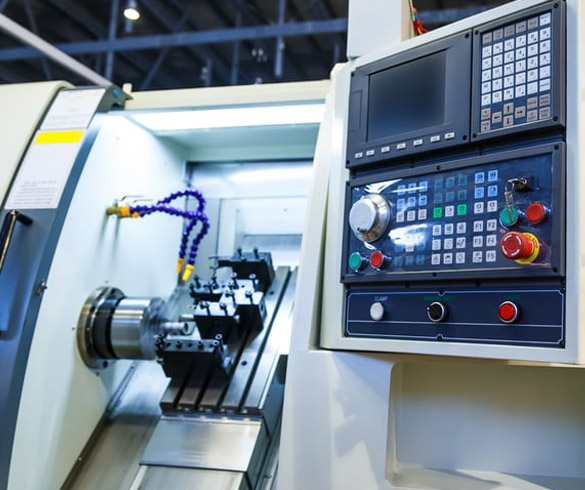
A Standard Horizontal Machining Center (HMC) is a high-precision CNC machine tool characterized by its horizontally oriented spindle, which allows tools to approach the workpiece from the side. These machines are engineered for heavy-duty cutting and can perform a wide array of operations including milling, drilling, boring, and tapping on multiple faces of a part in a single setup. Their design inherently facilitates effective chip evacuation, which is crucial for maintaining machining accuracy and extending tool life, especially during prolonged operations. HMCs are built to deliver consistent performance and accuracy, making them a cornerstone in industries that demand tight tolerances and robust material removal capabilities. They are a staple in sectors like automotive, aerospace, and general manufacturing for producing complex parts with high efficiency.
Single-Pallet vs. Twin-Pallet HMCs: Understanding the Production Volume Boundary
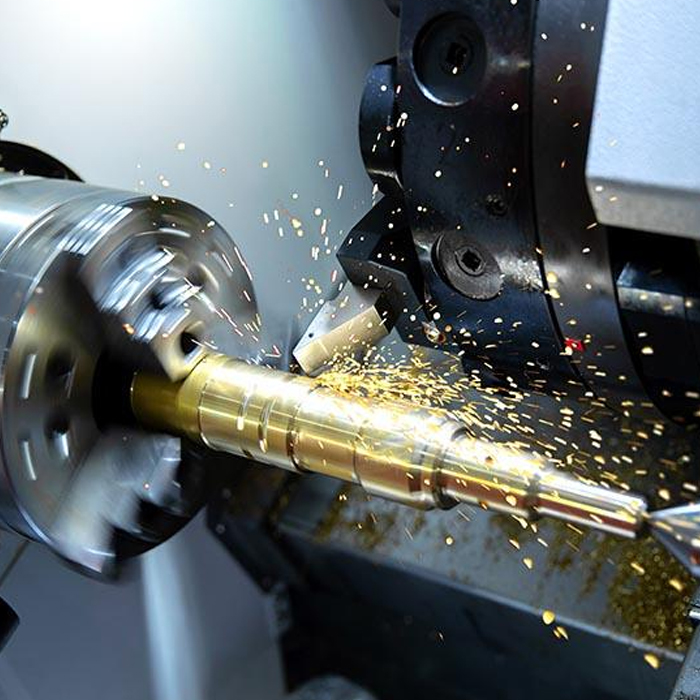
The choice between a single-pallet and a twin-pallet Standard Horizontal Machining Center hinges directly on your production volume, part complexity, and the need for uninterrupted machining. While a single-pallet HMC is perfectly adequate for many applications, a twin-pallet system introduces a significant advantage: reduced non-cutting time. This is achieved by allowing operators to load and unload workpieces on one pallet while the machine continues to process parts on the other. This overlap in operations can drastically boost machine utilization and overall throughput. The added purchase price of a twin-pallet system is justified when the time savings from continuous machining directly translate into increased output that meets or exceeds demand, particularly for medium to high-volume production runs or parts with longer cycle times.
Here is a comparative breakdown to help assess your needs:
| Feature |
Single-Pallet HMC |
Twin-Pallet HMC |
| Initial Investment |
Lower |
Higher (due to additional pallet, changer mechanism) |
| Machine Utilization |
Interrupted (machine idles during load/unload) |
Continuous (loading/unloading off-line) |
| Ideal Production Volume |
Low to medium volume; prototyping; job shops with diverse, short runs; long cycle times where operator attention is needed during machining. |
Medium to high volume; repeated part production; continuous manufacturing; when minimizing non-cutting time is critical for throughput targets. |
| Operator Involvement |
Directly tied to machine cycle for loading/unloading. |
Independent of machine cycle, allowing for simultaneous tasks. |
| Floor Space Requirement |
Less |
More (for the additional pallet and changer) |
| Flexibility |
High; easy to switch between diverse jobs. |
High; can run two different jobs simultaneously if setups permit, or two identical jobs for higher output. |
| Return on Investment (ROI) |
Faster for lower production needs. |
Slower initial ROI, but significant long-term gains in high-volume, continuous production environments. |
A single-pallet HMC is sufficient when your production volume does not consistently create idle machine time for loading and unloading. This applies to operations with very long individual part cycle times where the machining duration far exceeds the setup time, or in job shop environments where variety trumps sheer volume. Conversely, a twin-pallet system becomes essential when the machine's spindle is frequently waiting for a part change, causing a bottleneck in your workflow. For example, if your average part cycle time is 30 minutes and loading/unloading takes 5 minutes, a single-pallet machine would be idle for 5 minutes every 35 minutes cycle. A twin-pallet system eliminates this idle time, effectively gaining those 5 minutes back per cycle, proportionally increasing hourly output. The crossover point to justify the twin-pallet investment is when these accumulated time savings significantly contribute to meeting production targets that would otherwise require additional machines or extended shifts.
Key Features of Modern Horizontal Machining Centers
Modern
professional cnc machining center solution, particularly those from MAKCNC, are engineered with foundational robust construction and advanced technological integration to meet the stringent demands of precision manufacturing. The structural integrity of our machines begins with a body crafted from high-strength cast iron, often utilizing resin sand castings. This material choice is critical for absorbing vibrations and maintaining exceptional stability during heavy cutting operations. Furthermore, these cast iron components undergo meticulous aging treatment, a process that relieves internal stresses and ensures long-term accuracy and rigidity, preventing any dimensional shifts over the machine's operational lifespan. This foundational strength supports consistent machining performance, which is vital for maintaining tight tolerances over extended production runs.
Beyond the robust framework, the core motion components are selected for their precision and reliability. We often incorporate high-precision ballscrews and guideways from renowned Taiwanese or German brands. These components are integral to achieving the precise, repeatable movements required for high-accuracy machining. The manufacturing process focuses on system协同 (system synergy), ensuring that all components work together seamlessly to deliver optimal overall machine performance. For industries like mold manufacturing, where surface finish and dimensional accuracy are paramount, our machines integrate advanced systems such as intelligent feedforward control and over-quadrant jump compensation technologies. These features specifically address common machining challenges like "overshoot marks," "quadrant marks," and "chatter marks," which can compromise part quality. For manufacturers dealing with diversified, small-batch production, our HMCs are designed with the capability to complete multi-face machining in a single setup. This significantly reduces setup times and minimizes potential errors from multiple re-fixturing, improving efficiency and part consistency for complex geometries.
Applications for Standard Horizontal Machining Centers
Standard Horizontal Machining Centers are highly versatile machine tools, finding their place across a broad spectrum of industrial applications where precision, efficiency, and robust material removal are critical. One primary sector benefiting significantly from HMCs is the **mold industry**. The demand for high-precision molds, often featuring complex geometries and fine surface finishes, aligns perfectly with the capabilities of a modern HMC. The advanced system integration, including intelligent feedforward and over-quadrant jump compensation, directly addresses challenges like overcut and chatter marks, which are detrimental to mold quality. This ensures that the intricate details and smooth surfaces required for injection molds, die-casting molds, and stamping dies are achieved with superior accuracy.
Beyond molds, HMCs are indispensable in **general manufacturing and automotive industries**. They excel at machining large, heavy workpieces, such as engine blocks, transmission cases, and various structural components. Their ability to perform multiple operations on several faces of a part in one clamping setup drastically reduces cycle times and improves overall part accuracy by minimizing re-fixturing errors. This efficiency makes them ideal for high-volume production lines where consistent output and quality are paramount. Furthermore, for **multi-variety, small-batch production**, HMCs offer significant advantages. The capacity for multi-face machining in a single setup means complex parts can be completed faster, with less manual intervention and fewer opportunities for error. This flexibility allows manufacturers to quickly adapt to changing product demands and produce diverse components efficiently, supporting agile manufacturing strategies. From heavy equipment components to intricate aerospace parts, the Standard Horizontal Machining Center provides a robust and precise solution for a wide range of demanding machining tasks.
Factors Influencing Horizontal Machining Center Pricing
The investment required for a Horizontal Machining Center can vary widely, influenced by several key factors that directly impact its capabilities, performance, and long-term value. Understanding these elements is crucial for buyers to align their budget with their operational needs, ensuring they acquire a machine that offers the best return for their specific production environment.
Key factors that influence HMC pricing include:
* **Machine Configuration:** The most significant factor is often the pallet system. A single-pallet HMC will naturally have a lower base price than a twin-pallet system, which includes the additional pallet and the complex automatic pallet changer mechanism. Automated pallet pool systems or flexible manufacturing systems (FMS) with multiple pallets and robotic loading will further increase the cost.
* **Spindle Specifications:** Spindle speed (RPM), power (kW/hp), and torque capabilities are critical. High-speed spindles (e.g., 15,000-20,000 RPM) suitable for aluminum and fine finishing, or high-torque spindles for heavy-duty cutting of tough materials, come at a premium. The spindle taper (e.g., BT40, BT50, HSK) also plays a role.
* **Control System (CNC):** The choice of CNC controller significantly impacts cost. Premium brands like Fanuc, Siemens, Heidenhain, or Mitsubishi offer advanced features, higher processing speeds, and more sophisticated programming capabilities, which contribute to a higher price point compared to more basic controllers.
* **Tool Magazine Capacity and Type:** The number of tools the machine can hold (e.g., 40, 60, 120+ tools) and the type of tool changer (e.g., arm-type, chain-type) affect price. Larger capacities and faster tool change times generally increase cost.
* **Machine Size and Travel:** The XYZ-axis travel distances dictate the maximum workpiece dimensions the machine can handle. Larger machines with greater travel capabilities require more material and more powerful components, leading to higher prices.
* **Optional Features and Automation:** Additional features such as through-spindle coolant, high-pressure coolant systems, automatic tool length measurement, broken tool detection, thermal compensation, probing systems, chip management systems, and integration with robotics or gantry loaders all add to the final price.
* **Brand and Origin:** Established brands with a reputation for precision, reliability, and strong after-sales support often command higher prices. The country of origin for core components (e.g., Taiwan, Germany for ballscrews and guideways) can also influence cost due to quality and import considerations.
* **Warranty and Service Packages:** The standard 12-month warranty is typical, but extended warranties, such as a three-year free warranty often required for specific bidding projects, will impact the price. Comprehensive service packages that include preventative maintenance or faster on-site response times also add to the overall investment.
While MAKCNC does not impose a hard minimum order quantity, allowing single unit purchases, bulk procurement (e.g., multiple machines) can unlock more favorable business terms regarding price, delivery schedules, and after-sales service. This flexibility aims to accommodate both small-scale precise operations and large-volume production lines.
Implementing a New Horizontal Machining Center: User & Operational Considerations
Integrating a new Horizontal Machining Center into your production workflow requires careful planning beyond the initial purchase. Proper implementation and ongoing operational considerations are essential to maximize machine performance, ensure long-term precision, and safeguard your investment.
* **Site Preparation:** Before installation, ensure your facility has a stable, level foundation capable of supporting the machine's weight and absorbing vibrations. Adequate power supply, compressed air, and coolant systems must be in place. Space for material handling, chip management, and maintenance access is also critical. Proper environmental controls, such as temperature and humidity regulation, can further enhance machine stability and accuracy, particularly for high-precision applications.
* **Operator Training:** While modern HMCs are user-friendly, comprehensive training for operators and programmers is indispensable. This includes understanding the specific CNC control interface, programming techniques, tool setup, maintenance routines, and safety protocols. Well-trained personnel can fully utilize the machine's capabilities, reduce errors, and improve overall efficiency.
* **Maintenance Schedule:** Adhering to a strict preventative maintenance schedule is paramount for preserving the machine's long-term accuracy and rigidity. This involves regular lubrication of guideways and ballscrews, checking and adjusting machine alignments, inspecting electrical components, and cleaning filters. Given that our machines utilize high-strength cast iron bodies (like resin sand castings) with aging treatment, consistent maintenance helps uphold the built-in stability and precision over years of operation.
* **Tooling and Workholding:** Investing in high-quality tooling and robust workholding solutions is as important as the machine itself. The right tools enhance cutting performance, extend tool life, and improve surface finish, while secure workholding minimizes vibration and ensures part accuracy.
* **Chip Management:** Efficient chip evacuation is a key advantage of HMCs. Ensure your chip conveyor system is properly configured and regularly maintained to prevent chip accumulation, which can interfere with machining, damage tools, and even scratch machined surfaces.
* **After-Sales Support:** Consider the support network. MAKCNC offers a standard warranty of 12 months after machine acceptance, alongside lifetime paid service. Our established after-sales network is typically structured to respond within 8 hours and have technicians on-site within 48 hours to address any faults, minimizing potential downtime and ensuring continuous operation. For specific tender requirements, such as a three-year free warranty, we can also accommodate those needs.
Choosing a Reliable Horizontal Machining Center Supplier
When investing in a Horizontal Machining Center, partnering with an experienced and reliable supplier is just as important as the machine's technical specifications. Since our establishment in 2016, MAKCNC has developed into an ISO9001:2015 certified manufacturer of high-quality CNC machine tools. Our commitment to precision and performance is evident in our multiple production lines and readily available sample machine inventory, allowing potential buyers to see our capabilities firsthand. As a dedicated
about makcnc, we understand the varied needs of global manufacturers.
We maintain flexible procurement policies, recognizing that not every project requires a massive investment. While we have no hard minimum order quantity and can accommodate single unit purchases, we also offer more favorable business terms—including better pricing, optimized delivery schedules (typically 1 to 6 months), and enhanced after-sales support—for bulk orders. This approach ensures that whether you are a small workshop expanding your capabilities or a large enterprise scaling up production, you receive terms that align with your operational scale. Our focus on utilizing high-strength cast iron, aged for stability, and integrating high-precision components from Taiwan or Germany, underscores our dedication to long-term accuracy and robust performance. We aim to provide not just machines, but complete
customized cnc machines and machining centers from makcnc that deliver consistent results and drive your manufacturing success.
Frequently Asked Questions About Horizontal Machining Centers
Q: What is the typical warranty period for a MAKCNC Horizontal Machining Center?
A: Our standard warranty covers the entire machine for 12 months following its acceptance at your facility. Beyond this period, we provide lifelong paid service to ensure your machine continues to operate effectively throughout its lifespan. For certain large bidding projects, we understand that requirements may be more stringent; in such cases, we can accommodate requests for an extended three-year free warranty.
Q: What is the typical lead time for an HMC order from MAKCNC?
A: The lead time for our Horizontal Machining Centers typically ranges from 1 to 6 months. This duration can vary based on the specific machine configuration, customization requirements, and current production schedules. We strive to provide accurate delivery estimates at the time of order and work diligently to meet agreed-upon timelines.
Q: Is there a minimum order quantity (MOQ) for purchasing an HMC?
A: MAKCNC operates with a flexible approach to order quantities. We do not enforce a hard minimum order quantity, meaning you can procure a single machine to meet your specific needs. However, for customers looking to purchase multiple units or place larger orders, we offer more advantageous commercial terms, including improved pricing, expedited delivery schedules, and enhanced after-sales service packages.
If you are evaluating options for a Standard Horizontal Machining Center, whether single- or twin-pallet, we invite you to connect with our technical team. We can provide tailored advice and a current product quotation to match your specific production requirements.