How to Choose a Vertical CNC Milling Machining Center for Deep Cavities
What Is a Vertical CNC Milling Machining Center?
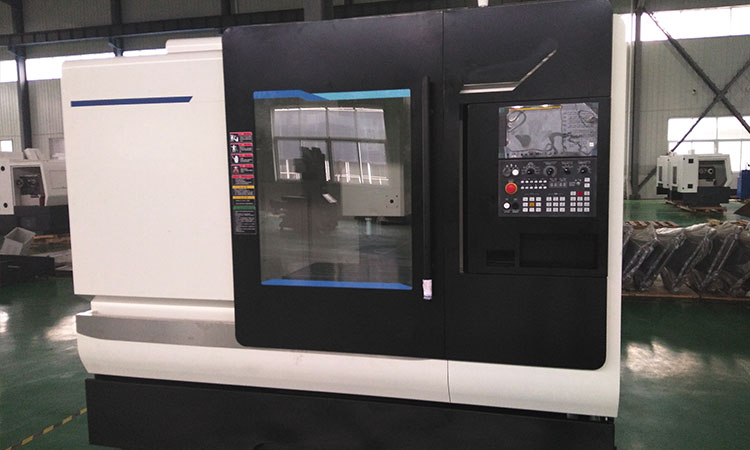
Vertical CNC Milling Machining Center is a computer-controlled machine tool with a vertically oriented spindle that performs milling, drilling, boring, tapping, and cavity machining on a fixed workpiece. For mold, die, and deep-pocket parts, the buying decision is not simply about selecting the largest table or the highest spindle speed. The machine must allow the spindle nose, toolholder, cutting tool, and coolant flow to reach the bottom of the cavity without creating excessive tool deflection, poor chip removal, or collision risk. A vertical CNC milling machining center is often a practical choice for open-top molds, plates, housings, and parts that can be loaded from above. However, it has physical limits in very deep, narrow, or enclosed cavities. Buyers should therefore evaluate actual cavity geometry before comparing machine quotations. The key questions are cavity depth, opening width, wall clearance, tool length, fixture height, material, finishing requirement, and whether chips can leave the cutting area during machining.

Types of Vertical CNC Mills for Deep Cavity Work
Vertical CNC mills used for deep cavity milling generally fall into several practical categories. A standard three-axis machine suits open cavities where tools can approach vertically and the workpiece can remain in one fixture. A machine with a larger Z-axis travel can suit taller fixtures, deeper workpieces, or cavities that need greater clearance between the spindle nose and the part. Four-axis or five-axis configurations may suit parts requiring angled access or multiple faces in one setup, although added axes do not automatically solve a narrow-cavity problem. A vertical CNC milling machining center for mold cavities should be selected according to access geometry, not axis count alone. For example, if a cavity is deep but wide enough for a short toolholder and stable tool extension, a standard vertical configuration may be appropriate. If the cavity mouth is narrow and the bottom is wide, a longer tool may be unavoidable, which increases deflection and limits finishing quality. In that situation, changing the tool strategy, part orientation, or machine type may be more sensible than only increasing Z travel.
| Machine Configuration | Best-Fit Working Condition | Why It Can Work | Limits to Check |
|---|---|---|---|
| Standard three-axis vertical mill | Open-top cavities and deep pockets with clear tool access | Simple setup and direct vertical cutting path | May struggle with narrow openings and long tool overhang |
| Long Z-travel vertical mill | Tall workpieces, raised fixtures, and deeper access requirements | Provides more vertical clearance for tools and fixtures | Extra travel does not remove tool deflection or chip buildup |
| Four-axis or five-axis machine | Multi-face mold inserts and angled features | May reduce re-clamping and improve access from different angles | Does not help if the cavity opening physically restricts the tool |
| Horizontal machining center | Parts needing side access or improved chip fall-away | Workpiece orientation can improve chip evacuation | May not be the preferred approach for every open mold cavity |
Features That Matter for Mold Machining and Deep Pockets
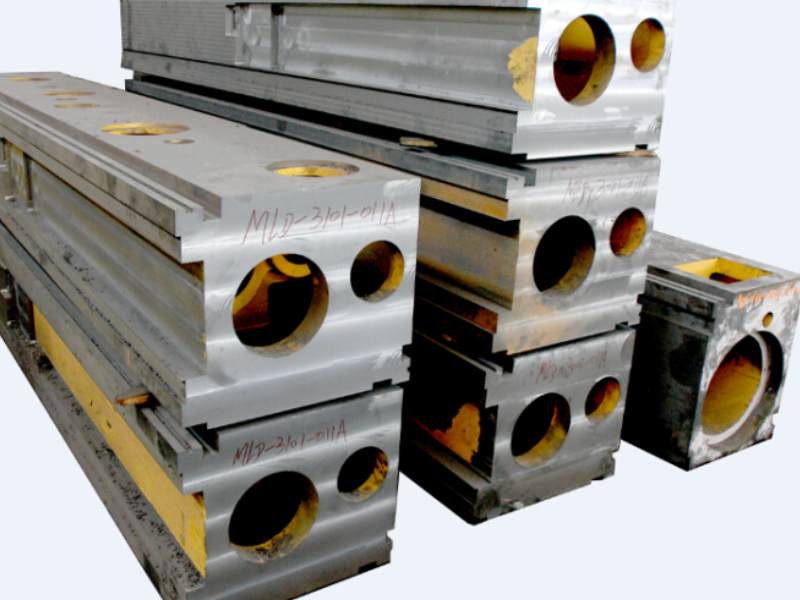
The most useful features for deep cavity work are those that protect rigidity, repeatable motion, and stable cutting conditions. A Vertical CNC Milling Machining Center should be assessed as a complete system: machine body, guideway arrangement, ball screw system, spindle, control functions, tooling, workholding, and coolant method all affect cavity results. MAKCNC machine bodies commonly use high-strength cast iron, including resin-sand castings, with aging treatment intended to support long-term rigidity and accuracy retention. Core transmission components such as ball screws and guideways commonly use high-precision components from Taiwan or Germany. For mold machining, advanced control functions can also matter. Intelligent feedforward and quadrant-transition compensation are intended to help address issues such as overcut marks, quadrant marks, and vibration marks during contour machining. These functions are relevant when the cavity contains curved walls, blended radii, or fine finishing passes. They are not a substitute for correct tooling, stable workholding, realistic cutting parameters, and sufficient access around the cutting tool.
- Choose rigidity first when long tools are necessary, because a rigid structure supports more stable cutting. This does not eliminate vibration caused by excessive tool extension.
- Check spindle-nose clearance when fixtures or tall workpieces sit high on the table. Z-axis travel alone is not enough if the spindle nose or toolholder contacts the fixture.
- Review control functions for contour finishing when mold surfaces require smooth transitions. These features are less relevant for simple rough pocketing.
- Plan one-clamp machining where practical for multi-face small-batch parts. It is not always suitable when the part needs access that a vertical setup cannot provide.
Applications That Fit a Vertical CNC Milling Machining Center
A Vertical CNC Milling Machining Center is well suited to mold inserts, die plates, deep pockets in housings, fixture plates, tooling components, and small-batch parts that benefit from machining multiple faces in one clamping arrangement. In mold machining, it can perform roughing, semi-finishing, drilling, tapping, and surface finishing when the cavity remains reasonably open from above. The machine is especially relevant when a shop needs flexibility across varied workpieces rather than a dedicated production line for one fixed component. A vertical machining center for mold cavities can also support work where operators need straightforward loading and clear visibility of the workpiece. The limit appears when the cavity geometry forces a very long tool to reach the bottom while the toolholder must pass through a narrow opening. In that condition, the tool can bend, chatter, leave poor wall finish, or cut inaccurately. A horizontal machining center may deserve evaluation when side access, multi-face machining, or chip removal becomes the larger production issue.
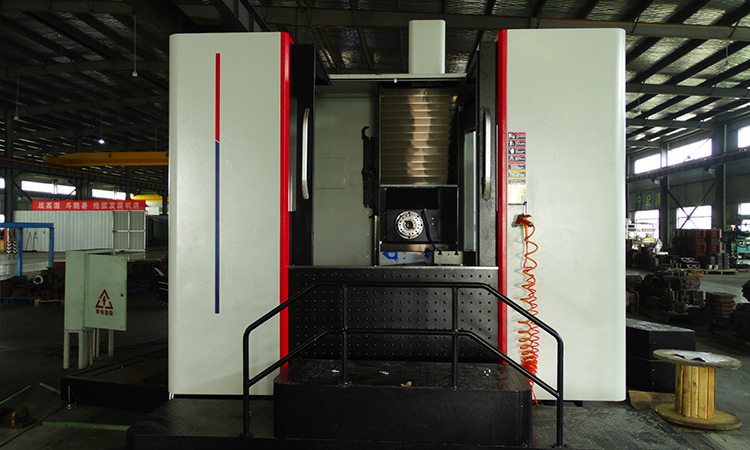
For buyers comparing configurations, MAKCNC also provides a horizontal CNC machining center option for work that does not fit the access pattern of a standard vertical layout. The correct choice depends on the actual part drawing, fixture concept, tool package, and process sequence. A vertical CNC milling machining center remains a sensible option when the cavity can be machined from the top with controlled tool extension and adequate evacuation space.
Boundary Analysis for Spindle Reach Tool Length and Chip Evacuation
Spindle reach, tool length, and chip evacuation set the real working boundary for a standard vertical CNC mill in deep-cavity work. The first rule is simple: do not select a machine based only on cavity depth. The full tool assembly must enter the cavity safely. That assembly includes the spindle nose, toolholder, cutting tool, and the clearance required to avoid contact with cavity walls or the fixture. A Vertical CNC Milling Machining Center can machine a deep cavity when the opening gives enough room for the toolholder and when the tool can reach the floor without excessive extension. It becomes less suitable when a narrow opening forces a long, slender tool, especially during heavy roughing or fine surface finishing. Deep cavities also retain chips. If chips repeatedly recut, they can mark finished surfaces, raise cutting load, and create heat around the tool. Coolant direction, air assistance where suitable, toolpath design, and periodic clearing moves should be considered before machine selection.
| Decision Factor | When a Standard Vertical Mill Fits | Boundary That Requires Extra Review | When It May Not Be Suitable |
|---|---|---|---|
| Spindle reach | The spindle nose and holder can approach the cavity without touching walls or fixtures | Fixture height consumes much of the available Z-axis clearance | The spindle nose cannot safely approach the cavity opening |
| Tool length | A stable cutter can reach the cavity floor with moderate extension | The required extension causes visible vibration, deflection, or unstable finishing | The cutter must be excessively long to pass through a narrow opening |
| Cavity opening | The opening provides room for the selected holder and cutting path | Holder clearance is limited near cavity walls or corners | The opening blocks the holder before the tool reaches the cavity bottom |
| Chip evacuation | Chips can move out of the cavity through coolant flow and toolpath movement | Chips gather in corners or at the cavity floor during long cycles | Chips remain trapped and repeatedly contact the tool and finished surface |
| Workpiece orientation | Top-down access supports the planned roughing and finishing operations | Some walls require long-reach tools or difficult re-clamping | Side access would materially improve process stability and chip removal |
The practical selection step is to request a tool-access review using the part drawing, cavity section view, fixture concept, and proposed cutter list. This helps determine what spindle reach is needed for deep cavity milling without relying on a general rule that may not fit the part. If the analysis shows poor holder clearance, unstable tool length, or trapped chips, consider changing the part orientation, using a different cavity machining strategy, selecting a longer-travel configuration, or comparing a horizontal machine. A vertical CNC milling machining center is not the best answer for every deep cavity, and identifying that limit before purchase reduces later process changes.
Price Factors to Compare Before Requesting a Quote
The price of a Vertical CNC Milling Machining Center varies because the required configuration changes with cavity size, travel requirements, spindle arrangement, control system, tooling needs, automation level, and inspection expectations. Buyers should avoid comparing quotations that describe only a machine model without confirming the included configuration. For deep cavity work, a lower initial price can become less attractive if the machine cannot accommodate the required fixture height, toolholder clearance, or finishing process. Request separate clarification for standard equipment, optional control functions, toolholding, coolant-related accessories, commissioning scope, spare parts, training, freight, and after-sales terms. MAKCNC states that a single machine can be purchased without a hard minimum order quantity. Multiple-machine purchases may receive improved commercial terms related to price, delivery, or after-sales support. Delivery timing should also be confirmed for the selected configuration. The company brief states a typical lead time of 1 to 6 months, while sample machine inventory may be available for some requirements. These points should be written into the quotation discussion rather than assumed.
- Machine base and travel: Confirm whether the selected size supports the actual workpiece and fixture, not only the raw part dimensions.
- Spindle and control package: Confirm suitability for the planned roughing and finishing sequence. Do not select options only by marketing labels.
- Tooling and workholding: Ask whether these items are included, optional, or sourced separately.
- Delivery and acceptance: Confirm the agreed delivery window and acceptance conditions before issuing a purchase order.
- Service terms: MAKCNC generally provides a 12-month machine warranty after acceptance and lifetime paid service. Some tender projects may require a three-year free warranty, which should be agreed separately.
User Guide for Selecting and Using the Machine
How to choose a vertical CNC mill for deep cavities starts with a drawing review, followed by a tooling and fixture review. First, measure the cavity depth, opening width, narrowest internal area, bottom corner radius, and wall angle. Second, identify every operation that must reach the cavity floor, including roughing, semi-finishing, finishing, drilling, and any inspection access. Third, select a preliminary toolholder and cutter concept, then check whether the holder can enter the opening without collision. Fourth, calculate available vertical clearance after adding fixture height, workpiece height, holder length, and required safe approach distance. Fifth, define how chips will leave the deepest cutting area. A vertical CNC milling machining center should be shortlisted only after these checks are complete. This process fits buyers preparing an RFQ or comparing machine models. It does not replace final process verification, because actual tool behavior also depends on material, cutting conditions, cutter geometry, and workholding stiffness.
- Send a part drawing with cavity section views, overall dimensions, and material information.
- State the deepest cavity, narrowest opening, bottom geometry, and required surface condition.
- Provide the fixture concept or identify whether MAKCNC should review a fixture requirement.
- List expected production quantity and whether the part mix changes frequently.
- Ask for confirmation of spindle-nose clearance, Z-axis travel suitability, and tool-access feasibility.
- Confirm the warranty, service response arrangement, installation scope, and delivery terms in writing.
FAQ of Vertical CNC Milling Machining Center Selection
How do you choose a vertical CNC mill for deep cavities?
Choose a vertical CNC mill by checking the entire access chain rather than the cavity depth alone. Review the workpiece position, fixture height, spindle nose, toolholder diameter, cutter length, and wall clearance. Then assess whether the tool can reach the bottom with acceptable stability and whether chips can leave the cavity. A Vertical CNC Milling Machining Center fits deep cavities when the opening remains sufficiently open for the holder and tool, the tool extension is controlled, and the machining path does not trap chips. It is less suitable when a narrow entry requires an excessively long tool or when cavity walls prevent safe holder clearance. For mold machining, provide the supplier with section drawings and the intended operation sequence. This allows machine travel and access to be reviewed against the real process instead of a general machine category.
What spindle reach is needed for deep cavity milling?
The needed spindle reach is the clearance required to bring the cutting edge to the cavity bottom while keeping the spindle nose and toolholder safely away from the workpiece and fixture. There is no single number that applies to every part because cavity depth is only one element. The workpiece height, fixture height, holder length, cutting-tool length, cavity opening, and safe approach position must all be evaluated together. A vertical CNC milling machining center with more Z-axis travel may help with tall setups, but it will not correct a cavity that physically blocks the toolholder. Request a machine-access review using a cavity cross-section and tool concept. This is the most direct way to determine whether the machine can perform the planned work.
Is a vertical machining center for mold cavities always the best option?
No. A vertical machining center for mold cavities is often effective for open-top inserts, plates, and pockets that can be machined from above. It also supports accessible loading and can suit varied small-batch work. However, it may not be the preferred option where side access is needed, chips cannot clear from the cavity floor, or the workpiece requires several faces to be machined with limited re-clamping. A horizontal configuration may provide a better process route in those cases. The correct decision should compare cavity access, fixture design, tool extension, chip behavior, and the required machining sequence. Machine type should follow the part and process, not the other way around.
MAKCNC as a Vertical CNC Milling Machining Center Supplier
MAKCNC has manufactured CNC equipment since 2016 and offers CNC machining centers, CNC lathing machines, and CNC machines for export buyers evaluating production equipment. The company has multiple production lines and sample machine inventory, subject to the selected requirement. Its facility is listed as S09001:2015 in the company information provided. For deep cavity work, MAKCNC can review the machine category against drawings, fixture needs, and access conditions before a buyer finalizes specifications. Buyers looking for larger vertical options can also review the vertical CNC machining center MV1380 and the vertical CNC machining center MV1160 as starting points for specification discussions. Standard warranty is generally 12 months after machine acceptance, with lifetime paid service available. Submit your cavity drawing and fixture details to request selection advice and a current quotation.