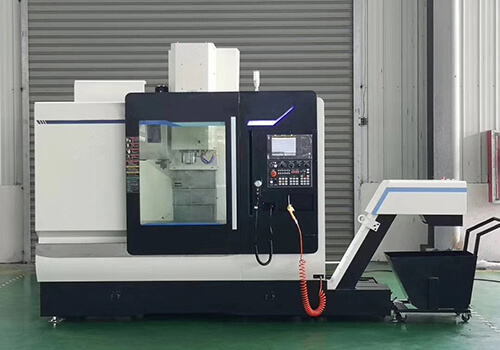
Evaluating the True Cost of a Wholesale CNC Inclined Bed Lathe
A cnc inclined bed lathe purchased directly from an overseas manufacturer often presents a compelling ex-works price. However, for procurement managers and engineers, the most significant risk is miscalculating the total cost of acquisition. The initial quote is only one part of the equation. Factors like freight, duties, commissioning, and long-term support can substantially alter the final investment, turning an apparent bargain into a costly oversight. Before deciding if importing is the right strategy, it's essential to understand the full financial picture and the technical benchmarks that define a truly valuable machine.
What Defines a High-Performance Inclined Bed Lathe?
The foundation of any reliable CNC machine is its structural integrity and the quality of its core components. These elements directly impact machining accuracy, surface finish, and the machine's operational lifespan. Unlike lighter-duty machines, industrial-grade lathes prioritize rigidity and vibration damping, which begins with the machine base.
At MAKCNC, our machine bodies are constructed from high-strength cast iron, specifically using resin sand castings. This material provides superior vibration absorption compared to welded steel structures. To ensure lasting precision, these castings undergo an extensive aging treatment process. This critical step relieves internal stresses within the material, preventing deformation over years of thermal cycles and heavy cutting forces. This commitment to structural stability is a core part of our ISO 9001:2015 certified manufacturing process.
Beyond the frame, performance hinges on the motion system. We integrate high-precision components for all core-drive functions:
- Ball Screws and Linear Guideways: Sourcing these critical parts from established brands in Taiwan or Germany ensures smooth, accurate, and repeatable axis movement with minimal backlash.
- System Synergy: Individual high-quality components are not enough. Our engineering focus is on system-wide integration, ensuring the spindle, drives, and control system work in concert to deliver optimal performance and reliability.
This build philosophy results in a machine that not only meets specifications on day one but also maintains its rigidity and precision for long-term production demands.
Decoding the Total Landed Cost of Your Imported Machine
The most common mistake when evaluating a wholesale offer is focusing solely on the Ex-Works (EXW) price. A professional buyer must account for all expenses required to get the machine from the factory floor to your production line. Neglecting these costs leads to budget overruns and project delays. We believe in transparency and encourage buyers to build a complete landed-cost model. This approach separates the machine price from the logistics and service costs, allowing for a true "apples-to-apples" comparison between suppliers.
Here is a breakdown of the typical costs to consider when importing a CNC machine:
| Cost Component | Description | Considerations for Your Budget |
|---|---|---|
| Ex-Works (EXW) Price | The base price of the machine at the factory, including standard accessories. | Confirm exactly what is included (e.g., standard chuck, tool holders, coolant system). |
| Tooling & Options | Optional accessories like tool preservers, bar feeders, chip conveyors, or specialized work-holding. | These are often best purchased with the machine for guaranteed compatibility and integration. |
| Crating & Packing | Export-grade, fumigated wooden crating to protect the machine during sea transit. | Inadequate packing can lead to corrosion or damage. This is not an area to cut corners. |
| Inland & Ocean Freight | Cost to transport the machine from the factory to the port, and from the port of origin to your destination port. | Quotes can vary significantly between freight forwarders. Insurance (CIF terms) is highly recommended. |
| Import Duties & Taxes | Tariffs, VAT, or GST based on the machine's HS code and declared value in your country. | Consult a customs broker for accurate rates. These are mandatory and can be a significant percentage of the value. |
| Commissioning & Training | On-site installation, leveling, testing, and operator training by a qualified technician. | Clarify if this is included or an extra cost. Travel and accommodation for the technician may be billed separately. |
| Initial Spare Parts | A recommended starter kit of common wear items (e.g., filters, seals, fuses). | Having these on hand minimizes downtime while waiting for parts to be shipped later. |
Key Capabilities for Precision and Versatility
Modern manufacturing demands more than just raw power. Our CNC machines are engineered with advanced control system features to solve specific, high-value production challenges. This is particularly relevant for businesses in competitive sectors like mold making or those handling high-mix, low-volume orders.
For the demanding mold and die industry, surface finish and accuracy are paramount. Our systems incorporate technologies designed to eliminate common machining defects:
- Intelligent Feed-Forward Control: This predictive function anticipates axis movements to minimize servo lag, resulting in more accurate toolpaths, especially in complex 3D contouring.
- Quadrant Glitch Compensation: When an axis crosses from positive to negative motion (or vice-versa), a microscopic pause can leave a visible "quadrant mark" on the workpiece. This compensation algorithm smooths the transition, ensuring a flawless surface finish.
- Vibration Suppression: Advanced software features actively combat chatter, solving the problem of "chatter marks" that often appear during heavy or deep cuts, leading to better finishes and longer tool life.
For job shops focused on multi-variety, small-batch production, machine uptime and setup efficiency are critical. Our machines support this with capabilities for multi-face machining in a single clamping. By reducing the number of manual setups, you minimize the risk of operator error, slash non-productive time, and improve overall part-to-part consistency.
After-Sales Support and Long-Term Partnership
The purchase of a CNC machine tool is the beginning of a long-term relationship. The quality of after-sales support is just as important as the quality of the machine itself. We structure our service and warranty terms to provide clear expectations and dependable support for your investment. Our standard warranty package covers the entire machine for 12 months after final acceptance at your facility.
We also offer lifetime paid service, ensuring you have access to technical expertise and parts for the life of the machine. For larger projects or specific tender requirements, we can provide extended terms, such as a three-year free warranty. Our mature after-sales network is built for responsiveness, with a commitment to reply to service requests within 8 hours and, where necessary, have a technician on-site to handle faults within 48 hours.
Buyer's Pre-RFQ Checklist for Imported Lathes
Before issuing a Request for Quotation (RFQ), gathering the right information will ensure you receive accurate and comparable proposals. A well-prepared RFQ saves time and helps suppliers provide the best possible professional cnc machining center solution for your needs. Use this checklist to prepare your inquiry:
- [ ] Define Part Geometry: Provide drawings or 3D models of 3-5 typical parts you plan to machine. Include maximum diameter and length.
- [ ] Specify Material Types: List all materials you will be cutting (e.g., 4140 steel, 6061 aluminum, titanium).
- [ ] State Tolerance Requirements: What is the tightest tolerance you need to hold consistently?
- [ ] Detail Production Volume: Estimate annual volume per part. Is this for prototyping, small-batch, or mass production?
- [ ] List Required Options: Do you need a tailstock, chip conveyor, tool presetter, bar feeder, or parts catcher?
- [ ] Clarify Power & Utility Specs: What is the voltage, phase, and frequency of the power supply at your facility?
- [ ] Determine Your Incoterms Preference: Do you want the price quoted as EXW (Ex-Works), FOB (Free on Board), or CIF (Cost, Insurance, and Freight) to your nearest port?
Frequently Asked Questions
What is the typical lead time for a wholesale order?
Our standard production lead time ranges from 1 to 6 months, depending on the specific machine configuration and current order volume. Machines with more customization or specialized components may require a longer lead time. We maintain an inventory of sample machines for faster evaluation.
Is there a minimum order quantity (MOQ)?
We have no rigid MOQ. You can procure a single machine. However, purchasing in bulk (multiple units in one order) often allows for more favorable commercial terms regarding price, delivery scheduling, or after-sales service packages.
How are warranty and service handled internationally?
Our standard 12-month warranty is backed by a responsive service network. We commit to an 8-hour initial response time for troubleshooting. If a technician is required on-site, we aim for a 48-hour arrival time to your facility to diagnose and begin resolving the issue, minimizing your downtime.
To discuss your specific machining requirements and receive a detailed quote that includes a full landed-cost estimate, please contact the MAKCNC team.