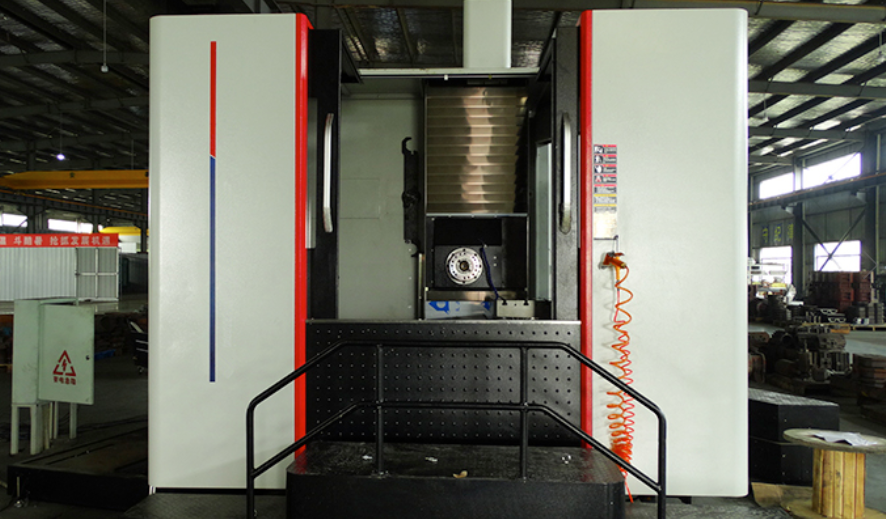
How to Vet Custom CNC Automation Equipment Before an RFQ
What is Custom CNC Automation Equipment?
Custom CNC Automation Equipment is a production system designed around a specific machining process, part family, material-handling method, and output requirement. It may combine a CNC lathe or machining center with a robot, gantry loader, pallet system, fixture, parts conveyor, inspection device, safety enclosure, and control interface. The buyer’s main risk is not simply selecting the wrong robot or machine tool. It is selecting suppliers whose project responsibilities overlap, leave gaps, or are never written into the RFQ. A machine tool builder may understand cutting performance but not robot reach. A robot company may size the robot but not confirm chip management, workholding, or machining cycle stability. An automation integrator may coordinate the cell but need machine-tool data from another party. Before issuing an RFQ, define who owns each engineering decision, who proves performance, and who supports the system after startup. This prevents a common dispute: every supplier claims the fault sits outside its scope.
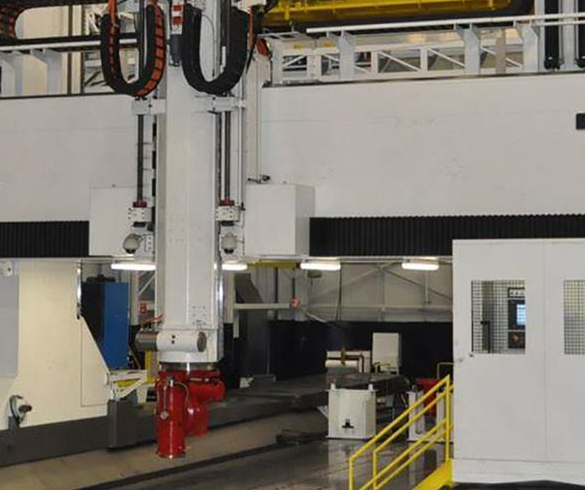
The main types are machine-tending cells, palletized machining systems, bar-fed turning systems, multi-machine robotic cells, and dedicated production lines. A machine-tending cell generally loads and unloads one CNC machine. It fits stable parts that require repeatable handling and enough unattended machining time to justify automation. A palletized system exchanges fixtures or workpieces rather than handling each loose component. It suits parts that need secure clamping or several machining operations. Bar-fed turning automation supports long or small-diameter stock in a CNC lathe, while multi-machine cells route parts between operations. Dedicated lines fit established products with predictable volumes, but they are less suitable when part designs, batch sizes, or process sequences change frequently.
Compare Automation Types Against Your Production Need
Choose the cell concept from the part and process first, not from a preferred automation brand. A sourcing team should compare the required loading method, part variation, machining cycle, inspection requirement, and future product changes. The right option is the one that solves the present bottleneck without forcing the factory into a fixed process it cannot maintain. For example, a single robot serving one machining center can be appropriate when machine utilization is the concern and the part family is stable. It does not fit a project where fixtures change constantly, parts have poor pickup surfaces, or upstream and downstream operations still cause the main delay.
| Automation option | Best-fit production condition | Buyer should request | Limit or poor-fit condition |
|---|---|---|---|
| Single-machine robot tending | One CNC machine has repeatable loading and unloading work | Robot reach study, gripper concept, part presentation layout, projected cell sequence | Not ideal if the part mix changes often or manual inspection controls quality |
| Gantry or linear loader | Parts follow a fixed travel path and floor layout permits overhead or linear movement | Loader envelope, maintenance access plan, loading-cycle study | Less flexible when future machines or part routes may change |
| Pallet handling cell | Workpieces need fixture-based clamping or several machining faces | Pallet interface, fixture responsibility, pallet identification method, recovery procedure | Not suitable when manual loading remains the real production constraint |
| Bar-fed turning system | Turning parts start from suitable bar stock | Material range, bar remnant handling, chip control plan, unattended-run assumptions | Not a substitute for secondary-operation automation |
| Multi-machine cell | Several CNC processes must be linked with controlled part flow | Routing logic, buffer capacity, machine interface list, fault recovery sequence | Higher coordination risk when suppliers do not appoint one technical owner |
Ask each shortlisted company to identify what it is offering: the machine tool, the robot package, the full integration scope, or coordination with third parties. This is a basic qualification question, yet it changes the commercial comparison. A supplier that quotes only a CNC machine should not be scored as if it owns robotic safety validation or production acceptance. Likewise, an integrator should not claim machining capability without confirmed data from the machine-tool builder. If your project requires a turning platform, compare the process requirement with a cnc lathing machine configuration before selecting the loading method.
Assess the Features That Affect Cell Acceptance
The most useful supplier discussion focuses on interfaces and acceptance evidence. A robot cell can look complete in a layout drawing yet still fail at startup because the gripper cannot tolerate part variation, chips interfere with location surfaces, or the machine door and controller signals are not coordinated. Request a documented list of inputs, outputs, alarm conditions, manual-recovery actions, and required operator interventions. The supplier should state what information is assumed and what information has been verified. This distinction matters when production data is incomplete.
- Cycle study: Ask for the sequence being measured. It should distinguish CNC cutting time, loading time, unloading time, door movement, inspection, and expected recovery actions. A favorable study that omits loading or inspection time cannot be used as a production commitment.
- Part presentation: Confirm how raw parts arrive at the cell and how finished parts leave it. Trays, bins, pallets, conveyors, and manual staging each create different handling risks.
- Gripper approach: Require a concept that shows pickup surfaces, orientation control, part detection, and the response if a part is missing or misaligned. A generic two-finger gripper illustration is not enough for approval.
- Workholding ownership: Specify whether the machine builder, fixture supplier, integrator, or buyer supplies the fixture. The chosen party must also own clamp-confirmation signals and interference checks.
- Safety validation: Define the applicable site rules and the responsible party for safety documentation, guarding, interlocks, emergency-stop logic, and acceptance checks. This should be agreed before purchase order release, not during installation.
- Fault recovery: Ask what happens after a dropped part, interrupted cycle, robot alarm, low material level, or machine alarm. A cell that requires specialist intervention for routine recovery may create a new bottleneck.
For machining projects, the CNC platform also matters. MAKCNC supplies CNC lathing machines, CNC machining centers, and CNC machines. Its machine structures commonly use high-strength cast iron, including resin-sand castings, with aging treatment intended to maintain rigidity and long-term accuracy. Core transmission components such as ballscrews and guideways commonly use high-precision components from Taiwan or Germany. These facts are relevant when an automated cell depends on repeated loading and machining stability, but they do not replace a cell-specific cycle study or safety review. For prismatic work, a buyer can examine a professional cnc machining center solution alongside the planned robot interface and fixture arrangement.
Use This Responsibility Matrix Before You Request Quotes
The buyer should nominate one party as the accountable cell owner, even when several suppliers contribute equipment. The table below is an RFQ-ready starting point. It does not assume that every CNC machine supplier or robot supplier provides integration services. Instead, it forces the project team to assign ownership in writing. The “recommended owner” is the party that should accept accountability; subcontracting is acceptable only when that accountable party remains responsible for the deliverable.
| Work item | Recommended accountable owner | Supporting parties | Required RFQ evidence |
|---|---|---|---|
| Cycle studies | Lead integrator or appointed cell owner | Machine builder, robot supplier, buyer process engineer | Time-element breakdown, assumptions, part data, proposed output basis |
| Gripper design | Lead integrator | Robot supplier, fixture supplier, buyer | Part-contact concept, gripping method, orientation control, replacement-part scope |
| Safety validation | Lead integrator or qualified safety scope owner named in the contract | Buyer site safety team, robot supplier, machine builder | Guarding concept, interlock list, emergency-stop architecture, site acceptance responsibilities |
| FAT | Lead integrator for the complete cell | Machine builder, robot supplier, buyer witness team | Factory acceptance test criteria, sample-part responsibility, pass and fail conditions |
| Installation | Lead integrator when it sells the complete cell | Buyer facilities team, machine builder, local contractors | Site layout, utilities list, lifting plan, commissioning boundaries, schedule dependencies |
| Post-startup support | Contractually named primary support owner | Machine builder, robot supplier, buyer maintenance team | Response route, warranty boundaries, spare-parts responsibilities, escalation process |
A common mistake is to assign factory acceptance testing to the machine builder when the actual requirement is acceptance of the complete automated cell. The machine builder can verify its machine, but a full FAT must also test loading, gripping, guarding, machine signals, finished-part discharge, and fault recovery. Another mistake is accepting a “turnkey” label without a list of exclusions. The word has little procurement value unless it is tied to acceptance criteria, documents, and a named accountable party.
Build an RFQ That Exposes Gaps Before Contract Award
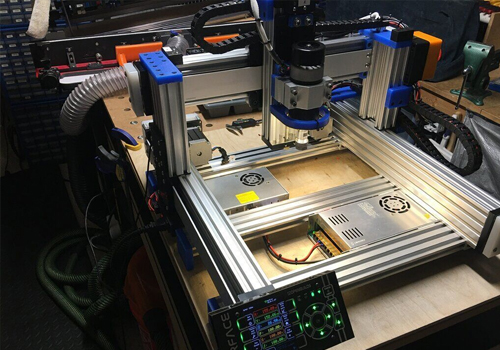
A useful RFQ does not ask only for a price and delivery date. It gives all bidders the same facts, then asks them to show their assumptions. This makes bids easier to compare and reduces the chance that one supplier has quietly excluded fixtures, safety work, programming, or commissioning. MAKCNC was established in 2016 and has multiple production lines and sample-machine inventory. For buyers considering a CNC machine as part of the cell, those are practical points to discuss during supplier qualification. They do not prove automation scope by themselves, so the RFQ should still assign the cell responsibilities listed above.
- Define the part family. Provide drawings, material, weight, dimensions, tolerances, surface requirements, expected variants, and photographs of raw and finished parts.
- Map the existing process. List each manual task from incoming parts to finished-part packing. Identify the actual bottleneck rather than assuming the machine loading step is the cause.
- Set acceptance conditions. State which parts will be used, what operating sequence will be demonstrated, who supplies material, and how faults will be handled during the test.
- Assign responsibility. Include the matrix in every RFQ and require bidders to mark any item they will not own. Unmarked items should not be treated as included.
- Request exclusions separately. Ask for exclusions covering civil work, electrical supply, air supply, chip removal, tooling, fixtures, programming, operator training, and local compliance activities.
- Compare commercial terms. Separate machine price, automation hardware, integration engineering, safety equipment, installation, and post-startup support. A lower initial quote may exclude items required for production release.
Price variation is driven by more than robot size. The number of machine interfaces, fixture complexity, gripper changes, guarding, inspection, buffer storage, installation conditions, and acceptance testing all affect the total scope. A basic machine-loading concept may require limited engineering, while a multi-machine system with routing logic and traceability requires more design and validation work. Do not ask suppliers for an identical fixed price if the part, cycle target, and acceptance method are not yet defined. Ask for a clearly labeled budgetary proposal, followed by a revised offer after technical assumptions are agreed.
Check Cooperation Terms and Support Boundaries
Support terms should be reviewed at the same time as technical scope. MAKCNC states that single-machine purchasing is available with no hard minimum order quantity, while larger purchases may receive improved commercial terms for price, delivery, or service. This can suit a buyer that wants to validate one machine platform before expanding a wider production plan. It does not automatically mean that a one-machine order includes a custom automation cell, robot, or integration engineering. Those items need written confirmation.
The stated manufacturing lead time is generally one to six months, and the usual warranty is 12 months after complete-machine acceptance, with lifetime paid service available. Some tender projects may specify a longer free warranty, including three years. A mature service network typically commits to an eight-hour response and on-site fault handling within 48 hours. These terms should be confirmed for the exact machine, installation region, automation scope, and contract. For an integrated cell, ask whether the warranty covers only the CNC machine or also the robot, gripper, safety hardware, controls, and integration programming. One support contact is preferable, but only if that contact has contractual authority to coordinate all involved suppliers.
How MAKCNC Fits a CNC Automation Shortlist
MAKCNC is a CNC machine supplier for buyers assessing CNC lathing machines, machining centers, and related customized equipment. The company’s machine configurations are intended for applications where rigidity, repeated machining performance, and process coordination matter. For mold-industry precision work, its advanced system integration can include intelligent feedforward and quadrant-transition compensation intended to address issues such as overcut marks, quadrant marks, and chatter patterns. For multi-variety, small-batch production, the equipment can support machining multiple faces in one clamping where the process and configuration permit it. These are machine and process considerations; they should be evaluated separately from robot-cell ownership and site safety obligations.
When adding MAKCNC to an automation shortlist, request clarity on the supplied machine scope, controller interface, available machine signals, fixture assumptions, sample-part availability, and the party accountable for complete-cell acceptance. Review about makcnc for company information, then use the responsibility matrix to define whether MAKCNC, a separate integrator, or your appointed project lead owns each automation deliverable. This approach gives procurement, manufacturing engineering, and maintenance teams a shared basis for comparing proposals.
FAQ of CNC Automation Integrator Vetting
Should the machine tool builder always be the automation integrator?
No. A machine tool builder may be the right partner when it explicitly accepts responsibility for the complete cell, including interface coordination, safety validation, FAT, installation, and post-startup support. It is not the right assumption when the supplier only quotes the machine. The buyer should assess the documented scope, not the supplier category.
What should be proven during a factory acceptance test?
The FAT should prove the agreed cell sequence using agreed parts or representative samples. At minimum, the documented test should cover material loading, gripping, machine communication, machining-cycle interaction, finished-part discharge, safety functions, alarms, and planned recovery actions. If the buyer’s actual parts are unavailable, the proposal should identify this limitation and define what will be verified later at site acceptance.
When is a custom system a poor choice?
A custom system may be a poor fit when annual demand is uncertain, product geometry changes frequently, the process is not stable, or the main constraint is tooling, inspection, staffing, or material availability rather than machine handling. In those situations, a flexible manual or semi-automatic process may be more appropriate until the production requirement is clearer.
If you are evaluating a CNC machine and automation project, contact MAKCNC with your part drawings, process sequence, and required responsibility scope for the latest quotation.