How to Qualify a Horizontal Machining Center Supplier
What is a Horizontal Machining Center?
Horizontal machining center supplier qualification means checking, before you ask for a formal quotation, whether a company can ship the machine, commission it, and answer a breakdown call after the contract is signed. Buyers who skip this step usually regret it months later, when a spindle alarm or a missing spare part stops a production line and nobody picks up the phone.
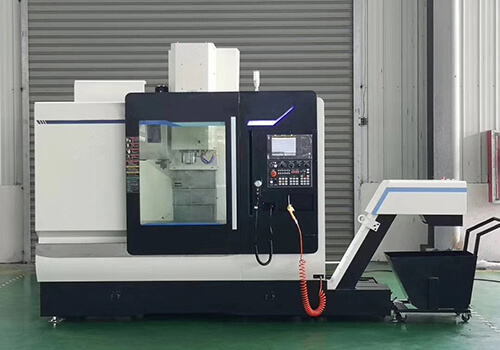
A horizontal machining center (HMC) is a CNC machine tool whose spindle axis lies horizontal. The workpiece is usually clamped on a pallet or rotary table, so several faces can be cut in one setup. Chips fall away from the cut instead of piling on the part, which helps in deep pockets and long production runs. The vertical and horizontal cnc machine center range differs mainly in this spindle orientation and in how fixtures and chips are handled. A supplier, in this context, is the company that sells the machine and carries the obligations around it: delivery, installation support, warranty, spare parts and service.
Types of Horizontal Machining Centers
Machines are grouped by how the workpiece is presented and how much automation surrounds them. The type you choose changes what you must ask the supplier, because each one adds different parts that can fail and different spares you may need to hold.
| Type | Best fit | Question to ask the supplier |
|---|---|---|
| Single-table HMC with rotary indexing | Low to medium volume, mixed parts | Who supports the rotary table and its drive? |
| Dual-pallet HMC | Repeat batches where loading must not stop cutting | How is the pallet changer serviced and its spares supplied? |
| HMC with pallet pool or cell automation | Unattended or high-volume work | Who is responsible for integration and acceptance? |
| Customized configuration | Special fixtures, travels or controls | What is the documented scope and drawing approval? |
This table is a screening aid, not a rating. If your part family does not need pallet changes, a simpler type avoids paying for components you will never use.
Features of a Horizontal Machining Center to Verify
Feature sheets look alike across suppliers, so ask for the construction facts that decide long-term accuracy. For MAKCNC, the brief supplied to us lists these points, and you can use them as a model for what a supplier should be able to state clearly.
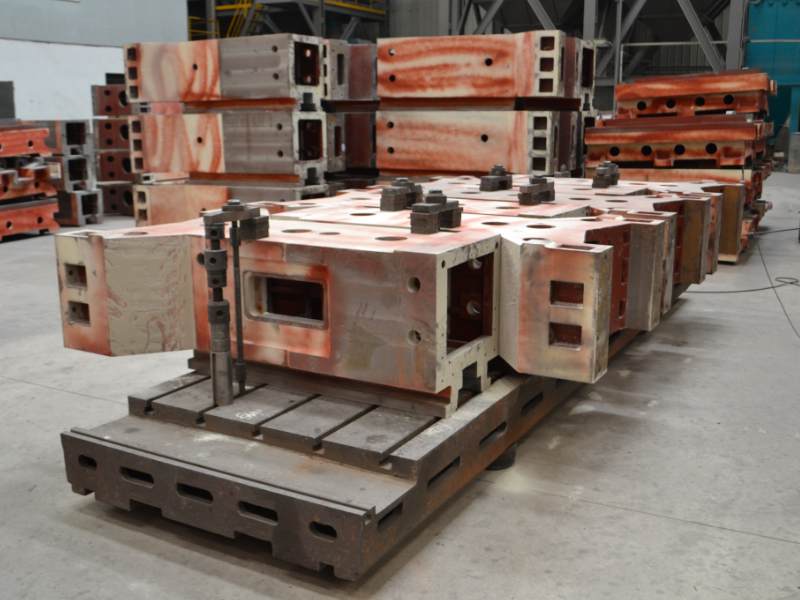
- Structure: high-strength cast iron, typically resin sand castings, with aging treatment to keep accuracy and rigidity over time.
- Drive components: ball screws and guideways from Taiwanese or German brands, with the system tuned as a whole rather than assembled from parts.
- Control functions: intelligent feedforward and quadrant-jump compensation, aimed at problems such as overcut marks, quadrant marks and chatter marks in mold work.
- Setup efficiency: multi-face machining in one clamping for multi-variety, small-batch production.
Ask every candidate to name the component brands in writing, by model. A supplier who answers "equivalent brand" is leaving room to substitute later. This guidance does not replace a test cut on your own part, which remains the better proof of accuracy.
Horizontal Machining Center Applications
HMCs are chosen where one part needs several faces cut with minimal re-clamping. Typical examples include housings, valve bodies, gearbox cases, engine and pump components, and fixture-mounted multi-part tombstone work. Mold and die shops use them where surface marks and repeatability matter, which is why the compensation functions above are relevant to that sector.
Match the machine to your batch pattern. If you produce many variants in small lots, one-clamping multi-face machining reduces setup time and handling error. If you run mostly flat plates or shallow pockets, a vertical machine such as the vertical cnc machining center mv1160 may serve you at lower cost. An HMC is not automatically the better purchase.
Horizontal Machining Center Price Factors
We do not quote a single price range here, because configuration moves the figure too far for a generic number to be useful. What you can do is separate the price into parts and ask each supplier to quote them the same way.
| Cost element | What moves it | What to confirm |
|---|---|---|
| Base machine | Travels, spindle, table size, casting and component brands | Full model specification in the quotation |
| Pallet changer and automation | Number of pallets, loading method | Included or optional |
| Control system and options | Controller brand, compensation functions | Which functions are standard |
| Warranty terms | Standard 12 months after acceptance, longer if a tender requires it | Start date and exclusions |
| Quantity | No hard MOQ, but multi-unit orders can earn better price, delivery or service terms | Written volume terms |
| Delivery time | Configuration and stock; lead times of 1 to 6 months apply | Date tied to the specification |
The cheapest line item is rarely the cheapest machine. Spare parts pricing and service travel are paid after the purchase, so ask for them before it.
Supplier Qualification for Spare Parts, Remote Service and Commissioning
This is the screening step most product pages never cover. Run every shortlisted company through the same three tests, and treat any answer that is vague as an open item rather than a pass.
| Area | Evidence that counts | Weak signal |
|---|---|---|
| Spare-parts availability | A written list of wear and critical parts for your model, with stated supply arrangements | "Parts available on request" with no list |
| Remote service response | A stated response time, such as 8 hours, and onsite arrival within 48 hours as described for MAKCNC's service network | No time stated, or only a general email address |
| Documented commissioning support | A written scope covering installation checks, acceptance criteria and who attends | Verbal promises, or support only on payment of extra fees not quoted |
Treat the response commitment as a contract item. A service network that "typically" responds in 8 hours is good, but ask that the figure appear in the agreement, and ask what applies in your country. Our brief does not supply a documented spare-parts stocking policy or a standard commissioning procedure, so those two points are matters to agree with us in writing, as you should with any supplier.
Screening steps
- Request the model specification and the named component brands.
- Ask for the critical spare-parts list and how each part would reach your site.
- Ask for the stated service response time and where the nearest service resource is.
- Agree the commissioning scope, acceptance criteria and responsibilities before payment.
- Confirm warranty start date, duration and whether paid lifetime service is offered after expiry.
Common screening mistakes
- Comparing machines on price alone and leaving service terms for "later".
- Accepting a standard 12-month warranty without checking your tender, which may require three years of free warranty.
- Assuming a stocked demo machine proves local parts stock.
- Leaving acceptance criteria undefined until the machine arrives.
Horizontal Machining Center User Guide for Installation
Installation problems are easiest to prevent while the order is still open. Before shipment, confirm the foundation drawing, power and air supply, and the unloading route into your plant. A machine cast from aging-treated iron still needs a level, stable base to hold its accuracy.
On arrival, record packing condition with photographs before unpacking. During commissioning, check leveling, axis motion and the pallet change cycle, then run an agreed test part against the acceptance criteria you set earlier. The 12-month warranty typically starts at acceptance, so the acceptance record matters as a legal document, not just a checklist. Keep the operator manual and parameter backup in two places. Train at least two operators, so one absence does not stop the machine.

MAKCNC as a Horizontal Machining Center Supplier
MAKCNC was founded in 2016 and works with multiple production lines and a stock of demo machines. Our quality system is certified to ISO 9001:2015. Our range covers the CNC lathing machine, CNC machining center and wider CNC machine categories, including the cnc lathing machine line for turning work. There is no hard minimum order quantity, so a single machine can be purchased, while multi-unit orders may carry better price, delivery or after-sales terms. Standard delivery runs from 1 to 6 months depending on the configuration.
Warranty is normally 12 months from machine acceptance, with paid lifetime service afterward. Some tender projects require longer, such as three years free warranty, and we can discuss those requirements case by case. Our service network aims for a response within 8 hours and onsite arrival within 48 hours. To learn more about the company, read about makcnc, or see the global cnc machiery cases of makcnc for installed examples.
FAQ of Horizontal Machining Centers
What should I ask a supplier before requesting a quotation?
Ask for the full specification with named component brands, a critical spare-parts list, the stated service response time, and the commissioning scope. These four items let you compare quotations on equal terms.
Is a minimum order quantity required?
MAKCNC has no hard MOQ, and one machine can be purchased. Orders of several units can bring better commercial terms, which you should have written into the quotation.
How long does delivery take?
Lead time ranges from 1 to 6 months. The exact date depends on configuration and stock, so ask for the date to be tied to your final specification.
What warranty applies?
The usual warranty is 12 months after acceptance, with paid lifetime service afterward. Projects with stricter tender rules, such as three years free warranty, should be raised at the start of discussions.
If you are shortlisting an HMC source and want to test our terms against your list, send your part drawings, annual volume and warranty requirement to makcnc and ask for the latest quotation.