
Industrial CNC Lathing Equipment for Bar Automation
Industrial CNC Lathing Equipment represents a core technology in modern manufacturing, performing precise material removal to create cylindrical or complex rotational parts. For manufacturers weighing production efficiency against initial investment, the question often arises: are these machines truly ready for advanced bar automation, and when does such an upgrade make economic sense? This decision hinges on evaluating production volumes, part complexity, material costs, and the operational differences between traditional chucking and automated bar-fed workflows. Understanding these distinctions is crucial for optimizing throughput, minimizing waste, and ensuring the long-term profitability of your machining operations.
What is Industrial CNC Lathing Equipment?
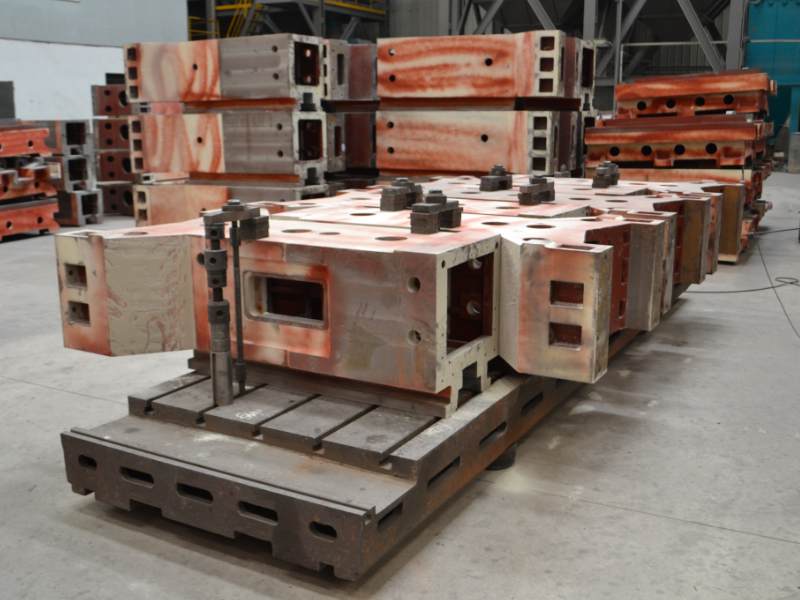
Industrial CNC Lathing Equipment refers to sophisticated machine tools controlled by computer numerical control (CNC) systems, designed to produce parts by rotating a workpiece against a cutting tool. Unlike manual lathes, CNC systems offer unparalleled precision, repeatability, and the ability to execute complex machining operations autonomously. These machines are fundamental across various industries, from automotive and aerospace to medical device manufacturing and mold making. Modern industrial CNC lathes are engineered for high rigidity and stability, often incorporating advanced materials like high-strength cast iron, specifically resin sand castings, which are then aged to ensure long-term accuracy and structural integrity. This foundational strength is critical for maintaining tight tolerances and reducing vibration during heavy cutting, directly impacting part quality and tool life. The integration of high-precision components, frequently sourced from reputable Taiwanese or German brands for critical transmission parts like ball screws and linear guides, further enhances the overall performance and reliability of the entire system.
Types of Lathe Automation: Bar-Fed Versus Chucking Workflows
The choice between bar-fed and chucking workflows is a fundamental decision for any CNC lathing operation, directly impacting unattended-run time, material utilization, and labor costs. Chucking involves manually loading individual workpieces, typically pre-cut slugs or castings, into the lathe chuck. This method is common for larger parts, lower volumes, or when parts require secondary operations on a different machine. Bar-fed automation, conversely, integrates a bar feeder system that continuously supplies raw bar stock into the lathe's spindle. This allows for continuous, uninterrupted machining of multiple parts from a single length of bar, significantly boosting productivity for high-volume, smaller-part production. The strategic decision to adopt one over the other must consider several operational metrics, which are detailed in the comparison below. MAKCNC designs its high quality and durable cnc lathe machines with the versatility to support both workflows, ensuring adaptability to diverse production strategies.
| Feature | Bar-Fed Workflow | Chucking Workflow |
|---|---|---|
| Unattended-Run Time | High. Can run for hours without operator intervention, producing numerous parts from a single bar length. Ideal for lights-out manufacturing. | Low. Requires operator presence for each part load/unload cycle, limiting continuous production. |
| Remnant Loss | Moderate to High. A portion of the bar stock (remnant) at the end of each bar cannot be machined, leading to material waste. Can be minimized with advanced bar feeders. | Low. Minimal material waste per part, as each slug is sized for the specific component. |
| Changeover Frequency | Low. Changes occur only when a bar length is fully consumed, or a different bar diameter/material is needed. | High. Requires frequent loading of individual workpieces, leading to more frequent operator interaction and potential for setup time per part. |
| Operator-Touch Points | Low. Primarily for loading new bar stock, tool changes, and quality checks. Operators can manage multiple machines. | High. Direct interaction for loading/unloading every part, impacting labor efficiency. |
Evaluating Automation Suitability for Your Production Needs
Determining whether bar automation is suitable for your manufacturing process involves a careful assessment of several factors beyond just machine capability. Part geometry is a primary consideration; parts that are long, slender, and can be machined entirely from bar stock are ideal candidates. Short, complex parts requiring multiple setups might still benefit from chucking or even a professional cnc machining center solution. Production volume is another critical element; bar automation typically yields significant returns for high-volume, recurring orders where the initial investment in a bar feeder can be amortized quickly. For multi-variety, small-batch production, MAKCNC's industrial CNC lathing equipment offers particular advantages, including the ability to complete multi-face machining in a single clamping operation. This capability drastically reduces setup times and improves accuracy for diverse part runs. Furthermore, material cost and type play a role. While bar-fed systems can have higher remnant waste, the labor savings and increased throughput can often outweigh this for expensive materials, especially in high-volume scenarios. Our machines are designed to meet the high-precision machining demands of industries such as mold manufacturing, integrating intelligent feedforward and over-quadrant jump compensation technologies to effectively mitigate common issues like overcut marks, quadrant marks, and chatter marks. This ensures that even the most intricate parts maintain exceptional surface finish and dimensional accuracy.
Precision and Durability in Industrial CNC Lathing Equipment
The performance of any industrial CNC lathing equipment, particularly when integrated into an automated workflow, relies heavily on its core design and the quality of its components. MAKCNC emphasizes durability and precision through its manufacturing standards. The machine bodies are predominantly constructed from high-strength cast iron, such as resin sand castings, which undergo a meticulous aging treatment. This process is crucial for relieving internal stresses, thereby ensuring long-term dimensional stability and consistent accuracy over the machine's operational lifespan. Such robust construction is essential for minimizing vibration during high-speed or heavy-duty cutting, which directly impacts surface finish and tool life. Furthermore, the selection of core transmission components, including ball screws and linear guides, is critical. We primarily utilize high-precision components from leading Taiwanese or German brands, known for their engineering excellence and reliability. Our manufacturing process focuses on system synergy, ensuring that all components work in optimal concert to achieve peak whole-machine performance. This commitment to quality and precise engineering allows our industrial CNC lathing equipment to consistently deliver the tight tolerances and superior surface finishes required for demanding applications, including advanced mold making and precision component production.
Choosing a Reliable Industrial CNC Lathing Equipment Supplier
Selecting the right supplier for your industrial CNC lathing equipment is as critical as choosing the machine itself. A reliable partner ensures not only high-quality machinery but also comprehensive support throughout its lifecycle. MAKCNC, established in 2016, operates multiple production lines and maintains a stock of sample machines, allowing for efficient production and timely delivery. We are an about makcnc ISO9001:2015 certified manufacturer, reflecting our commitment to stringent quality management systems across all operations. While typical lead times range from 1 to 6 months, we understand diverse procurement needs. We do not impose a strict minimum order quantity; a single unit can be purchased. However, for bulk purchases, such as multiple machines, customers can benefit from more favorable commercial terms regarding pricing, delivery schedules, and after-sales service. Our standard warranty typically covers 12 months post-machine acceptance, with lifetime paid service available. For specific tender projects requiring extended coverage, such as three years of free warranty, we are equipped to meet those demands. Our mature after-sales network is designed for rapid response, usually committing to an 8-hour response time and on-site resolution within 48 hours for critical issues, minimizing downtime and protecting your investment.
Common Questions About Industrial CNC Lathing Equipment and Automation
Manufacturers often have specific questions when considering industrial CNC lathing equipment and its automation potential. Here are answers to some frequently asked questions:
- What is the typical lead time for MAKCNC's industrial CNC lathing equipment?
Our standard lead time typically ranges from 1 to 6 months, depending on the specific machine configuration and current production schedule. We strive to meet your project timelines efficiently. - Is there a minimum order quantity (MOQ) for MAKCNC machines?
No, there is no strict minimum order quantity. You can purchase a single machine if that meets your needs. However, for larger orders involving multiple units, we can offer more advantageous commercial terms regarding pricing, delivery, and after-sales support. - How does MAKCNC ensure the precision of its CNC lathing equipment?
We ensure precision through several key aspects: utilizing high-strength cast iron (resin sand castings) that undergoes aging treatment for long-term stability, incorporating high-precision core transmission components from Taiwan or Germany, and focusing on system synergy during assembly to optimize overall machine performance and accuracy. - What kind of after-sales support does MAKCNC provide?
We offer a 12-month warranty post-acceptance for the entire machine, along with lifetime paid service. Our established after-sales network aims for an 8-hour response time and a 48-hour on-site resolution for technical issues, ensuring minimal disruption to your operations. - Can MAKCNC's machines handle high-precision parts for challenging industries like mold making?
Yes, our industrial CNC lathing equipment is specifically designed to address the high-precision machining demands of industries such as mold manufacturing. We integrate advanced technologies like intelligent feedforward and over-quadrant jump compensation to effectively eliminate common issues like overcut marks, quadrant marks, and chatter marks, ensuring superior part quality.
If you are exploring options for industrial CNC lathing equipment and its automation capabilities, we invite you to connect with MAKCNC. Our team is ready to provide tailored advice and a detailed quotation to match your specific production requirements. Submit your project details for expert guidance on optimizing your machining workflow.