Verify HMC Supplier Documents Before You Buy
Choosing a horizontal cnc machining center is a significant capital investment. The machine's specifications on paper are only part of the story; the real proof of quality, performance, and reliability lies in the supplier's documentation. Overlooking this verification step is a common and costly mistake, leading to equipment that fails to meet production tolerances or experiences premature downtime. Before signing a purchase order, a thorough review of key technical and quality documents is essential to protect your investment and ensure the equipment you receive matches the equipment you were promised.
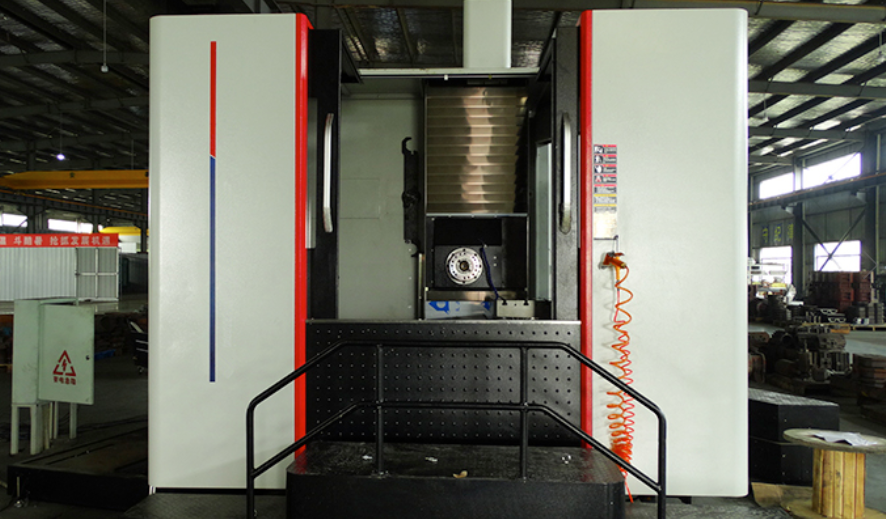
A horizontal machining center, or HMC, is a type of machine tool that machines parts using rotary cutters while the workpiece is mounted on a table that rotates around a vertical axis (B-axis). The spindle, which holds the tool, is oriented horizontally. This configuration is ideal for machining large, heavy, or boxy workpieces, as gravity helps with chip evacuation and the integrated rotary table allows for machining on multiple faces of a part in a single setup. This reduces setup time and improves accuracy compared to moving the part between multiple machines.
Core Construction Features That Define HMC Performance
The long-term accuracy and durability of an HMC are determined by its fundamental design and the quality of its components. While control systems and software are important, the mechanical integrity of the machine forms its foundation. Buyers should scrutinize these physical attributes, as they directly impact machining quality and the machine's operational lifespan.
At MAKCNC, we build our machines for sustained precision and rigidity. Key structural elements, including the machine bed and columns, are made from high-strength cast iron, such as resin sand castings. These components undergo a critical aging treatment process to relieve internal stresses. This ensures the machine frame will not deform over time, maintaining its geometric accuracy for years of heavy use. A stable machine body is the first requirement for producing accurate parts.
The performance of any HMC also depends heavily on its core transmission components. We integrate high-precision ball screws and linear guideways from established brands in Taiwan and Germany. These elements are responsible for the precise, smooth, and rapid movement of the axes. By focusing on the synergy between these high-quality components and our rigid machine structure, we achieve superior overall performance, minimizing backlash and ensuring repeatable positioning accuracy. This attention to mechanical detail is what separates a reliable production machine from one that constantly requires recalibration.
Key Documents for Your Pre-Purchase Supplier Audit
Requesting and reviewing specific documentation before finalizing a purchase from any Horizontal Machining Center supplier is a critical due diligence step. These documents provide objective evidence of the machine's quality, performance, and compliance with specifications. A supplier who readily provides this information demonstrates transparency and confidence in their product. Below is a checklist of essential documents to demand.
- Factory Acceptance Test (FAT) Report Samples: The FAT is a series of tests performed at the manufacturer's facility to verify the machine is built and operating correctly before shipment. Ask for a sample report for a similar machine. Look for detailed results of spindle runout tests, tool change cycle times, axis movement speed and acceleration tests, and coolant system pressure checks. A thorough FAT report proves the supplier has a structured quality control process.
- Machine Geometry and Positioning Test Records: These are the most important documents for verifying a machine's precision. Insist on seeing laser interferometer and ballbar test reports. A laser interferometer report provides definitive proof of linear positioning accuracy and repeatability for each axis. A ballbar test report reveals the machine's dynamic performance and geometric accuracies, such as squareness and circularity. These tests identify issues that are impossible to see with the naked eye.
- Electrical and Pneumatic Schematics: Reviewing these drawings allows your maintenance team to verify the brands of key components like PLCs, drives, contactors, and valves. It confirms the design follows logical safety standards and helps you plan for future maintenance and spare parts inventory.
- Operating and Maintenance Manuals: The quality of the user manuals reflects the supplier's commitment to after-sales support. A good set of manuals will be detailed, well-written in English, and provide clear instructions for operation, programming, routine maintenance, and troubleshooting.
- Packing Specifications and Photos: Especially for international exports, proper packing is non-negotiable. Request the supplier's standard packing procedure, including details on anti-rust protection (e.g., VCI film), moisture control (desiccants), and how the machine is secured within the crate or container to prevent movement during transit.
Common Applications and Industry Fit
Horizontal machining centers excel in specific production environments where their unique capabilities provide a distinct advantage. Their inherent design makes them particularly well-suited for industries that demand both high precision and high productivity, especially for complex or bulky parts.
A primary application is in the mold and die industry. Manufacturing complex molds requires exceptional accuracy to avoid surface imperfections. Our HMCs integrate advanced control features like intelligent feed-forward and quadrant glitch compensation. These technologies directly address and solve common machining defects such as overcut marks, quadrant lines, and chatter marks, resulting in a superior surface finish that reduces or eliminates the need for manual polishing.
Additionally, HMCs are heavily used in sectors like automotive, aerospace, and heavy equipment manufacturing. The ability to machine multiple sides of a large component—such as an engine block, transmission housing, or hydraulic manifold—in a single clamping is a major benefit. This one-and-done capability minimizes accumulative errors from re-fixturing, shortens overall cycle times, and simplifies production logistics. This makes our machines an excellent choice for a professional cnc machining center solution, especially for shops engaged in high-variety, small-to-medium batch production runs.

Understanding HMC Pricing and Total Cost of Ownership
The initial purchase price of a horizontal machining center is only one part of its total cost. Buyers should evaluate the total cost of ownership (TCO), which includes not just the upfront investment but also long-term operational and maintenance expenses. The machine's configuration, component selection, warranty, and the supplier's service level all influence the TCO.
Several factors affect the initial price:
- Machine Size and Travel: Larger X, Y, and Z axis travels and pallet sizes naturally increase the cost.
- Spindle Specifications: Higher spindle speeds, torque ratings, and taper types (e.g., BT40, BT50) impact the price.
- Control System: The choice between controllers like Fanuc, Siemens, or Mitsubishi affects the final quote.
- Tool Magazine Capacity: A larger automatic tool changer (ATC) adds to the cost but can increase production efficiency.
However, focusing solely on the purchase price can be shortsighted. The long-term costs are where a quality supplier provides value. Our standard commercial terms are designed to protect your investment. We typically provide a 12-month warranty after machine acceptance and offer lifetime paid service. Our mature after-sales network commits to an 8-hour response time for inquiries and, if needed, can have a technician on-site within 48 hours to handle any issues. This level of support minimizes costly downtime and is a critical factor in calculating the true TCO.
Choosing MAKCNC as Your Partner
When selecting a Horizontal Machining Center supplier, you need a partner with proven processes and a commitment to quality. Established in 2016, MAKCNC operates multiple production lines from our ISO 9001:2015 certified facility. We maintain an inventory of sample machines, allowing us to demonstrate our capabilities directly.
We understand the needs of modern manufacturing. We have no rigid minimum order quantity; you can procure a single machine to meet your needs. For businesses looking to scale, we offer more favorable commercial terms on pricing, delivery, and service for bulk purchases. With lead times typically ranging from one to six months, we can align our production with your project schedule. Our focus on high-quality materials and world-class components ensures that every machine we deliver is built for performance and longevity.
Frequently Asked Questions about Sourcing HMCs
What is a typical lead time for a new horizontal machining center?
Lead times can vary based on machine configuration and current production schedules. At MAKCNC, our standard lead time is between one and six months from order confirmation to readiness for shipment.
Is there a minimum order quantity (MOQ)?
We do not enforce a strict MOQ. You can purchase a single machine. However, placing a larger order for multiple units can provide access to better commercial terms, including potential benefits in pricing, delivery priority, or extended after-sales service.
What kind of warranty and after-sales support can I expect?
Our standard package includes a 12-month warranty on the entire machine, effective after final acceptance at your facility. We also provide lifetime paid technical support and service. Our service network is structured to provide an initial response within 8 hours and on-site support within 48 hours for critical issues.
If you are looking for a supplier that provides transparent documentation and builds machines for long-term performance, please contact our technical team to discuss your project requirements and request a detailed quotation.