CNC Horizontal Machine FAQs for Global Buyers
What Is a CNC Horizontal Machine
CNC horizontal machine refers to a computer-controlled machine tool with a horizontally oriented spindle. The cutting tool approaches the workpiece from the side while the part is secured on a worktable or pallet. This layout allows manufacturers to machine several faces of a component without removing it from the fixture. Fewer repositioning steps can reduce setup errors, shorten handling time, and improve dimensional consistency from one batch to the next. A typical unit may include three linear axes, a rotary table, an automatic tool changer, coolant delivery, chip removal equipment, and a CNC control system. For international buyers, the term may also describe a horizontal CNC machining center, a CNC horizontal mill, or a production machine configured for materials such as cast iron, aluminum, steel, or alloy components.
Unlike a basic manual mill, the machine follows programmed instructions for spindle speed, feed rate, tool movement, cutting depth, and coolant use. The operator loads the program, installs the correct tools, confirms the work offset, and inspects the first finished part. Once the process is proven, the equipment can repeat the same operation across dozens or thousands of components. Horizontal spindle positioning is particularly useful for deep cavities, side holes, cross-drilled features, and multiple vertical walls. Chip gravity also helps: chips can fall away from the cutting area rather than building up at the bottom of a deep pocket.
Types of Horizontal CNC Machines
Buyers will find several types of horizontal machines, and the right choice depends on part size, material, production volume, and the number of faces requiring machining. A standard horizontal machining center is well suited to prismatic parts such as pump bodies, gearbox housings, valve components, and industrial brackets. A four-axis model adds rotary positioning, allowing the workpiece to turn between operations. A five-axis configuration can reach angled surfaces and curved features with fewer setups. Heavy-duty versions use larger beds, stronger spindle systems, and higher load capacity for steel castings and large mechanical parts. Compact models are often chosen for small components, electronic hardware, and automotive parts where floor space is limited.
There is also a practical distinction between a production-focused horizontal machining center and a general-purpose CNC horizontal mill. The first may include pallet changers, tool magazines with 24, 32, or more positions, probing systems, and automatic chip conveyors. The second may be configured for flexible job-shop work, maintenance production, or lower-volume orders. MAKCNC can review the required travel range, table dimensions, spindle power, and control configuration based on the buyer’s drawings. When comparing models, do not judge a machine by maximum travel alone. The working envelope, pallet size, tool access, spindle taper, and permitted workpiece weight must all suit the actual production plan.
Features of Horizontal Machining Equipment
Quality horizontal machining equipment is built around stable cutting, repeatable positioning, and practical operator access. A rigid bed and column help reduce vibration when the tool engages steel or cast iron. Linear guides, precision ball screws, and a properly supported spindle help maintain positioning accuracy during long production runs. Many machines use BT40, BT50, or equivalent spindle tapers. BT40 is common for medium-sized components, while BT50 is often preferred for heavier cuts and larger tools. Buyers should also ask about spindle speed, motor torque, tool capacity, rapid traverse, table load, and the control brand. These specifications show how the machine is likely to perform in real production, not merely how it looks in a catalog.
Multi-sided machining is one of the main reasons to choose a horizontal layout. A component can be clamped once, then drilled, milled, bored, and tapped on several faces through programmed movements or rotary indexing. This reduces repeated manual alignment. A pallet changer can further separate loading from cutting: the operator prepares one pallet while the machine works on another. Probe systems can check part location and tool condition, helping prevent scrap caused by an incorrect offset. Chip conveyors and filtered coolant tanks also deserve attention. For castings and materials that generate heavy chips, the removal system should be sized for the expected daily workload.
What Is a CNC Horizontal Machine Used For
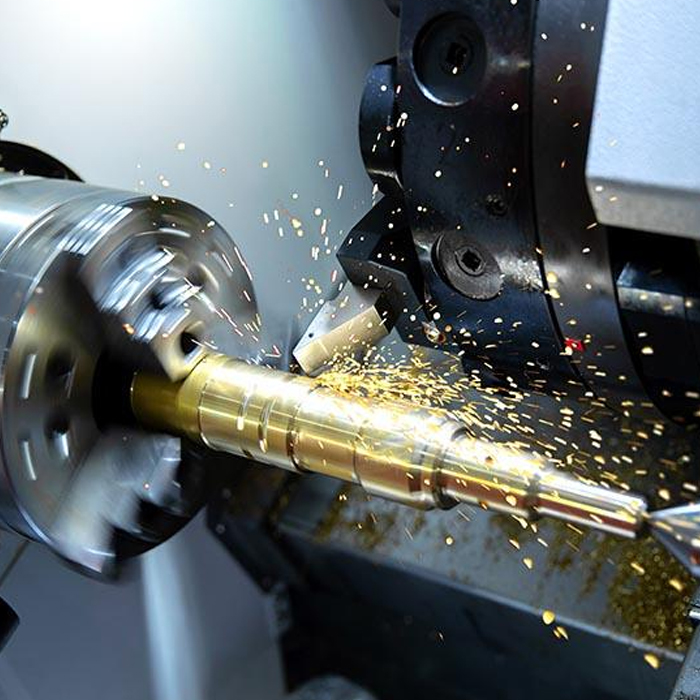
The answer to “what is a CNC horizontal machine used for” is broad, but the common purpose is multi-face machining of medium and large workpieces. Manufacturers use these machines to produce bearing bores, mounting holes, recessed pockets, threaded holes, sealing surfaces, and precision reference faces. A gearbox housing may require machining on its top, front, rear, and side surfaces. With a suitable fixture and rotary table, these operations can often be completed with fewer re-clampings than on a vertical machine. The result is a practical combination of productivity and dimensional control, especially when several intersecting features must remain aligned.
Horizontal machines are also well suited to repeat production. A supplier producing 300 pump housings per month may use fixed locating pins, a hydraulic fixture, and a proven tool list to keep each cycle consistent. A job shop, by contrast, may prefer a flexible setup with probing and a larger tool magazine. In both cases, the machining strategy should be based on the part drawing. Deep pockets may benefit from horizontal chip evacuation. Long boring operations may require a supported tool arrangement. Aluminum parts may call for higher spindle speed and strong coolant flow, while hardened steel requires suitable tooling, torque, and carefully controlled cutting parameters.
What Industries Use Horizontal CNC Machines
The question “what industries use horizontal CNC machines” has several answers. Automotive manufacturers use them for transmission cases, engine components, steering parts, and suspension housings. Aerospace suppliers machine structural fittings, landing gear components, and complex aluminum parts, subject to required certifications and inspection systems. Pumps, valves, compressors, and hydraulic equipment are common applications in the energy and fluid-control sectors. Agricultural machinery makers use horizontal equipment for gearboxes, axle housings, and heavy brackets. Mining and construction equipment companies often need large work envelopes and high spindle torque for cast iron and steel components. MAKCNC’s recommended machining center series can also support production for communication equipment, consumer electronics tooling, chemical equipment, and geological exploration machinery.
Oilfield component production is another important application. Flanges, valve bodies, connectors, and related parts may require accurate bores, bolt patterns, and sealing faces. A horizontal machining center can complement MAKCNC CNC oilfield lathes when a part needs both turning and side milling. In a typical factory, the lathe creates the outside diameter, thread, or internal bore, while the horizontal center handles cross holes, pockets, and bolt-circle features. This combined approach can reduce outside processing and simplify production planning. Buyers should provide sample drawings, material grades, monthly quantities, and inspection requirements when requesting a recommended configuration.
How Does a CNC Horizontal Machining Center Work
To answer “how does a CNC horizontal machining center work,” start with the part program. The CNC control reads coded instructions that define tool paths, spindle rotation, feed movement, coolant commands, and tool changes. The workpiece is secured to a pallet or fixture, and the operator establishes the work coordinate system. The spindle then rotates the selected tool and moves along the machine’s X, Y, and Z axes. On many horizontal designs, X and Z control horizontal travel while Y controls vertical movement, although the exact axis arrangement varies by manufacturer. A rotary fourth axis may turn the workpiece to a programmed angle, exposing another face for machining.
Before production begins, the operator checks tool length offsets, cutter diameter compensation, fixture clearance, and the program’s first moves. The machine may perform facing, rough milling, finish milling, drilling, boring, tapping, and chamfering in one cycle. Cutting data is selected according to tool material, workpiece grade, feature size, and the required surface finish. After machining, the part is measured with gauges, a coordinate measuring machine, or an integrated probing cycle. The results can be used to adjust offsets and maintain process stability. That is why training, fixture design, tool selection, and inspection planning matter as much as the machine’s advertised spindle speed.
CNC Horizontal Machine Price Factors
The price of a CNC horizontal machine varies because each machine can be configured for different production demands. A compact three-axis model with a small tool magazine costs less than a large machine with a 50-taper spindle, automatic pallet changer, rotary table, probing, chip filtration, and a high-capacity coolant system. Travel range, table size, maximum load, spindle motor power, spindle speed, control system, positioning accuracy, and tool magazine capacity all affect the quotation. The requested voltage and electrical standard also matter for export orders. A machine shipped to a 380 V, 50 Hz facility may require a different electrical arrangement from one destined for a 460 V, 60 Hz plant.
Freight, packing, insurance, port handling, installation support, and local duties should be considered alongside the equipment price. Buyers comparing a CNC machine export quotation should confirm what is included: standard tooling, spare parts, manuals, remote commissioning, operator training, and warranty terms. It is sensible to request a technical specification sheet rather than comparing headline prices alone. A lower-priced model may have fewer tools, a smaller pump, limited chip handling, or a spindle unsuitable for the intended material. For an accurate offer, send MAKCNC the part drawings, material, target cycle time, annual quantity, preferred control, destination port, and any required certifications.
CNC Horizontal Machine Installation and User Guide
Installation begins with the factory floor. The foundation must support the machine’s weight and absorb cutting forces without excessive movement. Leave adequate space for pallet loading, door opening, maintenance access, chip conveyor removal, and electrical inspection. Before commissioning, verify incoming power, grounding, compressed-air quality, coolant requirements, the lifting plan, and ambient temperature. The machine should be leveled according to the supplier’s instructions, then checked for axis movement and spindle runout. If the buyer uses a pallet changer or hydraulic fixture, those systems should be tested together rather than treated as separate accessories.
For daily operation, inspect lubrication levels, coolant concentration, air pressure, chip collection, and tool condition before starting a batch. Use a dry run or single-block mode when proving a new program. Confirm that the tool number, offset, work coordinate, and fixture location match the setup sheet. Never remove chips by hand while the spindle or conveyor is moving. Schedule periodic checks for ball screws, guideways, filters, belts, spindle cooling, and electrical cabinets. A clear maintenance record helps identify wear before it affects part quality. MAKCNC can discuss operation manuals, spare-parts packages, remote technical support, and training arrangements for overseas users.

MAKCNC as a CNC Machine Supplier
MAKCNC supplies CNC Lathing Machine, CNC Machining Center, and CNC Machine solutions for industrial buyers that need repeatable metalworking capacity. The company’s six main product lines include vertical machining center series, horizontal machining center series, gantry processing series, heavy-duty cutting lathe series, CNC oilfield lathe series, and CNC lathe series. Its recommended machining center, CNC oilfield lathe, and manual oilfield lathe products are designed for demanding work in automotive, aerospace, petroleum, minerals, agricultural machinery, chemical, water conservancy, communication, and consumer electronics applications.
When working with MAKCNC, buyers can discuss machine structure, spindle arrangement, axis travel, fixture plans, control systems, voltage, packaging, and export documentation before placing an order. A short application review can often prevent expensive mismatches, particularly when a buyer is moving from vertical milling to horizontal production. For a quotation, send drawings or photographs of the parts, material information, desired output, and destination country. If you are looking for a reliable CNC machine supplier, contact MAKCNC for the latest product quotation and a configuration matched to your factory.
FAQ of CNC Horizontal Machines
What is a CNC horizontal machine used for
A CNC horizontal machine is used for computer-controlled milling, drilling, boring, tapping, and related operations on workpieces that need machining on multiple faces. Its horizontal spindle is well suited to deep cavities, side holes, gearbox housings, pump bodies, valve parts, automotive components, and heavy industrial castings. Because the workpiece can remain on one fixture while the machine reaches several sides, the process can reduce manual repositioning and improve feature alignment. Final suitability depends on travel, spindle power, table load, fixture design, tooling, and the material being cut.
How does a CNC horizontal machining center work
A CNC horizontal machining center works from a programmed tool path. The operator secures the part, sets the work offset, loads the tools, and verifies the program. The spindle rotates the cutter horizontally while the machine moves the tool or workpiece along its linear axes. A rotary table or fourth axis can index the part to another face. The machine may then complete roughing, finishing, drilling, boring, and tapping without releasing the component. Sensors, probing systems, and tool offsets help maintain position and size. Correct setup and inspection are still necessary for safe, accurate production.
What industries use horizontal CNC machines
Automotive, aerospace, oilfield, energy, pump and valve, agricultural machinery, mining, construction equipment, chemical processing, communication equipment, and consumer electronics industries all use horizontal CNC machines. The equipment is especially useful where parts have several intersecting faces, large bores, deep pockets, or repeated production requirements. Manufacturers may pair a horizontal machining center with a CNC lathe to complete both turning and milling operations. The best model depends on component dimensions, material, production quantity, tolerance, surface finish, and the factory automation plan.
What information should a global buyer send for a quotation
Send the part drawing or three-dimensional model, material grade, maximum workpiece size, finished tolerance, surface-finish target, monthly or annual quantity, and preferred cycle time. Also state the destination country, factory voltage, available lifting equipment, preferred CNC control, and whether installation or operator training is required. Photos of the existing fixture and details of related lathes can also be helpful. This information allows the supplier to recommend spindle power, travel, pallet size, tool capacity, chip removal, coolant equipment, and optional probing with fewer assumptions.
Choose the Right Horizontal Machine for Your Production
A horizontal CNC machine can improve access to multiple workpiece faces, reduce repeated setups, and support stable production of housings, castings, valve bodies, automotive parts, and other complex components. The right purchase depends on more than spindle speed. Review the complete working envelope, fixture plan, tooling, chip handling, control system, installation conditions, service terms, and export scope. MAKCNC offers CNC machining centers, CNC lathing machines, CNC oilfield lathes, and related CNC machines for international B2B customers. If you are searching for a horizontal machining solution supplier, contact MAKCNC to receive the latest product quotation.