Calculating the 5-Year Ownership Cost of a Servo Drive Slant Bed CNC Lathe
Overlooking the long-term operational costs before purchasing a Servo Drive Slant Bed CNC Lathe is a common and expensive mistake. While a low initial acquisition price is tempting, it often conceals higher expenses in energy consumption, maintenance, and lost productivity over the machine's life. A comprehensive evaluation requires looking beyond the invoice to understand the true Total Cost of Ownership (TCO). This analysis is essential for ensuring your investment delivers the best financial return, not just the lowest upfront cost.
At MAKCNC, we believe an informed buyer is a successful partner. Our manufacturing processes, certified under ISO 9001:2015, are geared towards producing machines that offer long-term value. This guide provides a framework for calculating the five-year cost of ownership, helping you make a more strategic procurement decision.
Beyond the Sticker Price: A 5-Year TCO Model for Servo-Driven Lathes
The initial purchase price is only one part of the total investment. A Total Cost of Ownership (TCO) model provides a more accurate financial picture by projecting expenses over a set period, typically five years. A servo-driven machine, while potentially having a higher initial cost than a conventional one, often demonstrates significant savings in other areas. The following breakdown helps quantify these differences.
| Cost Category | Key Factors and Considerations for Servo-Driven Lathes |
|---|---|
| 1. Acquisition Price | This is the initial capital outlay. While important, it should be weighed against all other factors. Servo systems and higher-precision components may increase this initial cost compared to basic models. |
| 2. Servo-Axis Energy Use | Unlike conventional drives that consume power continuously, servo motors only draw significant power during motion (acceleration, cutting). This "power-on-demand" operation can lead to substantial energy savings, especially in production environments with frequent tool changes or part loading/unloading cycles. |
| 3. Ballscrew and Drive Maintenance | High-quality servo systems offer precise control, reducing mechanical shock and vibration. This leads to less wear on critical transmission components like ballscrews and linear guides. Our machines utilize high-precision components from established Taiwanese or German brands, further extending service life and minimizing unplanned maintenance. |
| 4. Downtime Exposure | Downtime costs include lost production, operator wages, and emergency repair fees. The reliability of servo drives, combined with a rigid machine structure, reduces the frequency of failures. Our standard after-sales service, which promises an 8-hour response and 48-hour on-site support, is designed to minimize the financial impact of any unexpected issues. |
| 5. Productivity Gains | Servo drives enable faster acceleration, deceleration, and positioning speeds. This directly shortens cycle times. For high-volume production, even a few seconds saved per part can accumulate into hundreds of extra production hours per year, generating significant additional revenue. |
Core Components and Build Quality: The Foundation of Long-Term Performance
A machine's long-term reliability and accuracy are determined by its foundational design and the quality of its components. These factors directly impact maintenance costs and downtime exposure, which are critical variables in the TCO calculation. A lower-priced machine may compromise on these elements, leading to higher costs over its operational life.
At MAKCNC, we prioritize structural integrity and component quality. Our approach includes:
- High-Strength Cast Iron Body: The machine frame is the backbone of any CNC lathe. We utilize high-strength cast iron, such as resin sand castings, for superior rigidity and vibration damping. This robust construction is essential for maintaining accuracy during heavy cutting.
- Internal Stress Relief: All major castings undergo an aging treatment process. This critical step relieves internal stresses within the material, preventing deformation over time and ensuring the machine maintains its geometric accuracy for years of service.
- Premium Drive Components: The core transmission parts, including ballscrews and linear guides, are sourced from reputable high-precision brands in Taiwan or Germany. These components are selected not just for their individual specifications but for their ability to work in synergy, delivering optimal performance and longevity for the entire system.
This commitment to build quality, validated by our ISO 9001:2015 certified processes, ensures that our machines provide a stable and reliable platform, minimizing the risk of premature wear and costly repairs. When evaluating a high quality and durable cnc lathe, always inquire about the materials, treatment processes, and brand of core components.
Precision Machining: How Advanced Systems Reduce Scrap and Rework
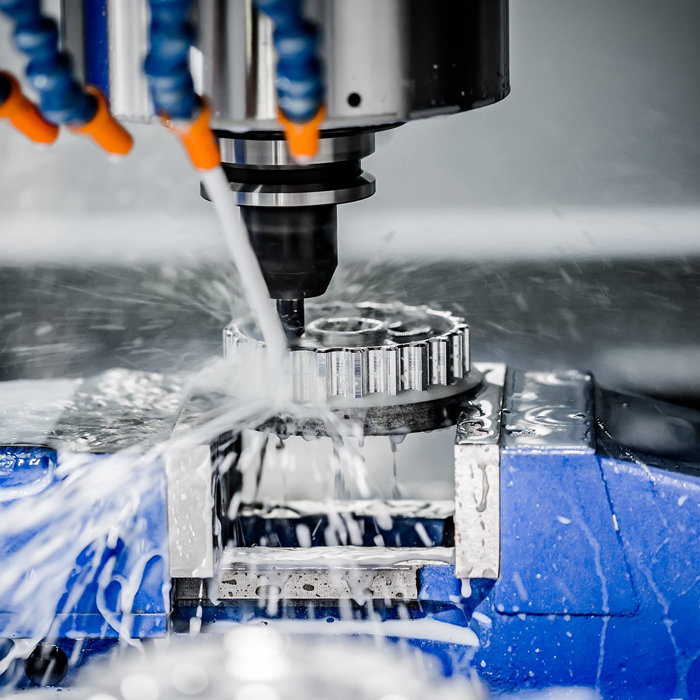
In high-precision industries like mold and die manufacturing, part quality is paramount. Common machining defects such as over-cutting, quadrant marks (visible lines at 90-degree transitions), and chatter marks lead directly to financial losses through scrapped parts, rework labor, and delayed deliveries. These issues are often symptoms of a poorly integrated control and drive system.
Our advanced system integration addresses these challenges head-on. By focusing on the synergy between the CNC controller and the servo drives, we implement technologies that enhance machining precision and surface finish. Key features include:
- Intelligent Feedforward Control: This technology anticipates the tool path command, proactively adjusting motor torque to minimize tracking errors. It is highly effective at preventing the "over-cutting" that occurs when an axis overshoots its target position during rapid changes in direction.
- Quadrant Glitch Compensation: When an axis changes direction (e.g., from X+ to Y+), a momentary pause can leave a visible mark on the workpiece. Our systems use specific compensation algorithms to ensure a smooth, continuous transition across quadrants, eliminating these tell-tale marks.
- Vibration Suppression: The system actively monitors and suppresses resonant frequencies that cause tool chatter. This results in a superior surface finish and extends tool life, reducing both tooling costs and the need for secondary polishing operations.
Furthermore, for businesses engaged in high-mix, low-volume production, the ability to complete multi-sided machining in a single clamping is a significant advantage. This capability, inherent in well-designed lathes, reduces setup time, minimizes the potential for operator error, and improves overall part accuracy.
Structuring Your Purchase: MOQ, Lead Time, and Warranty Terms
Understanding a supplier's commercial terms is just as important as evaluating their technical specifications. These policies affect your project timeline, cash flow, and long-term operational security. We aim for transparency and flexibility in our cooperation terms to support a wide range of business needs.
Buyer's Decision Checklist: Commercial Terms
Use this checklist when discussing your project with potential suppliers:
- Minimum Order Quantity (MOQ): Is there a rigid MOQ? For many projects, especially initial investments or specialized applications, purchasing a single machine is necessary. We have no hard MOQ; you can procure a single unit. However, be aware that bulk purchases may unlock more favorable commercial terms regarding price, delivery, or after-sales support.
- Lead Time: What is the realistic delivery timeline from order confirmation to shipment? Our standard lead times range from 1 to 6 months, depending on machine complexity and current production schedules. Clear communication on this point is essential for your project planning.
- Warranty and After-Sales Service: What is covered, for how long, and how responsive is the support team? Our standard warranty covers the entire machine for 12 months after acceptance. We also offer lifetime paid service. For specific tenders or projects, extended warranties (e.g., three years) can be negotiated. Our after-sales network is committed to an 8-hour response time and 48-hour on-site arrival for troubleshooting.
As a professional about makcnc, we have been building CNC machines since our establishment in 2016. Our multiple production lines and inventory of sample machines allow us to accommodate diverse project requirements and timelines.
To receive a detailed proposal tailored to your specific machining application and production goals, please submit your drawings or contact our technical team for a consultation.