
Custom CNC Machine Tools FAT Criteria Reduce Rework Before Final Payment
What Is Custom CNC Machine Tools?
Custom CNC Machine Tools are CNC lathes, machining centers, or related machine configurations adapted to a buyer’s part geometry, production method, tooling arrangement, automation requirements, and acceptance conditions. For procurement teams, the main sourcing risk is not simply selecting a machine category. The larger risk is accepting equipment that appears correct during a short factory visit but later creates rework, unstable cycle times, chip blockage, or repeated setup adjustments at the production site. A useful purchase specification therefore defines both the machine and the proof required before final payment. For a custom-built CNC machine, a factory acceptance test, often called FAT, should convert part-level risks into agreed evidence. That evidence may include measured workpieces, program records, tool lists, chip photographs, and documented machine conditions. This approach helps buyers compare supplier proposals on operating results rather than on broad promises alone. Custom CNC Machine Tools should be specified around the actual workpiece, the planned process, and the inspection method that will be used to accept the result.
Types of Custom CNC Machine Tools for Different Part Risks
Custom CNC Machine Tools generally fall into three practical sourcing groups: CNC lathing machines for rotational parts, vertical machining centers for accessible multi-face milling work, and horizontal machining centers for parts that benefit from different workholding orientation and multi-face processing. The right type depends on where the part risk occurs. A turned shaft, sleeve, flange, or threaded component may require a CNC lathing machine when the primary machining features are concentric with the workpiece axis. A prismatic part with pockets, drilled holes, and top-face features may suit a vertical machining center. A component requiring several faces to be machined in one clamping may justify evaluation of a professional CNC machining center solution, including horizontal configurations where appropriate. The conclusion is simple: select the machine family from the part’s dominant process risk, not from the supplier’s standard catalog layout. This does not apply when the buyer has not finalized part drawings or annual production planning; in that case, first define the process assumptions before requesting a fixed configuration.
- CNC lathing machines: Suitable when diameter control, concentric features, facing, boring, threading, and turning are central to the part process.
- Vertical machining centers: Suitable when operators need direct access to fixtures, tools, and workpieces during development or lower-volume production.
- Horizontal machining centers: Suitable for planned multi-face work where fewer reclamping steps may reduce accumulated positioning risk.
Features to Specify Before Comparing Supplier Quotations
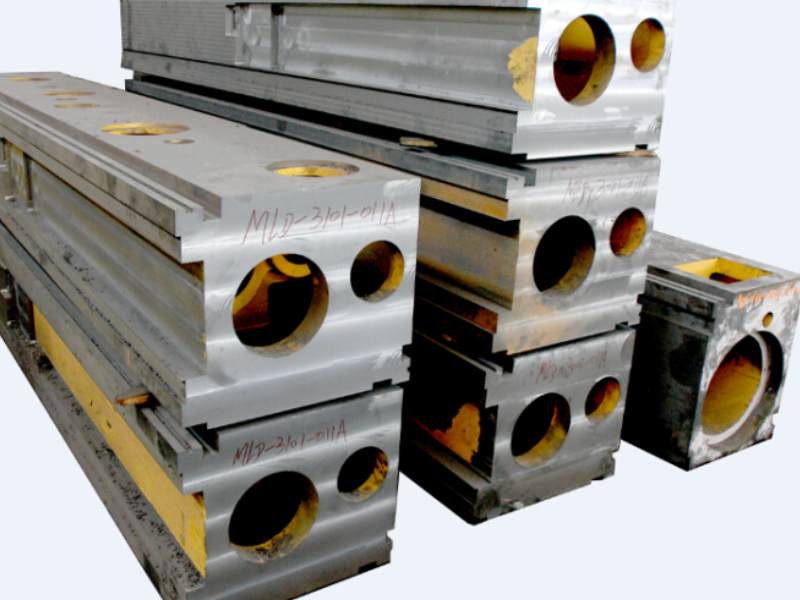
When comparing Custom CNC Machine Tools, buyers should specify the features that affect acceptance evidence rather than only requesting a list of optional equipment. MAKCNC states that machine bodies commonly use high-strength cast iron, including resin-sand castings, with aging treatment intended to support long-term accuracy and rigidity. Core transmission components such as ballscrews and guideways may use high-precision components from Taiwan or Germany. These are useful sourcing details, but they are not a substitute for part testing. For mold-related precision work, advanced control integration may include intelligent feedforward and quadrant transition compensation intended to address common problems such as overcut marks, quadrant marks, and vibration patterns. For varied, smaller-batch work, a machine may also be planned to complete multiple faces in one clamping. Buyers should ask which of these functions applies to the quoted process and how it will be demonstrated. Do not require a function merely because it sounds desirable. If a feature does not address a stated part, fixture, tool, or inspection risk, it can increase project complexity without improving the acceptance result.
| Specification Item | What the Buyer Should Define | Why It Matters | When It May Not Apply |
|---|---|---|---|
| Machine structure | Required rigidity, workpiece condition, fixture load, and intended process | Structure affects stability during the agreed cutting operation | When only light finishing operations are planned |
| Control functions | Required compensation or feed-related functions linked to a sample part issue | Prevents vague requests for advanced functions without an acceptance method | When the part process does not show related surface or contour risks |
| Workholding | Fixture concept, clamping surfaces, datum strategy, and loading method | Many tolerance failures originate in clamping rather than machine motion | When the buyer supplies a finalized fixture independently |
| Chip handling | Material form, expected chip shape, coolant method, and removal path | Chip accumulation can interrupt machining and damage finished surfaces | When the agreed sample operation produces minimal chips |
Custom CNC Machine Tools Applications and Process Fit
Custom CNC Machine Tools are used where standard equipment needs process-specific workholding, tooling, control settings, or machine layout to match a defined production task. Mold-related machining is one example because contour quality and surface behavior can affect later finishing work. Another application is multi-variety, small-batch production, where completing several faces in one clamping can reduce handling and datum-transfer exposure. The practical recommendation is to write the application section of an RFQ around the part family rather than around a generic industry label. State the material condition, raw-part form, key machined features, datum surfaces, tool type, fixture concept, target production sequence, and inspection points. This gives suppliers a usable basis for evaluating whether a CNC lathe or machining center should be configured differently. The limit is equally important: a sample part can demonstrate a defined process, but it does not automatically prove every future part variant. If future parts have different materials, wall thicknesses, tooling demands, or clamping conditions, list those separately as anticipated process families rather than treating one FAT sample as universal proof.
Turn Part Risks Into Measurable FAT Criteria Before Final Payment
The best way to reduce rework is to make factory acceptance testing a contractual proof process before final payment. For Custom CNC Machine Tools, the FAT should use the buyer’s agreed drawing, material condition, fixture method, tooling assumptions, CNC program, and inspection plan. A statement such as “machine must run stably” cannot be inspected consistently. Replace it with an observable criterion, a recording method, and a pass or fail rule agreed by both parties. The table below shows the action required: convert risks in cycle time, tolerance, repeatability, and chip evacuation into measurable FAT criteria. Each check matters because an accepted part produced once under unusual attention does not confirm that the planned process can be repeated. These criteria fit buyers who can provide representative drawings and process information before machine build. They do not replace incoming inspection or site acceptance when transport, local utilities, buyer-supplied fixtures, or production operators can alter the result after delivery.
| Part Risk | FAT Criterion to Add | Evidence Required | Why the Check Matters |
|---|---|---|---|
| Cycle time exceeds planning | Run the agreed CNC program using the approved tooling and record the start-to-finish cycle time for each accepted trial | Program version, tool list, recorded cycle-time log, and setup condition | Cycle time changes when tools, feeds, loading assumptions, or program versions change |
| Key dimensions drift outside drawing limits | Measure the agreed critical dimensions against the buyer-approved drawing and acceptance limits | Inspection report, measuring method, datum reference, and part identification | A verbal statement of accuracy does not show whether the actual part meets its drawing requirements |
| Results cannot be repeated | Machine repeated sample parts under the same documented setup and compare agreed dimensions and surface observations | Sequential part records, inspection reports, and unchanged program identification | Repeatability exposes risks from clamping, thermal behavior, tool condition, or process inconsistency |
| Chips interrupt the process | Observe chip movement during the agreed operation and document whether chips remain on the part, fixture, tool area, or removal route | Photos or video, chip condition record, and operator observations | Chip buildup can affect surface quality, tool life, machine stoppage, and operator intervention |
Step-by-Step FAT Procedure for Procurement Teams
- Issue the controlled drawing and identify the dimensions, surfaces, and features that determine acceptance.
- Confirm the sample material condition, raw-stock form, fixture arrangement, cutting tools, and CNC program revision.
- Set the cycle-time measurement point, such as program start through program end, before the FAT begins.
- Define the inspection equipment, datums, reporting format, and acceptance limits for each selected feature.
- Require repeated machining under the documented setup, then compare the recorded results.
- Observe chip evacuation during the agreed sample process and document any manual intervention.
- List deviations, corrective actions, retest requirements, and the documents required before final payment.
Custom CNC Machine Tools Price Factors and Commercial Terms
The price of Custom CNC Machine Tools can vary because the machine base is only one part of the supply scope. A buyer should request a quotation that separates the machine configuration from the project elements that affect engineering effort, workholding, tooling assumptions, control functions, inspection requirements, FAT sample preparation, packing, and service terms. This does not mean the lowest itemized price is always the best choice. A lower initial quotation may omit the FAT documentation needed to identify a process problem before shipment. The recommended approach is to compare quotations against one shared specification and one FAT matrix. MAKCNC states that single-machine purchasing is available without a hard minimum order quantity, while multi-machine purchases may receive improved commercial terms on price, delivery, or after-sales service. Stated delivery timing is generally within one to six months, subject to the project scope. Buyers should treat this as a planning reference, not as a substitute for a confirmed contractual schedule for the exact configuration.
| Cost Area | Question for the Supplier | Buyer Risk if Unclear |
|---|---|---|
| Base machine configuration | Which standard machine elements are included? | Scope gaps may appear after the purchase order is issued |
| Customization work | Which requested changes require engineering or special manufacturing? | Unplanned changes can affect schedule and acceptance scope |
| FAT preparation | Who provides material, fixtures, tools, programs, and measuring requirements? | The test may not represent the intended production process |
| After-sales support | What warranty and paid lifetime service terms apply to this order? | Support expectations may differ from the quoted scope |
Custom CNC Machine Tools User Guide for Installation and Acceptance
Before delivery, prepare an installation and handover plan that links the factory test to the buyer’s site conditions. Custom CNC Machine Tools should arrive with controlled records for the agreed machine configuration, FAT results, program revision, tooling list, fixture information, and inspection documents. At the buyer’s facility, compare the delivered configuration with the approved order before beginning production trials. Then verify utilities, foundation or placement conditions where applicable, safety arrangements, workholding, tool offsets, and the local inspection method. The buyer should run a site acceptance check using the same controlled sample process when possible, because shipping, reassembly, local coolant practice, different operators, and different raw material can change the outcome. Do not expand the acceptance scope casually during installation. New parts or revised tolerances should be documented as a change request, since they are not necessarily represented by the factory test. This procedure is especially useful for production teams handing over a project from procurement to manufacturing engineering.

Common FAT Mistakes That Lead to Rework
Several common mistakes make acceptance records less useful than they should be. The first is testing with a supplier-selected sample that does not represent the buyer’s hard-to-machine feature. The second is measuring only one finished part, which cannot show whether the documented setup produces consistent results. The third is recording a cycle time without identifying the CNC program revision, tools, or loading assumptions. The fourth is ignoring chip behavior because the finished dimensions look acceptable during a short test. The fifth is accepting general statements about accuracy while leaving the inspection method undefined. Custom CNC Machine Tools should be accepted against evidence that both commercial and engineering teams can review. A detailed FAT is most valuable when the buyer has a real production concern, such as a tight feature relationship, a difficult clamping surface, a surface-quality issue, or chip accumulation. It may be less necessary for a simple, low-risk operation with no special process requirements, but even then the machine configuration and basic handover documents should remain clear.
- Mistake: Asking for “high accuracy” without naming drawing features and inspection methods.
- Better action: Identify each acceptance feature, its datum, allowable drawing limit, and report format.
- Mistake: Treating the FAT as a machine demonstration only.
- Better action: Treat the FAT as proof of the agreed part process under documented conditions.
- Mistake: Releasing final payment before the evidence package is complete.
- Better action: Make the required records part of the payment-release condition.
MAKCNC as a Custom CNC Machine Tools Supplier
MAKCNC has operated since 2016 and has multiple production lines and sample-machine inventory. As a Custom CNC Machine Tools supplier, MAKCNC provides CNC lathing machines, CNC machining centers, and CNC machines for buyers evaluating standard and adapted equipment configurations. The company brief lists S09001:2015 and states a typical whole-machine warranty of 12 months after machine acceptance, with paid lifetime service. Certain tender projects may require a higher warranty scope, including three years of free warranty, so buyers should confirm the applicable terms in their quotation and contract. The stated after-sales network target is response within 8 hours and on-site fault handling within 48 hours, subject to the agreed service arrangement and location. Procurement teams can also review about MAKCNC when assessing supplier background, manufacturing scope, and available machine categories. The right supplier discussion should begin with drawings, part risks, and acceptance evidence rather than a request for a generic machine price.
FAQ of Custom CNC Machine Tools
Should FAT criteria be included in the purchase order?
Yes. Put the FAT sample requirements, inspection method, required records, retest procedure, and payment-release condition into the purchase order or an approved technical attachment. If these items remain only in email discussions, different teams may interpret them differently later.
Can one FAT part qualify every future part?
No. A FAT part proves only the agreed process conditions. If future parts use different materials, feature depths, clamping methods, tools, or tolerance demands, add those conditions to the specification or define a separate validation plan.
What should buyers provide before a supplier prepares an offer?
Provide controlled drawings, material details, target process, expected workholding method, key quality features, anticipated tooling, desired cycle-time basis, and the planned inspection approach. These inputs allow the supplier to propose an acceptance method that can be checked objectively.
When should final payment be released?
Release final payment according to the agreed commercial terms after the FAT evidence package, any approved corrective actions, and required acceptance documents have been completed. If site acceptance is part of the agreement, identify that condition clearly before ordering.
If you are looking for a Custom CNC Machine Tools supplier, contact MAKCNC with your part drawings and FAT requirements to request the latest quotation.