How a Slant Bed Lathe Compares With a Flat Bed
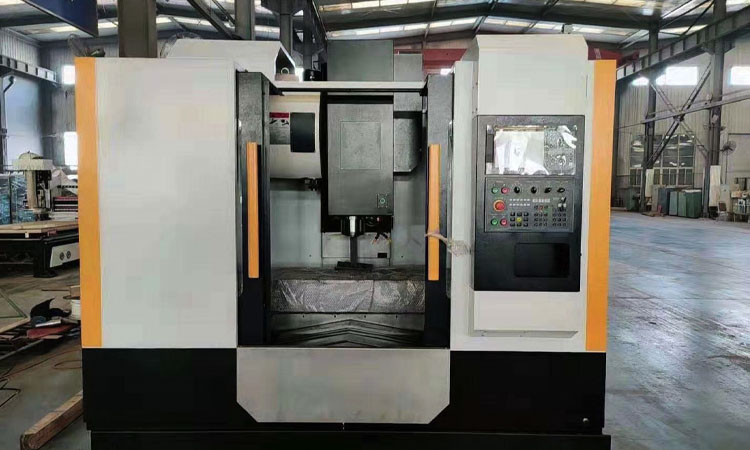
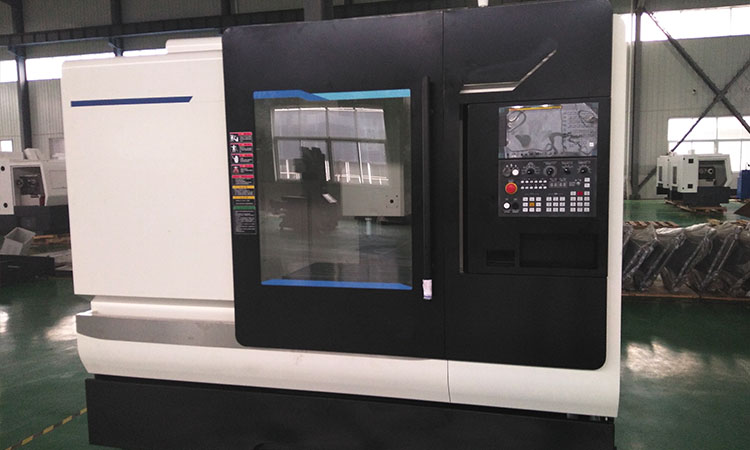
A cnc lathing machine is defined by its bed architecture, which dictates its performance characteristics. A Metal Turning Slant Bed CNC Lathe features a bed structure that is tilted, typically at a 30, 45, or 60-degree angle relative to the floor. This contrasts sharply with the traditional flat bed CNC lathe, which has a horizontal bed. This fundamental design difference is not merely aesthetic; it directly impacts rigidity, precision, chip removal, and the types of jobs for which each machine is best suited. Understanding these distinctions is the first step in specifying a machine that aligns with your production goals and budget.
At MAKCNC, we manufacture our machines in an ISO 9001:2015 certified facility, ensuring consistent quality control. The choice between a slant or flat bed depends entirely on your specific applications, from high-volume automated production to one-off custom parts. This guide provides a direct comparison to help you make an informed decision.
Slant Bed vs. Flat Bed: A Technical Comparison
The decision between these two lathe architectures hinges on five key operational factors. While one design may offer superior performance in one area, it may present limitations in another. The following table breaks down these differences to clarify which machine type is better suited for specific manufacturing environments.

| Feature | Slant Bed Lathe | Flat Bed Lathe |
|---|---|---|
| Rigidity & Damping | Generally higher. The angled design provides a wider, more stable base and allows gravity to assist in seating the turret and carriage firmly against the ways. This results in better vibration damping and higher machining accuracy, especially during heavy cuts. | Lower inherent rigidity compared to a slant bed of similar size. The horizontal layout can be more susceptible to lift-off forces during heavy cutting, potentially affecting surface finish and tool life. |
| Chip Evacuation | Excellent. Gravity is the primary advantage here. Chips and coolant naturally fall away from the workpiece and tooling into a chip conveyor below, preventing buildup that can cause thermal distortion or damage the surface finish. | Fair to poor. Chips tend to accumulate on the flat surfaces of the bed, tool post, and workpiece. This requires manual intervention or less effective flushing systems to clear, posing a risk to precision and increasing operator workload. |
| Work Envelope & Swing | Often more compact for a given swing diameter. However, the slant design can sometimes restrict the maximum turning diameter over the cross-slide compared to a flat bed with the same overall footprint. | Typically offers a larger effective swing diameter over the carriage for its machine size. The open, horizontal design provides more clearance, making it suitable for large, disc-shaped parts. |
| Tooling Access & Automation | Superior. The open front allows for easier operator access to the chuck and tooling. This design is also ideal for integrating automation like bar feeders and gantry loaders, as there are fewer physical obstructions. | More restricted. The operator often has to reach over the bed and carriage to access the chuck, which can be difficult with large workpieces. Automation integration is more complex due to the horizontal layout. |
| Suitable Part Families | High-precision, high-volume production. Ideal for complex parts requiring tight tolerances, superior surface finishes, and unattended operation. Common in automotive, aerospace, and medical manufacturing. | Large diameter, short-length parts (flanges, rings). Well-suited for job shops, repair work, and low-volume production where flexibility and manual operation are more important than cycle time. |
Key Factors Influencing Your Machine Investment
The initial purchase price is only one part of the total cost of a CNC lathe. Several factors influence the long-term value and suitability of either a slant bed or flat bed machine for your operations. Considering these elements upfront prevents costly mismatches between the machine's capabilities and your production needs.
- Component Quality: The precision and longevity of a machine are determined by its core components. We construct our machine bodies from high-strength cast iron, which undergoes an aging treatment to ensure long-term stability and rigidity. Furthermore, the use of high-precision drive components, such as ball screws and linear guides from established German or Taiwanese brands, directly contributes to sustained accuracy. A machine with lower-quality components may have a lower initial price but will likely incur higher maintenance costs and produce less accurate parts over time.
- Automation and Accessories: A slant bed lathe is designed for easy integration with automation systems like bar feeders, parts catchers, and robotic loading. If your goal is high-volume, "lights-out" manufacturing, the additional investment in a slant bed and its associated automation will yield a much faster return. A flat bed lathe, while less expensive, requires significant custom engineering to automate, often negating the initial cost savings.
- Required Precision and Complexity: For industries like mold making, where geometric accuracy is paramount, advanced control features are necessary. Our systems can integrate intelligent feed-forward and quadrant glitch compensation to eliminate common defects like over-cut marks and chatter. These capabilities, typically found on higher-rigidity slant bed machines, are essential for producing complex contours and fine finishes. A flat bed may struggle to achieve the same level of precision without multiple setups.
- Order Volume and Flexibility: Your business model should guide your machine choice. For high-mix, low-volume job shops, the flexibility and lower cost of a flat bed can be advantageous. For manufacturers with recurring part orders, the speed, precision, and automation-readiness of a slant bed machine will result in a lower cost per part. We recognize this diversity and have no strict minimum order quantity; single-unit purchases are possible, though better commercial terms are available for bulk orders.
Common Pitfalls When Choosing Between Lathe Architectures
Selecting the wrong machine architecture can lead to production bottlenecks, quality issues, and unforeseen costs. Awareness of common purchasing mistakes can help you specify a machine that truly fits your needs.
Here is a checklist of mistakes to avoid:
- Ignoring Chip Management: For materials that produce long, stringy chips (like aluminum or certain steels), poor chip evacuation on a flat bed lathe can quickly halt production. The constant need for manual clearing increases cycle times and introduces safety risks. For any high-volume application, the superior, gravity-assisted chip flow of a slant bed is a significant advantage.
- Underestimating the Need for Rigidity: A less rigid machine will exhibit more vibration during heavy cuts, leading to poor surface finish, reduced tool life, and dimensional inaccuracies. While a flat bed may handle light finishing passes, a slant bed's inherent structural stability is better for aggressive roughing and maintaining tight tolerances over long production runs. The use of aged, high-strength cast iron in our machine frames is a specific measure to preserve this critical rigidity for years.
- Overlooking Operator Ergonomics and Setup Time: Difficult access to the chuck, tooling, and tailstock increases setup time and operator fatigue. The open design of a slant bed generally provides easier access, speeding up tool changes and part loading/unloading. For shops with frequent changeovers, this can translate into a substantial increase in machine uptime.
- Purchasing Based on Swing Diameter Alone: A large swing over the bed on a flat bed lathe does not guarantee it can effectively machine a part of that size. The available horsepower, turret clearance, and overall rigidity must be sufficient for the intended cuts. It is more important to consider the entire work envelope and the machine's ability to handle the specific materials and depths of cut you require. A properly specified professional cnc machining center solution might even be a better fit for certain large, complex parts.
Frequently Asked Questions
Is a slant bed lathe always more accurate than a flat bed lathe?
Not necessarily, but its design offers a significant advantage. Accuracy is a function of the entire machine system: the rigidity of the frame, the quality of the ballscrews and bearings, the precision of the spindle, and the sophistication of the CNC control. However, a slant bed's superior rigidity and thermal stability (due to better chip and coolant flow) provide a more stable platform for achieving and maintaining high precision, especially under heavy thermal and cutting loads.
Can a flat bed lathe be used for automated production?
Yes, but it is generally more difficult and less efficient to automate than a slant bed. The horizontal bed can interfere with robotic arms or gantry loaders, and the poor chip control often requires additional systems (like high-pressure coolant or complex guarding) to ensure reliable, unattended operation. A slant bed is purpose-built for easy integration with common automation solutions.
What is the typical lead time and warranty for these machines?
Our standard lead times typically range from 1 to 6 months, depending on the machine's complexity and current production schedules. We offer a standard warranty of 12 months after machine acceptance, along with lifetime paid service support. For certain projects or tenders with specific requirements, extended warranties, such as three years of free coverage, can be arranged. Our after-sales network is structured to provide an initial response within 8 hours and have a technician on-site within 48 hours to address any issues.
Choosing the right lathe architecture is a critical decision. If you are evaluating options for a new metal turning application, our technical team can help analyze your part drawings and production requirements. Contact us to discuss your project and receive a detailed quote.