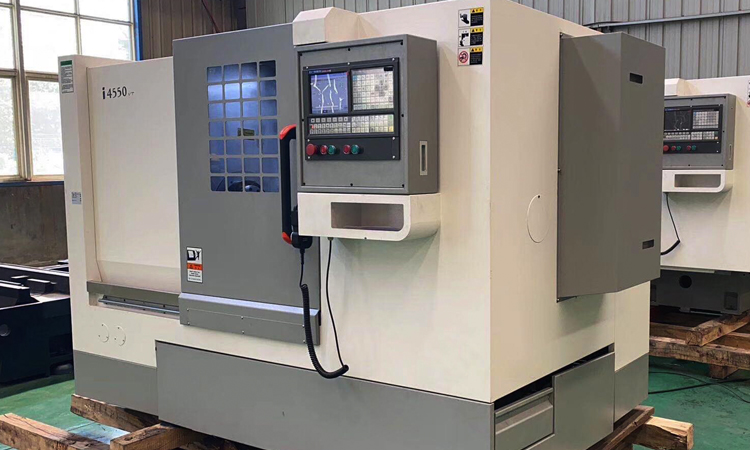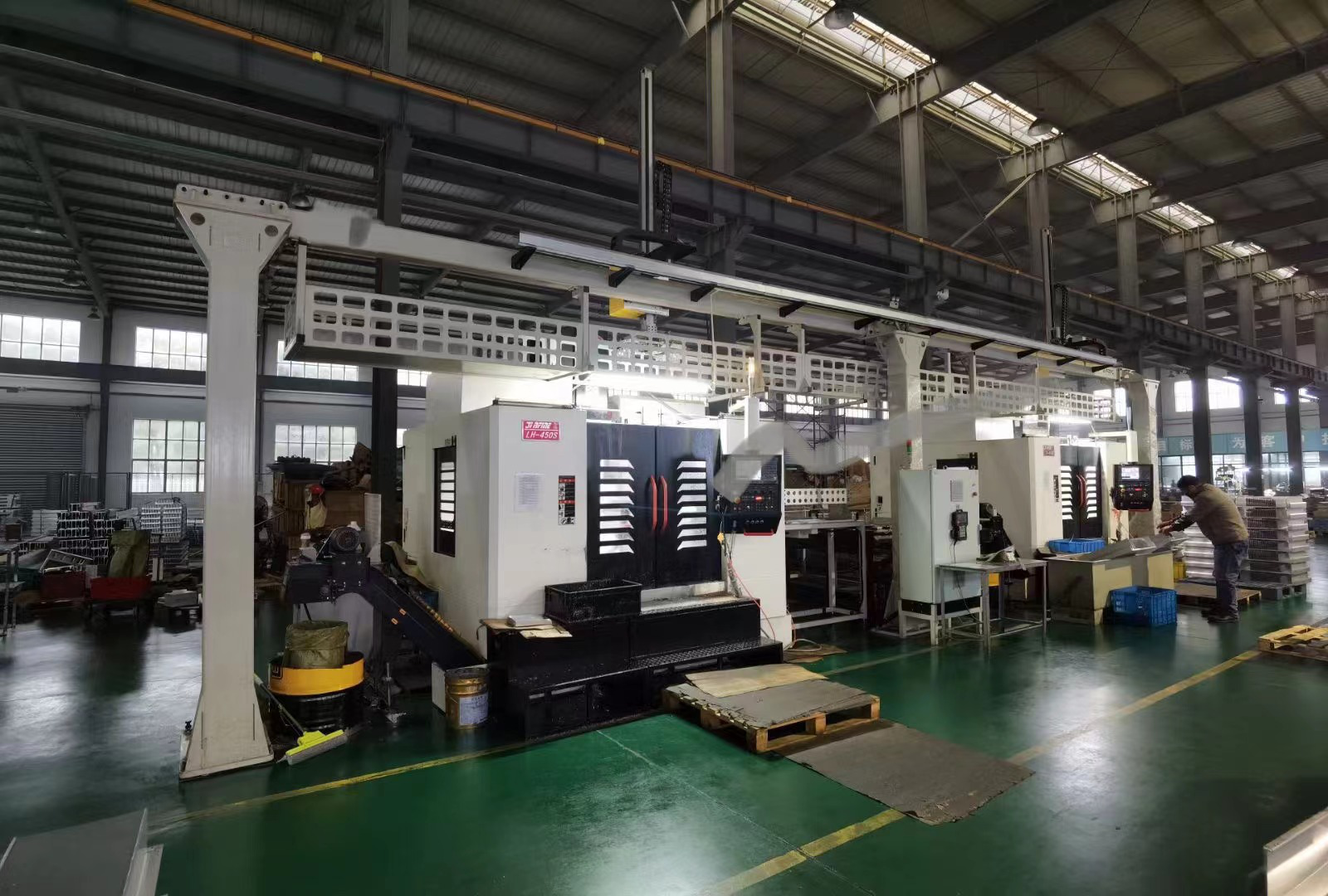
Normalize Heavy HMC Quotes by Spindle and Payload
Receiving multiple proposals for a Heavy Horizontal Machining Center that seem worlds apart is a common sourcing challenge. The base price on one quote can be lower than the optional add-ons of another, making a true like-for-like comparison nearly impossible. This discrepancy often stems not from the core machine quality, but from how suppliers bundle—or unbundle—critical components. Failing to normalize these quotes before making a decision exposes your project to unforeseen costs, performance bottlenecks, and a final investment that doesn't match your initial expectations.
A successful procurement process depends on breaking down each proposal into its fundamental building blocks. This requires looking past the final number and scrutinizing the specifications for the spindle, pallet system, coolant delivery, and service terms. At MAKCNC, we believe an informed buyer is the best partner. As an ISO 9001:2015 certified manufacturer, we provide transparent quotations that help you align machine capabilities with your production goals and budget.
Deconstructing the HMC Quote: A Component-Based Comparison
The most significant price variations in HMC quotes arise from optional and configurable subsystems. A low base price can be misleading if it excludes components essential for your application. Use the following framework to normalize proposals from different suppliers and reveal the true total cost of ownership.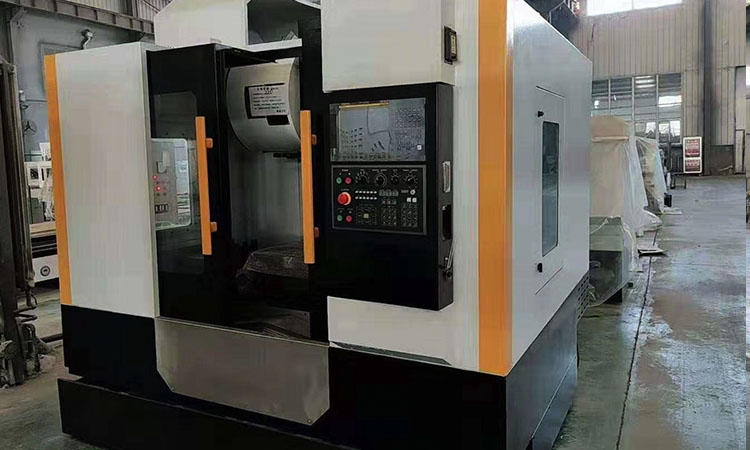
This table breaks down the core areas where quotes often differ. Requesting that suppliers itemize these components allows for a direct, feature-by-feature evaluation.
| Component / Scope | Key Questions for Your RFQ | Impact on Performance & Cost |
|---|---|---|
| Base Machine Structure | What material is the machine frame made from (e.g., cast iron, welded steel)? Has it undergone aging or stress-relief treatment? | High-strength cast iron bodies with aging treatment, like those we utilize, provide superior vibration damping and long-term geometric stability, which is essential for maintaining accuracy in heavy cutting. |
| Spindle Configuration | What is the standard taper (e.g., BT50, HSK-A100)? What is the maximum RPM and torque? Is it a direct-drive, gear-driven, or belt-driven spindle? | A high-torque, gear-driven spindle is ideal for machining tough alloys, while a high-speed, direct-drive spindle excels at finishing and light-alloy work. This choice is application-critical and a major cost driver. |
| Pallet System (APC) | How many pallets are included in the base price? What is the pallet size and maximum payload capacity? What is the pallet change time? | A standard two-pallet system is common, but more pallets can dramatically increase uptime for high-volume production. Ensure the payload capacity can handle your largest and heaviest workpieces plus fixtures. |
| Coolant System | Is through-spindle coolant (TSC) included? What is the pressure (e.g., 20 bar, 70 bar)? Are coolant chillers and advanced filtration systems standard or optional? | TSC is non-negotiable for deep-hole drilling and efficient chip evacuation. High pressure adds significant cost but can reduce cycle times and improve tool life. |
| Tool Magazine | How many tool pockets are in the standard automatic tool changer (ATC)? What is the maximum tool diameter, length, and weight? | A small magazine (e.g., 40 tools) may be insufficient for complex parts requiring many different tools, forcing costly mid-cycle manual changes. Larger magazines (60, 80, or more) support "lights-out" manufacturing. |
| Control & Software | Which CNC control system is standard (e.g., Fanuc, Siemens)? Are advanced software features for high-speed machining or precision mold-making included? | Advanced control features, such as intelligent feedforward and quadrant glitch compensation, directly address common machining defects like over-cutting and chatter marks, improving part quality. |
Core Machine Attributes That Define Long-Term Value
Beyond optional configurations, the fundamental engineering of the machine determines its rigidity, accuracy, and operational life. These are not line items on a quote but are reflected in the supplier's design philosophy and manufacturing standards.Key Structural and Component Considerations:
- Machine Body Construction: The foundation of any machining center is its frame. We construct our machine bodies from high-strength materials like resin sand cast iron. This material is then subjected to a meticulous aging treatment process to relieve internal stresses. The result is a highly stable and rigid structure that resists deformation under heavy loads and maintains its geometric accuracy for years of service.
- Core Drive Components: A machine's precision is only as good as its motion system. The lead screws and linear guide rails are responsible for positioning accuracy and repeatability. We integrate high-precision components from reputable German and Taiwanese brands, ensuring smooth, reliable motion and minimal backlash over the machine's lifetime. The focus is on system synergy to deliver optimal overall performance.
- Application-Specific Engineering: A generic machine cannot solve specific industry challenges. For the demanding mold and die sector, our systems can integrate advanced technologies to resolve common quality issues like "quadrant marks" and "chatter marks." For shops focused on high-mix, low-volume work, the ability to perform multi-face machining in a single clamping is a critical productivity feature built into the machine's design.
When evaluating a horizontal cnc machining center, ask suppliers to detail their approach to these foundational elements. A supplier committed to long-term performance will be able to explain their material choices and engineering processes in detail.

Evaluating Warranty, Service, and Support Commitments
The total value of your investment extends far beyond the machine itself. The supplier's after-sales support structure is a critical factor that impacts your operational uptime and maintenance costs. Do not treat service terms as an afterthought; they should be compared as rigorously as technical specifications.Buyer's Service & Warranty Checklist
Use this checklist to create a clear comparison of support packages offered by different suppliers:
- Standard Warranty Period: What is the length of the free warranty period after machine acceptance? (A common standard is 12 months.)
- Extended Warranty Options: Are paid or conditional extended warranties available? (For some tender projects, a three-year free warranty may be a requirement.)
- Service Response Time: What is the guaranteed time for an initial response after a service request is made? (Our network typically commits to a response within 8 hours.)
- On-Site Arrival Time: What is the maximum time for a technician to arrive on-site to address a failure? (A 48-hour on-site arrival is a strong benchmark for urgent issues.)
- Lifetime Service Availability: Does the supplier offer paid service and parts support for the entire lifespan of the machine?
- Flexibility on Terms: Is the supplier willing to negotiate more favorable commercial terms—on price, delivery, or after-sales service—for bulk purchases of multiple machines?
A supplier with a mature and well-documented service network provides a safety net that protects your production schedule. Our flexible procurement terms, which include no hard minimum order quantity, allow you to purchase even a single unit while still receiving professional support.
MAKCNC: Your Partner in Precision Manufacturing
Established in 2016, MAKCNC operates multiple production lines to build a diverse range of CNC equipment, including CNC Lathing Machines and CNC Machining Centers. Our status as an about makcnc page details our commitment to quality, backed by our ISO 9001:2015 certification. We maintain an inventory of sample machines, allowing for demonstrations and faster deployment in certain cases. Our lead times generally range from one to six months, depending on machine complexity and customization.
Our engineering philosophy is centered on building machines that deliver lasting precision and reliability. By using high-quality castings and world-class drive components, we create a platform capable of tackling the most demanding machining tasks. We understand that purchasing a machine is a significant investment, and our team is here to provide the technical clarity you need to make the right choice.
If you are evaluating suppliers for your next machining center project, contact our technical team to discuss your specific application and receive a detailed, transparent proposal.