What to Ask a Horizontal Machining Center Manufacturer Before an RFQ
Choosing a Horizontal Machining Center Manufacturer is a significant capital investment decision, and the questions you ask before issuing a Request for Quotation (RFQ) can determine the long-term success of your purchase. A poorly specified machine can lead to production bottlenecks, unexpected maintenance costs, and a failure to meet part quality standards. The initial quote is only one part of the story; understanding the manufacturer's engineering philosophy, service structure, and long-term commitments is essential for securing a machine that delivers value for years.
What Defines a High-Performance Horizontal Machining Center?
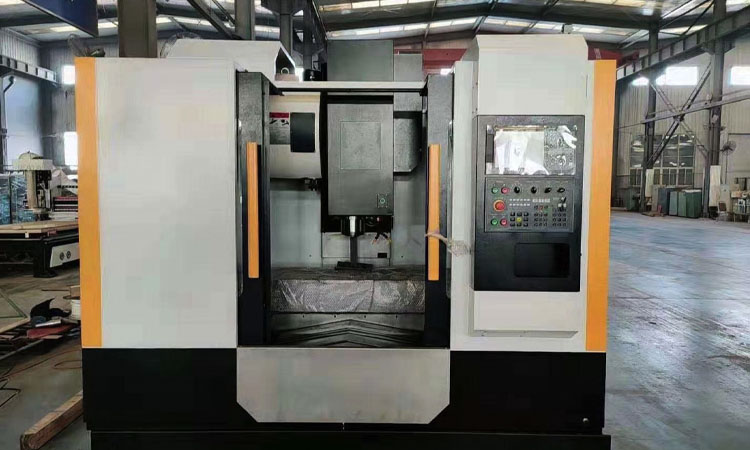
A horizontal machining center (HMC) is a type of CNC machine tool where the spindle is oriented horizontally. The workpiece is typically mounted on a rotary table (B-axis) that allows for machining on multiple sides in a single setup. This configuration is inherently efficient for complex parts and production environments. The machine's performance, however, is not just about its basic layout. True performance comes from the build quality and integration of its core systems. At MAKCNC, we build our machine bodies from high-strength cast iron, such as resin sand castings, which undergo an aging process. This critical step relieves internal stresses in the metal, ensuring the machine frame maintains its geometric accuracy and rigidity over its entire operational life, resisting deformation under heavy cutting loads.
Core Features Driving Machining Precision and Efficiency
The specified features of an HMC directly translate into its ability to produce accurate parts efficiently. Beyond the basic specifications, look for features that address specific machining challenges. For instance, structural rigidity is paramount. A machine's ability to damp vibration determines the final surface finish and tool life. This is why the quality of the casting and the precision of the assembly are so important. Furthermore, core transmission components like ball screws and linear guides dictate positioning accuracy and repeatability. We prioritize high-precision components from established brands in Taiwan and Germany to ensure reliable and smooth axis movement.
For industries like mold and die making, where surface finish and geometric complexity are critical, the control system's software capabilities are just as important as the hardware. Our systems incorporate intelligent feed-forward control and quadrant glitch compensation. These technologies proactively address common machining flaws such as "over-cutting" at corners, visible marks when an axis changes direction (quadrant marks), and chatter patterns on the finished surface. This level of system integration allows for a superior finish directly from the machine, reducing or eliminating the need for secondary polishing operations.
Key Applications and Industries Served
Horizontal machining centers excel in environments that require high productivity and precision on multi-sided or complex components. Their design, often featuring dual pallets and a rotary table, is ideal for reducing setup times and increasing machine utilization. This makes them a primary choice for several demanding industries.
- Mold and Die Manufacturing: The ability to machine complex 3D contours and maintain tight tolerances is essential. The rigidity and advanced control features of our machines directly address the challenges of creating high-quality injection molds and stamping dies.
- Automotive and Aerospace: These sectors require the production of components like engine blocks, transmission cases, and structural airframe parts. HMCs provide the power for heavy material removal and the precision for critical mating surfaces, often machining multiple faces in a single clamping.
- General High-Precision Machining: Any operation focused on high-mix, low-volume production benefits from an HMC's ability to reduce setups. A single clamping to machine four or five sides of a part drastically cuts down on idle time and reduces the chance of operator error from re-fixturing.
Understanding Horizontal Machining Center Pricing Factors
The final price of a horizontal machining center is influenced by numerous factors beyond the base unit. A lower initial price can sometimes hide long-term costs if the machine is not properly configured for your application or lacks adequate support. When evaluating quotes, consider how these elements contribute to the total cost of ownership.
| Pricing Factor | Description |
|---|---|
| Base Machine Size & Travel | The physical size of the machine, including pallet size and X, Y, Z axis travels, is the primary cost driver. |
| Spindle Configuration | Spindle speed (RPM), taper (e.g., BT40, BT50), and whether it is a direct-drive, belt-drive, or built-in motor type all affect price and performance. |
| Tool Changer Capacity | A standard 40-tool magazine costs less than an expanded 60 or 120-tool magazine. The choice depends on your part complexity and production mix. |
| Control System & Software | The brand of CNC controller (e.g., Fanuc, Siemens) and any optional software packages for high-speed machining or 5-axis control will impact the price. |
| Coolant & Chip Management | Options like high-pressure through-spindle coolant (TSC) and specialized chip conveyors add cost but are often essential for certain materials and unmanned operation. |
| Service & Warranty Package | Extended warranties or premium service level agreements are an additional cost but provide valuable production security. |
Your RFQ Checklist for Choosing a Manufacturer
Submitting an RFQ without a clear set of questions is like navigating without a map. You will receive quotes, but you won't be able to compare them effectively. Use the following checklist to gather the specific, decision-useful information you need from any potential Horizontal Machining Center Manufacturer. This ensures you are comparing equivalent machines and service levels, not just a price tag.
- Machine Configuration & Components
- What specific brands are used for the ball screws, linear guides, spindle bearings, and CNC control?
- Can you provide the material specifications and heat-treatment process for the main machine casting?
- Delivery Scope & Inclusions
- Does the quoted price include a standard chip conveyor, coolant system, and foundation bolts?
- Is on-site installation, commissioning, and operator training included? If so, for how many days?
- Accuracy Guarantees & Verification
- What are the machine's guaranteed positioning accuracy (e.g., ±0.005 mm) and repeatability (e.g., ±0.003 mm) according to standards like ISO 230-2?
- Will a ballbar test and laser calibration report be provided upon installation to verify these figures?
- Service Response & Support
- What is your guaranteed technical support response time via phone or email? (e.g., within 8 hours)
- If an on-site visit is required, what is the guaranteed timeframe for a technician to arrive? (e.g., within 48 hours for domestic clients)
- What is the standard warranty period, and what does it cover?
- Spare Parts & Long-Term Commitment
- What is your policy on the availability of critical spare parts for the next 10 years?
- Where are your spare parts stocked, and what is the typical lead time for critical components like a spindle or an axis drive?
Why Choose MAKCNC as Your CNC Machine Supplier?
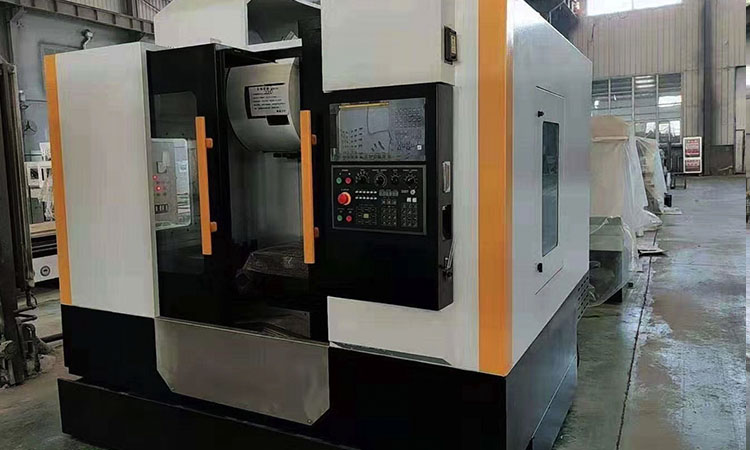
Established in 2016, MAKCNC operates from an ISO 9001:2015 certified facility, demonstrating our commitment to standardized quality management processes. We provide a professional cnc machining center solution built on a foundation of robust engineering and strategic component selection. Our philosophy is to combine rigid, stress-relieved cast iron structures with high-precision drive components from proven German and Taiwanese suppliers. This creates a machine platform that is both durable and accurate.
We understand that every customer's needs are different. We have no strict minimum order quantity; you can procure a single machine. However, we offer improved commercial terms on price, delivery, and service for volume purchases. With multiple production lines and a stock of demonstration machines, we can often facilitate faster delivery and provide tangible proof of our machine's capabilities. For more information, you can learn more about MAKCNC and our approach to manufacturing.
Frequently Asked Questions about Sourcing HMCs
What is a typical lead time for a new horizontal machining center?
Lead times can vary based on machine configuration and current order backlog. Generally, you can expect a delivery window of 1 to 6 months from the confirmation of the order.
Is there a Minimum Order Quantity (MOQ)?
No, we do not enforce a rigid MOQ. We support businesses of all sizes and are happy to supply a single machine. For customers placing batch orders for multiple units, we can provide more favorable terms regarding pricing, delivery scheduling, or after-sales service packages.
What kind of machining center warranty is provided?
Our standard warranty is 12 months from the date of final machine acceptance at your facility. We also offer lifetime paid service to ensure your machine remains productive for its entire lifespan. For certain tender projects or specific customer requirements, we can offer extended free warranty periods, such as three years.
What does your after-sales service network promise?
We have a mature service network committed to minimizing your downtime. Our standard promise is an 8-hour response time to your service request and, if necessary, a 48-hour on-site arrival time for a field service engineer to begin troubleshooting and repairs.
If you are looking for a reliable CNC machine supplier, please send us your drawings and requirements. We will provide a detailed technical proposal and quotation for your project.