Reducing Hand Polishing Starts With Choosing the Right Vertical Machining Center for Mold Making
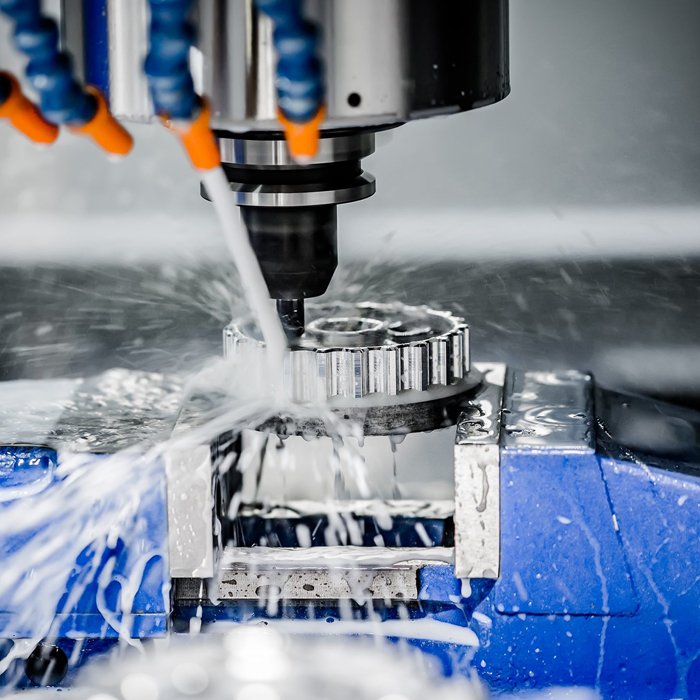
A Vertical Machining Center for Mold Making often gets blamed for polishing hours it didn't actually cause. A shop buys a new VMC expecting cleaner cavities straight off the spindle, then still spends two or three shifts stoning out scallop lines, quadrant rings, and chatter marks before the cavity goes to the press. The real question isn't whether the machine is capable enough — it's whether spindle speed, toolholder runout, and finish-pass programming were actually matched to the steel and the geometry being cut. Get those three right and the polisher's job shrinks from reshaping the surface to simply brightening it.
What Is a Vertical Machining Center for Mold Making?
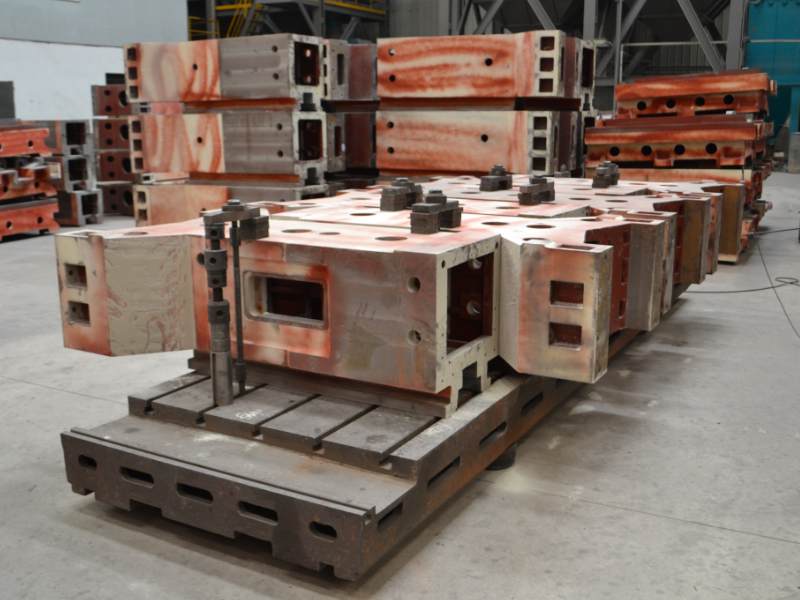
A Vertical Machining Center for Mold Making is a 3-axis, or 3+2 axis, CNC machine with a vertically oriented spindle, built to cut hardened and pre-hardened mold steel into finished cavity and core geometry in as few setups as possible. Unlike a general-purpose mill, a mold-making VMC is tuned around rigidity and finish-pass accuracy rather than raw material removal speed. The body is typically cast from high-strength iron, often resin sand castings, then aged before final assembly so the casting doesn't drift out of tolerance after a year of multi-shift use. Core transmission parts — ball screws and linear guideways — commonly use Taiwan or German-brand precision components, because the whole drive train has to move in sync for a finish pass to actually look finished when the tool lifts off.
Types of Mold-Making Vertical Machining Centers
Not every mold job needs the same footprint or travel. Picking a model that's oversized for the plate wastes floor space and makes thermal stabilization harder; undersized, and you can't finish large cavity blocks in one clamping.
| Model | Typical Shop Use | Best Fit |
|---|---|---|
| MV970 vertical machining center | Compact bench-level mold work | Small cavities, inserts, electrode blocks |
| MV1160 compact VMC | Mid-size mold base machining | Shops running mixed job sizes |
| MV1270 model | Larger mold plates, multi-cavity layouts | Multi-cavity consumer goods tooling |
| MV1380 vertical machining center | Large mold blocks | Automotive and appliance tooling |
| horizontal machining center | Multi-face machining without re-fixturing | Complex core/slide components |
How Spindle Speed, Toolholder Runout, and Finish-Pass Strategy Reduce Hand-Polishing Allowance on Mold Cavities
These three variables decide whether the cavity wall comes off the machine ready for a quick stone pass or needs real stock removal by hand. None of them work in isolation — a good spindle speed on a loose toolholder still leaves witness marks.
| Parameter | What It Actually Controls | Consequence If Wrong |
|---|---|---|
| Spindle speed vs. feed | Chip load and shear behavior at the cutting edge | Too slow for the stepover leaves scallops that need stoning; too fast on finish steel can burn or glaze the surface |
| Toolholder runout | How concentric the cutting edge spins relative to the spindle axis | Excess runout means only one flute actually cuts, doubling load on that edge and leaving a directional line on the wall |
| Finish-pass strategy | Scallop height and behavior at direction reversals | Standard quadrant reversal creates visible bumps or rings on round cavities, known as machining chatter marks when combined with low rigidity |
This is where system design matters more than catalog horsepower. Intelligent feed-forward control keeps programmed feed actually reaching the tool tip through corner moves instead of decelerating late. Quadrant protrusion compensation specifically corrects servo lag at direction reversal — the exact mechanism that causes the ring marks mold makers spend hours stoning out of round cavities. A machine with tight ball screw and guideway tolerances doesn't amplify toolholder runout through backlash, so the same holder performs more predictably job after job.
Common mistakes that extend polishing time:
- Running a worn or mismatched toolholder because "it's close enough" — runout compounds with every pass.
- Copying a roughing stepover into the finish program instead of tightening it for the required surface finish.
- Ignoring quadrant behavior on arcs and circular pockets, where reversal marks are most visible.
- Skipping a dry-run or first-article check before committing a full batch to the same program.
Features of a Mold-Making VMC
Beyond the spindle and control system, a few structural choices decide long-term finish consistency. High-strength cast iron bodies, aged before final machining, resist the thermal and vibration drift that shows up as inconsistent finish after months of three-shift running. Taiwan or German-brand ball screws and guideways keep positioning repeatable at finish-pass speeds, not just at roughing speeds. For shops running multiple small-batch mold jobs rather than one large production run, one-time clamping for multi-face machining matters just as much as surface finish — it removes the alignment error that re-fixturing introduces between faces.
Vertical Machining Center for Mold Making Application
These machines are built around injection mold cavities and cores, die-casting dies, stamping die details, and multi-cavity small-batch tooling where setup time matters as much as cutting time. Round mold components — guide pillars, sprue bushings, ejector pins — are usually turned separately on a CNC lathing machine or a CNC inclined bed lathe before assembly into the mold base, while the VMC handles the prismatic cavity and core work. Shops producing multiple small families of molds — rather than one repeat job — benefit most from the one-clamp, multi-face capability described above, since it cuts the number of separate setups per mold.
Vertical Machining Center for Mold Making Price
There's no single sticker price, because the configuration changes the cost structure more than the base casting does. Main factors buyers should budget around:
- Table size and model — MV970 through MV1380 cover different plate sizes, and larger travel costs more.
- Control system and spindle option — feed-forward and quadrant compensation packages affect both price and finish quality.
- Tooling and fixture package — finish-pass tooling suited to mold steel adds upfront cost but reduces polishing labor later.
- Customization level — shops with non-standard fixturing or automation needs can request customized CNC equipment, which shifts lead time and price together.
- Order quantity — there's no hard minimum order quantity; a single unit can be purchased, but bulk orders typically get better pricing, delivery, or after-sales terms.
User Guide to Setting Up a Finish Pass That Reduces Polishing
- Check toolholder runout with a dial indicator before the job starts — don't assume a holder is clean because it was clean last month.
- Match spindle speed and feed to the tool diameter and the actual steel hardness, not the roughing program's numbers.
- Program a finish stepover specifically for the surface finish the mold needs, separate from the roughing stepover.
- Let quadrant compensation engage fully on circular and arc toolpaths — don't override reversal behavior to save a few seconds of cycle time.
- Run a first article, measure the cavity, and compare against the polishing allowance before committing the full batch.
Choosing a Vertical Machining Center for Mold Making Supplier
MAKCNC has built CNC lathes and machining centers since 2016, running multiple production lines with sample machines kept in stock, which generally supports delivery windows of 1 to 6 months depending on model and customization. Manufacturing is carried out under an ISO9001:2015-certified quality system. Standard warranty runs 12 months after acceptance, with lifetime paid service afterward; some tender projects request stricter terms, such as a 3-year free warranty, which MAKCNC can also support. The after-sales network generally commits to an 8-hour response and 48-hour on-site arrival for machine issues. Buyers evaluating suppliers can review about MAKCNC for background, or browse global case studies to see the range of machines deployed across different mold and machining applications.
FAQ About Mold-Making VMCs
Does a Vertical Machining Center for Mold Making eliminate hand polishing entirely?
No. It reduces the allowance that needs to be removed by hand — scallop depth, quadrant marks, and chatter lines — but a mirror or texture finish still needs manual stoning or polishing afterward.
What's the typical lead time for one of these machines?
Generally 1 to 6 months, depending on model and whether customization is involved.
Is there a minimum order quantity?
No hard MOQ. A single machine can be ordered, though multi-unit orders usually come with better commercial terms.
What warranty should I expect?
Standard coverage is 12 months after acceptance plus lifetime paid service; stricter 3-year free warranty terms are available for qualifying tender projects.
Can one machine finish multiple faces of a mold block without re-fixturing?
Yes — one-time clamping for multi-face machining is a core capability for multi-variety, small-batch mold work.
If you're comparing spindle and tooling setups for mold cavity work, send us your drawings and surface finish targets, or submit your project details and our team will recommend a configuration.