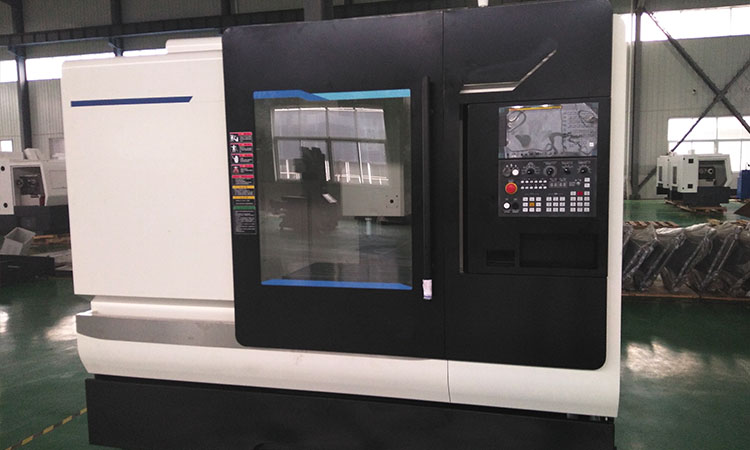
How a Multi-axis Horizontal CNC Machining Center Adds Rotary Motion
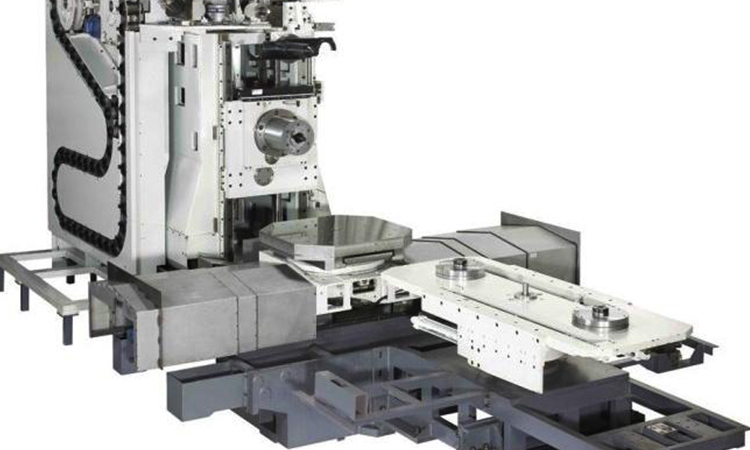
What Is a Multi-axis Horizontal CNC Machining Center?
A Multi-axis Horizontal CNC Machining Center is a machine tool whose spindle lies horizontally and whose table or pallet carries at least one rotary axis in addition to the three linear axes X, Y and Z. The rotary axis is what turns a plain horizontal machine into a multi-axis one. A rotary table under the pallet, usually called the B axis, turns the workpiece about a vertical centerline. A second rotary axis, such as a tilting trunnion, adds a tilt about a horizontal line. The rotary motion presents different faces and angles of the part to the cutter, so fewer re-clampings are needed. Whether that motion is only positioned between cuts or runs while the tool is cutting decides which parts the machine can handle. That distinction is what this article explains.
Types of Rotary Motion on a Horizontal Machining Center
Three working modes are commonly specified, and they are often mixed up in quotations.
- 4-axis indexing. The B-axis table rotates to a set angle, locks, and the cut runs on X, Y and Z only. It is the standard arrangement for box-type parts and fixture towers.
- 4+1 positioning. A fifth axis, usually a tilt, is set to a fixed angle before cutting and stays locked during the cut. Angled features are machined as ordinary three-axis work in a tilted plane. This is also called 3+2 machining.
- Simultaneous 5-axis. Two rotary axes move together with X, Y and Z while the tool is in contact with the part. This is the only mode that cuts continuously curved surfaces without stepping.
The cost and the programming effort rise at each step. Each mode also demands more from the control system and the rotary drive. Buying the highest mode "just in case" is a common mistake when most of the parts only need indexing.
Which Part Features Each Motion Mode Can Machine
This comparison ties each mode to the features it actually reaches. Use it before shortlisting equipment, because the part geometry should set the axis requirement and not the reverse.
| Motion mode | Rotary axis during cutting | Part features it suits | Where it falls short |
|---|---|---|---|
| 4-axis indexing | Locked at each position | Faces on two to four sides, bores and ports on several faces, pattern holes, multi-face housings on fixture towers | Holes or pockets at compound angles; continuous surfaces |
| 4-axis with continuous B | Moves with X, Z | Cam-like profiles, helical grooves, features wrapped around a vertical axis | Features that also need a tilt |
| 4+1 positioning | Tilt locked, B indexed | Angled bores, inclined faces, undercut-style access, compound-angle ports | Smooth contours across a tilt change |
| Simultaneous 5-axis | Both rotary axes move | Impeller-style blades, sculpted molds, turbine-type forms, deep contoured cavities with short tools | Higher programming, simulation and verification effort; not needed for prismatic parts |
The practical rule is simple. If every feature sits on a flat face or a flat angled plane, indexing or 4+1 positioning is enough. Simultaneous motion is justified when the surface itself is continuous and the tool must keep a set angle to it.
Features of Rotary Motion in a Horizontal Layout
A horizontal spindle changes how rotary motion behaves in practice. Chips drop away from the cut instead of collecting in pockets, and that keeps the tool cutting clean metal. Fixture towers let one clamping present several faces to the spindle through B-axis indexing. For multi-variety, small-batch work, one-setup multi-face machining is a capability MAKCNC builds its machines around, because every extra clamping adds alignment error and handling time.
There are trade-offs. A rotary axis adds a stack of mechanical and kinematic elements, and the pivot center must be calibrated and held. More axes also mean more collision zones around fixtures, tool holders and the spindle housing. A larger swing envelope does not guarantee access to deep features, so the tool length and holder geometry must be checked along with the axis count.
On the machine side, rigidity supports all of this. MAKCNC machine structures use high-strength cast iron, including resin-sand castings, with aging treatment to keep long-term accuracy and stiffness. The core transmission parts, screws and guideways, are typically high-precision Taiwanese or German brands. The point is not any single component. The machine works best when the structure, drives and control are matched as one system.
Common Misunderstandings About Multi-Axis Capability
The most frequent error is treating "5-axis" as a single capability. A machine sold as 5-axis may only offer 4+1 positioning, and the two behave very differently on contoured surfaces. Ask whether the fifth axis can interpolate with the other four or only position and lock.
- "More axes always mean better accuracy." Not so. Each added axis adds a source of error that must be compensated, so the accuracy of the rotary center matters more than the axis count.
- "Simultaneous motion removes the need for fixtures." No. The workholding still has to clear the tool through the full rotation.
- "Indexing is the old way." For prismatic parts it is often the more stable choice, since the rotary axis is locked and adds no motion error during the cut.
To verify a claim, request the control's axis configuration, a description of the rotary drive and clamping, and a test cut or sample part similar to your geometry. For surface quality on moving axes, ask how the control handles feed-forward and quadrant-crossing compensation. MAKCNC's mold-oriented control systems integrate intelligent feed-forward and quadrant-jump compensation, aimed at overcut marks, quadrant marks and chatter patterns. A cut-part inspection tells you more than a brochure figure.
Applications for Multi-Axis Horizontal Machining
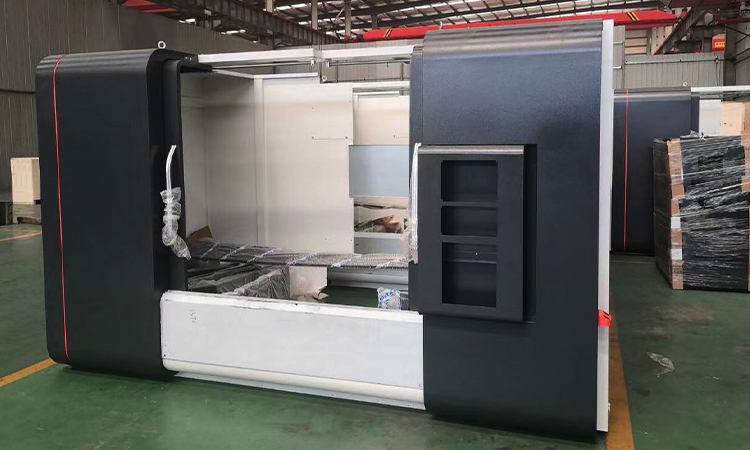
Indexing and 4+1 modes dominate in housings, valve bodies, gearbox cases, pump bodies and engine-type blocks, where several faces carry bores, threads and sealing surfaces. Simultaneous 5-axis suits impellers, sculpted molds and similar contoured parts. Here is an illustrative scenario, not a customer case. A valve body has four machined side faces and one angled port. Index the B axis for the four faces. Add a locked tilt for the port. The whole part stays in one setup, and simultaneous motion adds nothing but programming time. If the same shop then takes on a blade-type part, that is the point where simultaneous capability earns its cost.
For real examples of delivered equipment, see the global cnc machinery cases of makcnc. Check how closely any reference matches your own part family before drawing conclusions.
Multi-Axis Horizontal Machining Center Price Factors
No honest price exists without a defined configuration. The main drivers are listed below, with the reason each matters.
- Rotary axis count and type. A single indexing table costs less than a tilting-rotary arrangement with simultaneous interpolation.
- Control system and compensation functions. Continuous multi-axis cutting needs more capable software and kinematic handling.
- Pallet system and fixtures. Pallet changers and fixture towers raise cost but cut idle time for repeat work.
- Travels and table size. Larger parts need a larger machine, and cost grows with it.
- Screws, guideways and spindle grade. The brand and precision class of these parts affect both price and long-term accuracy.
- Order quantity and lead time. MAKCNC has no hard minimum order, so a single unit can be purchased. Batch purchases may earn better price, delivery or after-sales terms. Lead times typically run from 1 to 6 months, depending on configuration.
Compare quotations only when the axis mode, control and rotary drive are stated on the same basis. A figure for a 4-axis machine and a figure for a simultaneous 5-axis one are not equivalent.
User Guide for Specifying Rotary Motion
- List the part families. Record the faces, angles and surfaces that need machining on each part.
- Classify each feature. Mark it as indexable, angled-plane or continuously contoured, using the table above.
- Select the lowest mode that covers the set. Add simultaneous motion only for features that need it.
- Check tool access. Check tool length, holder size and fixture height through the full rotation, and simulate it in CAM before cutting.
- Calibrate the rotary center. Verify the pivot position and re-check it after any fixture or table change.
- Run a trial part. Inspect it before releasing the program for batch production.
If standard configurations do not match, customized cnc machines and machining centers from makcnc can be specified around your part drawings. For a wider look at horizontal and vertical options, see the vertical and horizontal cnc machine center range.
FAQ of Multi-Axis Horizontal Machining Centers
Is a B-axis table the same as 4-axis machining?
Yes, a horizontal machine with a rotating B-axis table is normally called 4-axis. Whether the table moves during cutting or only indexes between cuts decides which features it can reach.
When is 4+1 positioning enough?
It is enough when angled features lie on flat planes. The tilt is set, locked, and the cut runs like standard three-axis work. It is not suitable for surfaces that must be cut smoothly across a tilt change.
Does simultaneous 5-axis always give a better finish?
No. It lets the tool keep a favorable angle on contoured surfaces, but finish also depends on rigidity, tooling and control compensation. On flat or prismatic parts, it brings little benefit.
What warranty and service come with MAKCNC machines?
Warranty is typically 12 months after machine acceptance, with lifetime paid service. Some tenders require longer terms, such as three years of free warranty. The service network normally commits to a response within 8 hours and on-site attendance within 48 hours.
Multi-axis Horizontal CNC Machining Center Supplier
MAKCNC was founded in 2016 and runs multiple production lines with sample machines in stock. Our facility is certified to ISO9001:2015, and our range covers the about makcnc product lines of CNC lathes, machining centers and general CNC machines. A single unit can be purchased, and larger orders may carry better commercial terms. If you are evaluating rotary motion options for a part family, send us your drawings and tell us the features you need to machine. We will recommend the lowest axis mode that covers them and provide an up-to-date quotation.