
CNC Horizontal Turning Centers: Bar-Fed Production Guide
What Are CNC Horizontal Turning Centers?
cnc horizontal turning centers are machine tools where the spindle holds the workpiece in a horizontal orientation. The cutting tools move along multiple axes to remove material, generating precise cylindrical shapes. The spindle sits parallel to the floor. Gravity assists in chip evacuation — chips fall away from the cutting zone into the chip pan rather than piling onto the workpiece. Shops running high-volume production of shafts, bushings, and connectors have relied on this layout for decades. It works. It scales. It integrates naturally with bar feeders for lights-out operation. A horizontal turning center isn't just a lathe. It often includes a tool turret with live tooling capability, a sub-spindle for part catching, and a parts conveyor. When you add a bar feeder, the machine can pull material in, turn the part, cut it off, and repeat — without an operator touching a single piece.
The spindle orientation defines the machine's name: horizontal. Vertical turning centers flip the workpiece orientation 90 degrees and rely on the chuck to hold heavy, awkward parts. Horizontal machines excel when the part is long and slender relative to its diameter.
Types of CNC Horizontal Turning Centers
Not every shop needs the same machine configuration. Understanding the categories helps you avoid overpaying for capability you won't use — or worse, buying a machine that can't keep up with production demands.
2-Axis Horizontal CNC Turning Centers
These are the workhorses. X-axis controls diameter, Z-axis controls length. A turret holds 8, 10, or 12 tools. Cycle times for simple turned parts — spacers, pins, stepped shafts — often fall below 30 seconds per piece. If your part only requires turning and drilling on the centerline, a 2-axis machine paired with a bar feeder represents the most cost-effective high-volume setup on the market. We've seen shops run these machines three shifts unattended on bar-fed jobs, stopping only to reload a new 12-foot bar bundle.
Multi-Axis Turning Centers with Live Tooling
Add a C-axis to the spindle and driven tools to the turret, and suddenly you can mill flats, drill cross-holes, and tap off-center features in one clamping. This eliminates secondary operations. For parts like hydraulic fittings that need a hex milled plus a cross-drilled port, a horizontal CNC turning centers with live tooling finishes the part complete in a single cycle. The tradeoff is machine cost — typically 30–50% more than a 2-axis machine with similar capacity. The payoff is the labor and work-in-process inventory you eliminate by not moving parts between a lathe and a milling machine.
Sub-Spindle and Dual-Spindle Configurations
Sub-spindle machines pick off the part after the main spindle cuts it free. The sub-spindle brings the back side of the part to a secondary tool set for machining the back face, boring, or threading — all without manual part flipping. Dual-spindle setups overlap operations so that while one spindle cuts, the other loads. This configuration fits perfectly when using a CNC turning center with bar feeder. The bar feed pushes material through the main spindle; the sub-spindle extracts the finished part; the conveyor removes it. No human intervention needed.
Features of CNC Horizontal Turning Centers
Modern CNC lathe production systems pack capabilities that older manual lathes could not dream of. However, specifications on a brochure don't always translate to real floor performance. Here are the features that matter when running bar-fed production.
High-Pressure Coolant Through the Tool: Running 1,000 psi coolant through the cutting tool breaks chips and cools the cut zone directly. On deep drilling operations — say, drilling a 12-inch deep hole in a shaft — through-tool coolant prevents chip packing that snaps drills. We watched a hydraulic rod manufacturer reduce scrap rate from 4.1% to 0.3% by simply upgrading to 1,000 psi coolant on their existing horizontal turning centers. The math is brutal: 4% scrap on a million parts is 40,000 wasted pieces.
Y-Axis for Off-Center Machining: A Y-axis moves the tool above and below the spindle centerline. This enables slotting, keyway cutting, and off-center drilling that a C-axis alone cannot reach. Parts that once required two clampings — or two machines — finish complete on one Y-axis turning center.
Automatic Parts Catcher and Conveyor: When the sub-spindle or cut-off operation drops the finished part, a parts catcher swings in and deposits the component onto a conveyor belt. The conveyor carries parts out of the machining enclosure into a collection bin. Without this, parts pile up inside the machine and eventually crash into tools. That's a $2,000 turret repair you don't need.
Thermal Stabilization Systems: Heat expands machine castings. The ballscrew on the Z-axis can grow by 0.0006 inches per foot per degree Fahrenheit. On a 20-inch long shaft, a 10°F temperature swing means 0.001 inches of size drift. Machines with core-cooled ballscrews and temperature sensors adjust for this in real-time. You hold ±0.0002 inches across a 500-part run without offset adjustments.
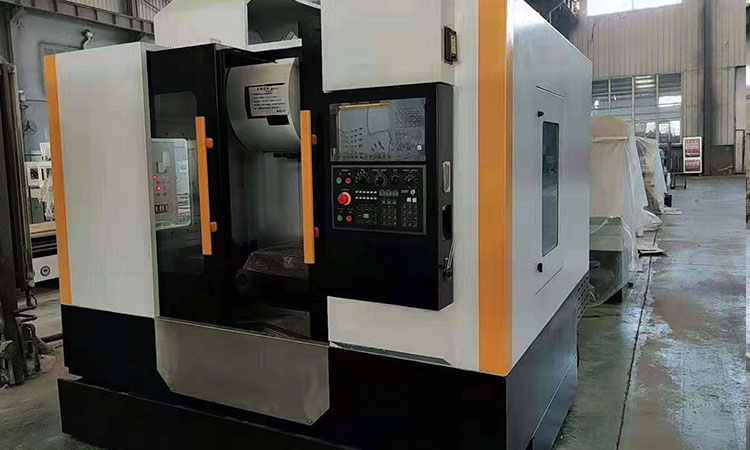
CNC Horizontal Turning Centers Application
Automated turning equipment finds its home wherever part quantities climb into the thousands per month. Bar-fed horizontal turning centers dominate these sectors:
Hydraulic and Pneumatic Fittings: Brass, steel, and stainless steel fittings — thousands of variants, all cylindrical, most under 3 inches in diameter. Bar feeders running 12-foot lengths push material through the spindle. One operator manages three or four machines, refilling bar magazines once per shift. A single machine might produce 1,200 fittings per shift. CNC pipe lathe in Iran installations show this exact workflow in high-volume oil and gas fitting production.
Automotive Transmission Components: Shafts, gears blanks, bushings — transmission parts need tight concentricity between diameters. Holding 0.01mm runout on a shaft 300mm long requires a rigid horizontal spindle with robust bearings. Bar-fed systems blank the gear, turn bearing journals, and cut snap ring grooves without unclamping. The part stays referenced to the same spindle centerline through all operations.
Bearing Components: Inner and outer rings start as seamless tube or bar stock. Turning centers rough-turn the raceway, bore the ID, and chamfer edges. Application of truss manipulator in bearing production at customer facilities proves that pairing turning centers with automation cuts labor to near zero.
Medical Device Implants: Bone screws, spinal rods, dental posts — small parts, exotic materials like Ti-6Al-4V, surface finish requirements below 16 Ra. A horizontal turning center with a Swiss-style guide bushing shines here, supporting the bar within millimeters of the cut. The payoff is the ability to turn long, slender parts from expensive bar stock without chatter or scrap.
Oilfield Components and Pipe Threads: API threads on couplings, subs, and connectors. Large-bore spindles (8 inches and above) swallow pipe directly. CNC pipe lathing to Brazil projects repeatedly deliver machines that thread pipe ends in 90 seconds. The horizontal layout handles the weight of the pipe without distorting the thread form.
CNC Horizontal Turning Centers Price
Budgeting for a horizontal turning center demands more than comparing base machine quotes. The purchase price stretches widely depending on configuration, automation, and brand. A basic 2-axis 8-inch chuck turning center with a Fanuc or Syntec control starts around $45,000 to $65,000 from a quality Chinese manufacturer with a solid export track record. Add live tooling and a Y-axis — now you are at $75,000 to $110,000. Go to a sub-spindle, dual-turret machine with a bar feeder interface, and the system cost climbs to $130,000–$180,000 or more.
What swings the price aggressively:
- Bar feeder type and capacity: A 12-foot Hydrodynamic bar feeder supporting 3-inch bar stock can cost $30,000 on its own. Pneumatic bar feeders cost half that but limit rotational speed and precision.
- Spindle bore diameter: Moving from a typical 2.5-inch bar capacity to 4 inches or larger dramatically increases spindle and casting cost.
- Control system: Fanuc vs. Siemens vs. Syntec. Fanuc typically commands a premium; Syntec offers strong price-performance with growing global support.
- Tooling package: A machine with no tool holders is a paperweight. Budget $8,000–$15,000 for initial VDI or BMT tool blocks, collets, and cutting tools.
- Freight and import duties: A 7-ton machine shipped from China to Houston runs $4,000–$7,000 in ocean freight plus 4.4%–5% customs duties depending on the specific HTS classification.
If you are comparing a $50,000 machine to a $120,000 machine, stop comparing specs sheets. Instead, calculate the cost per part. A machine that runs 40% faster with 0.1% scrap often pays back the price difference in 14 months.
User Guide for CNC Horizontal Turning Centers
Installing and running a bar-fed CNC lathe production system is not like dropping a manual lathe on the floor and plugging it in. The bar feeder integration demands thoughtful setup. Here's what we tell customers during installation:
Foundation and Leveling: A 6-inch-thick reinforced concrete pad isolates vibration. The machine must be leveled to within 0.02mm per meter using precision levels. An unlevel machine bed twists — and cuts a taper. Anchor bolts secure the machine. If you skip anchoring, the machine can walk across the floor during rapid G0 moves, eventually pulling coolant lines and cables loose.
Bar Feeder Alignment: The bar feeder centerline must match the spindle centerline exactly. Misalignment by 0.005 inches creates vibration and accelerated spindle liner wear. Use a dial indicator mounted in the spindle to sweep the bar feeder pusher and guide channel. Correct any deviation before running a single bar.
Spindle Liner Selection: The spindle liner reduces the internal spindle bore to match the bar diameter closely. A liner with 0.030 inches clearance prevents bar whip at high RPM. Running a 1-inch bar in a 2.5-inch bore without a liner at 3,000 RPM will destroy the spindle bearings within weeks. Keep a set of liners for your common bar diameters.
Coolant Concentration and Filtration: Maintain coolant concentration at 7%–10%. Skimp to 3%, and you will grow bacteria, rust your machine table, and smoke out your operators with rancid mist. Install a coalescer or oil skimmer to remove tramp oil from the bar stock. Clean coolant extends tool life by 20%–30%.
Remnant Optimization: The bar feeder cannot push the last few inches of stock past the chuck jaws. That remnant is scrap. On expensive materials — 316 stainless, titanium — a $4 remnant per bar on 200 bars per day adds up to $800 daily scrap that piles up into $16,000 monthly. Program the machine to minimize remnant length or use a second operation to reclaim remnants.
MAKCNC Supplier of CNC Horizontal Turning Centers
MAKCNC designs and builds cnc horizontal turning centers, professional cnc machining center solution, and complete automated turning equipment lines from our facility in Shandong, China. We ship to over 30 countries. We are not a trading company that rebadges other factories' machines. We pour our own castings, machine our own components, and assemble every machine on our floor. This vertical integration lets us control quality and cost. Our global cnc machiery cases of makcnc demonstrate repeat customer relationships — not one-off sales. We work with oilfield equipment manufacturers, automotive part suppliers, hydraulic component producers, and bearing factories. We have installed bar-fed turning systems in Iran, Brazil, Australia, and across Southeast Asia. About MAKCNC, you will find a customized cnc machines and machining centers from makcnc engineering team, not a generic catalog. We configure machines to your part drawings before quoting.
If you are searching for a reliable horizontal turning center supplier with proven bar-fed production expertise, please contact us for the latest pricing and machine specifications. We respond within 24 hours with a complete proposal tailored to your parts and production targets.
FAQ of CNC Horizontal Turning Centers
How do CNC horizontal turning centers improve bar-fed production?
A horizontal turning center with an integrated bar feeder eliminates manual part loading. The bar stock sits in a magazine or loading rack. The bar feeder pushes the material through the spindle automatically after each part cycle. The machine pulls the bar to a stop, clamps the chuck, machines the part, cuts it off, and ejects it. Cycle repeats. One operator can monitor three or four machines simultaneously, mainly watching for tool wear and refilling bar magazines every 4–6 hours. Output jumps from 50–100 parts per shift on a manual setup to 600–1,200 parts per shift with automation. The machine runs unattended through breaks, lunch hour, and overnight with proper tool life monitoring. This is the core advantage: consistent throughput without the labor cost scaling linearly with production.
What parts are best suited for horizontal turning centers?
Parts with length-to-diameter ratios above 1:1 normally suit horizontal turning centers better than vertical configurations. Think shafts, pins, bushings, spacers, connectors, fittings, valve stems, and pipe nipples. The part should be directly chuckerable or bar-feedable — that means round stock. Square or irregular castings need a vertical turning center or a VMC with a rotary table. Typical part envelope for common horizontal machines: diameters from 0.25 inches up to 20 inches, lengths from 0.5 inches to 40 inches. Beyond these dimensions, specialized heavy-duty horizontal turning centers with larger beds and bigger spindles handle oilfield pipes and large shafts up to 120 inches long. Material matters too: free-machining steels like 12L14, 303 stainless, brass, and aluminum run beautifully. Tougher materials like Inconel 718 and Ti-6Al-4V are possible but require rigid setups and specific cutting tool strategies.
How to select a bar feeder for a CNC turning center?
Start with your bar diameter range. Measure the smallest and largest diameter bars you will realistically run. Match the bar feeder capacity to these diameters. Next, decide on hydrodynamic vs. pneumatic. Hydrodynamic bar feeders support the bar in an oil film, allowing higher RPM without vibration or noise. They cost more but handle smaller diameter, high-speed applications. Pneumatic bar feeders use nylon guide channels and are economical for bars above 0.75 inches diameter running below 3,000 RPM. Check spindle liner compatibility — the bar feeder must work with liners that fit your spindle bore. Verify the bar magazine length. If you buy 12-foot bars, a 6-foot magazine requires cutting every bar in half — doubling remnant scrap and handling. Finally, check the bar feeder's interface protocol with the machine control. Fanuc controls communicate seamlessly with major bar feeder brands like LNS, Iemca, and FMB using standard M-code macro programs. Confirm compatibility before purchasing. A mismatched bar feeder is an expensive paperweight.
Selecting the right CNC turning center with bar feeder configuration directly determines your cost-per-part and your ability to deliver on time. Talk to MAKCNC engineers — we size the bar feeder, spindle liners, and tooling as one integrated package, not as separate afterthoughts.