
Horizontal CNC Machining for Gearbox Housing Parts
What is Horizontal CNC Machining
Horizontal CNC machining is a computer-controlled cutting process in which the spindle approaches the workpiece from the side. This spindle orientation makes it easier to machine several faces of a gearbox housing, transmission case, pump body, or similar component with fewer manual changes between operations. A typical machine may include a pallet changer, automatic tool changer, rotary table, or indexing fixture to produce bores, mounting faces, threaded holes, slots, and sealing surfaces in a controlled sequence. For gearbox housing production, this matters because bore alignment and the relationship between multiple machined faces directly influence bearing life, gear meshing, operating noise, and oil sealing. Rather than treating every face as a separate operation, the programmer can establish a common datum system and finish connected features from a stable setup.
Types of Horizontal CNC Machining
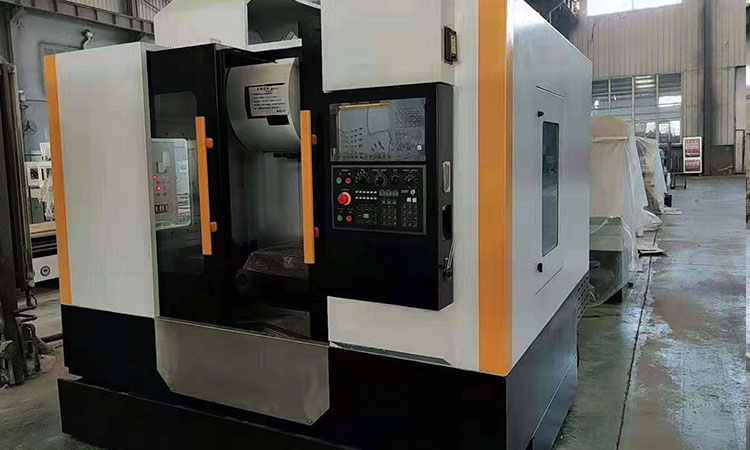
Horizontal machining equipment is available in several configurations, each suited to different production needs. A standard horizontal machining center is often chosen for prismatic housings made from cast iron, aluminum alloy, or steel. A four-axis model adds rotary positioning, allowing the tool to reach side faces without removing the component. A five-axis horizontal center can machine complex contours and angled features, often reducing the number of fixtures needed for demanding parts. Some production lines use twin-pallet machines, allowing one housing to be machined while the operator loads the next blank. Heavy-duty models feature larger tables, stronger spindle bearings, and higher torque for iron castings or thick steel cases. The right machine depends on housing size, bore diameter, material, annual output, and the number of surfaces that must remain precisely related.
Features of Horizontal CNC Machining
Setup efficiency is one of the main advantages of this equipment. Gearbox housings often include a large central cavity, bearing bores on opposite sides, and several mounting surfaces. A horizontal spindle can enter the cavity more directly and cut across the length of the part without the same tool overhang that may occur on a vertical machine. The horizontal machining process also improves chip evacuation. Gravity helps chips fall away from the cutting zone instead of collecting around deep pockets or bores. This reduces the risk of recutting chips, scratching finished faces, or packing material into internal corners. With a suitable fixture, the machine can maintain a common datum for bearing bores, dowel holes, and flange faces, supporting repeatability from the first housing to the last.
Setup Efficiency and Multi Face Access
Fewer setups mean fewer opportunities for positioning error. On a gearbox housing job, the first setup may establish the main reference face while roughing and finishing features on two adjacent sides. After pallet rotation or controlled indexing, the machine can complete the remaining faces while retaining the programmed coordinate relationship. This can reduce handling time, fixture costs, inspection interruptions, and work-in-process inventory. It is also useful for replacement parts, since the same fixture and coordinate system can be retained for a later production order. In our experience, buyers should ask how a supplier controls fixture repeatability, probing routines, tool offsets, and workholding pressure. These details can matter as much as spindle speed when the finished part includes several bores that must align within a defined tolerance.
Bore Alignment and Surface Control
Gearbox housing performance depends heavily on the location and alignment of bearing seats. A bore that is slightly out of position can alter shaft center distance, increase gear wear, or create unwanted operating noise. Horizontal CNC milling can machine related bores from a common setup, reducing the risk that a second clamping operation will shift the centerline. The machine should use stable linear guides or box ways suited to the application, a properly supported spindle, and a calibrated probing system where required. Buyers should also review how the supplier measures coaxiality, perpendicularity, flatness, and bore diameter. Typical inspection equipment includes a coordinate measuring machine, bore gauge, height gauge, or in-process touch probe. Measurement records should identify the part number, revision, material, tolerance, and inspection equipment used.
Gearbox Housing and Transmission Case Applications
Horizontal CNC machining is widely used for gearbox housings, reduction gear cases, transmission cases, differential bodies, motor housings, pump bodies, valve blocks, and hydraulic manifolds. A gearbox housing may require roughing of a large internal cavity, finishing of several bearing bores, drilling and tapping for covers, machining oil passages, and preparing gasket faces. Transmission cases often add angled holes, inspection openings, dowel locations, and mounting pads. The same production method can support industrial gear reducers, agricultural machinery transmissions, conveyor drives, mining equipment, and automotive components. Material selection changes the cutting strategy. Aluminum permits higher cutting speeds and larger chip loads, while cast iron demands attention to dust control, insert wear, and cutting-edge strength. Steel housings may require lower cutting speeds, stronger workholding, and planned coolant delivery.
Why Gearbox Housing Parts Suit This Method
These parts suit the method because their critical features are distributed across more than one face. A vertical machine can produce many of these features, but the operator may need to reposition a large housing several times. Each repositioning adds handling effort and introduces another chance for datum variation. A horizontal center gives the tool better access to deep internal areas and side walls, especially when a long boring bar or extended cutter would be unsuitable on a vertical setup. The result is a practical balance between output and dimensional control. For buyers comparing suppliers, the important question is not simply whether a factory owns a horizontal machine. Ask whether it has machined comparable castings, whether it can verify bore relationships, and whether its fixture design supports the required production volume.
Horizontal CNC Machining Services and Quality Requirements
Professional horizontal CNC machining services normally include engineering review, fixture planning, CNC programming, material preparation, cutting, deburring, cleaning, inspection, and packing. For gearbox housings, the supplier should review the drawing before quoting. Wall thickness, casting allowance, datum selection, tool access, chip clearance, and inspection points all influence the final process. A sound manufacturing plan separates roughing from finishing where necessary and leaves a controlled amount of material for the final pass. It also defines how large bores will be produced, whether a boring head or interpolation method is more appropriate, and how thermal growth will be monitored during long production runs. MAKCNC provides a range of machining equipment and can discuss a project through its professional cnc machining center solution resources.
Horizontal CNC Machining Price
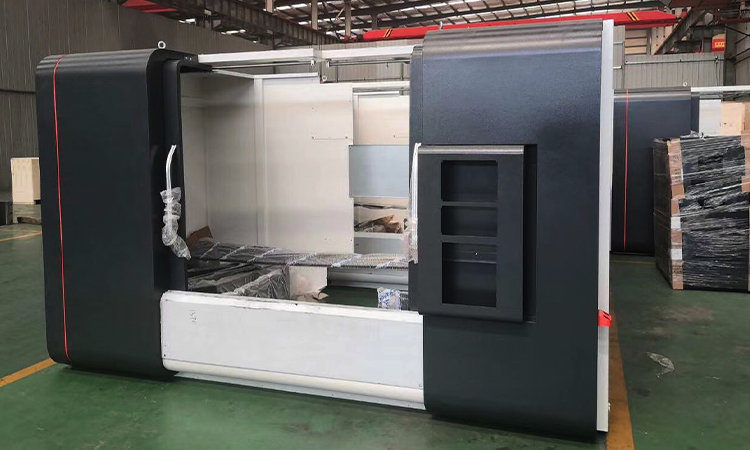
The price of gearbox housing production varies with part size, material, tolerance, annual quantity, programming time, and inspection requirements. A small aluminum motor case with broad tolerances may be economical to produce in batches of 100 or more. A large cast-iron reducer housing with a 250 mm bearing bore, tight coaxiality, and multiple sealing faces requires more tooling, longer cycle time, heavier workholding, and more inspection. Fixture design is another major cost factor. A basic vise or plate fixture may be enough for a simple case, while a dedicated hydraulic fixture with locating pins and controlled clamping may be justified for repeat production. Freight, raw casting quality, surface treatment, packaging, and sample approval should also appear in the quotation. Buyers should compare the complete delivered cost rather than the machine-hour rate alone.
What Should Be Included in a Quotation
A useful quotation should list the proposed material, blank condition, machining allowance, estimated cycle time, fixture cost, tooling assumptions, inspection method, surface finish, packaging, and delivery terms. It should also state whether the supplier is quoting one setup or several setups. For export orders, clarify Incoterms, documentation, wooden case treatment, spare tooling, and sample approval procedures. If the drawing contains GD&T symbols, ask the supplier to confirm how each requirement will be measured. A low unit price may not be attractive if the supplier excludes fixture development or sends parts that need rework at the buyer’s plant. MAKCNC can also review special production requirements through its page for customized cnc machines and machining centers from makcnc.
Horizontal CNC Machining User Guide
Before production begins, confirm the latest drawing revision, material certificate, casting condition, and datum scheme. The fixture should support the housing without distorting thin walls or sealing flanges. Locating pins must contact prepared reference surfaces, while clamps should apply pressure near supported areas. Check that the workpiece will not interfere with the spindle, tool changer, pallet, or enclosure during indexing. During cutting, select tools suited to the material and use coolant or air strategically to clear chips from deep cavities. A probing cycle can verify casting position before expensive finishing operations begin. Operators should monitor spindle load, vibration, tool wear, bore size, and coolant condition. After machining, remove burrs from oil passages and threaded holes, wash the component thoroughly, and protect finished faces from impact and corrosion.
Inspection and Maintenance Tips
Inspection should focus on the features that control assembly and operating life. Check bearing bore diameter and roundness, the distance between bore centers, flange flatness, mounting-hole position, thread quality, and the relationship between cover faces and housing datums. If the part is large, allow it to reach a stable temperature before final measurement. Keep the horizontal machine clean around the pallet, spindle taper, tool holders, and chip conveyor. A small chip beneath a fixture locator can shift the part enough to affect bore position. Scheduled checks of spindle runout, axis backlash, lubrication, coolant concentration, and rotary-table accuracy help prevent gradual quality loss. These routine actions are straightforward, but they protect consistency across a production batch.
How to Choose a Horizontal CNC Machining Supplier
When deciding how to choose a horizontal CNC machining supplier, assess equipment capability and manufacturing discipline together. Ask about machine travel, table load, spindle taper, spindle torque, pallet size, fourth-axis or fifth-axis capability, and maximum workpiece dimensions. Then review the supplier’s experience with castings, bearing bores, internal cavities, and multi-face parts. A capable supplier should be willing to discuss fixture design, first-article inspection, process approval, and corrective action. References from similar industries can be useful, particularly for agricultural machinery, industrial drives, petroleum equipment, and mining components. MAKCNC has experience serving international customers and presents its background as an about makcnc professional cnc lathing machine manufacturer. Its wider product range includes CNC lathing machines, CNC machining centers, and other CNC machines for different production needs.
Export buyers can also review documented applications before sending a drawing package. MAKCNC publishes global cnc machinery cases of makcnc, including equipment supplied for pipe machining and other industrial work. A supplier that answers technical questions clearly is usually easier to work with during sample approval, production scheduling, and after-sales support. Request a video or inspection report when the project is new, and provide the supplier with annual demand, target cycle time, tolerance data, and preferred delivery terms. Those details lead to a more useful recommendation than a general request for the cheapest machine or service.
FAQ of Horizontal CNC Machining
How does horizontal CNC machining improve gearbox housing accuracy
Horizontal CNC machining can improve gearbox housing accuracy by reducing the number of times the part is removed and repositioned. Bearing bores, dowel holes, mounting faces, and cover surfaces can often be machined from a shared datum system. This helps preserve the relationship between features that affect shaft alignment and gear engagement. The horizontal spindle also provides direct access to deep cavities and side faces, reducing tool overhang and cutting deflection in many applications. Chip evacuation is another advantage because chips tend to fall away from the cutting area rather than collecting inside a pocket. Accuracy still depends on machine condition, fixture stability, tool selection, temperature control, probing, and measurement. The method supports better control, but the supplier must use a suitable process and verify the finished housing with appropriate gauges or a coordinate measuring machine.
What parts are best suited for horizontal CNC machining
Parts with several machined faces, deep cavities, intersecting bores, or repeated side features are usually good candidates. Gearbox housings, transmission cases, differential bodies, pump bodies, valve blocks, hydraulic manifolds, motor housings, and large bearing supports are common examples. The method is also useful when a component is heavy and difficult to rotate manually. A horizontal center can hold the part on a pallet or dedicated fixture and reach multiple faces through indexing. Parts with a long centerline, such as a housing containing two or more aligned bearing seats, may gain particular value from this setup. Very simple flat plates may be more economical on a vertical center, while round shafts are normally better suited to a CNC lathe. The correct choice depends on geometry, quantity, tolerance, material, and required production time.
How to choose a horizontal CNC machining supplier
Start by matching the supplier’s machine envelope and spindle capacity to the housing rather than relying on a general equipment list. Confirm maximum workpiece weight, table dimensions, axis travel, pallet arrangement, rotary capability, and the supplier’s experience with your material. Ask how the company controls bore alignment and how it reports inspection results. You should also clarify fixture ownership, programming responsibility, sample quantities, delivery milestones, packaging, and warranty support. A capable supplier will review the drawing and identify risks before production, such as thin walls, insufficient casting allowance, inaccessible holes, or a datum that may distort during clamping. For international buyers, request export references, communication procedures, spare-part support, and clear commercial terms. A detailed technical review at the beginning often prevents expensive changes after the first shipment.
MAKCNC Horizontal CNC Machine Supplier
MAKCNC supplies CNC Lathing Machines, CNC Machining Centers, and CNC Machines for manufacturers that need dependable metal-cutting equipment. Its recommended machining center and oilfield lathe products are designed around high speed, high rigidity, high performance, and efficient production for industries such as automotive, aerospace, agricultural machinery, petroleum, minerals, chemical equipment, water conservancy, and geological exploration. Buyers evaluating gearbox housing production can compare a horizontal CNC machining center with suitable vertical models, including the vertical cnc machining center MV1380 when part access or factory layout favors vertical cutting. If you are looking for a horizontal CNC machine supplier, contact MAKCNC for the latest product quotation, machine specifications, application advice, and export support.