Horizontal Machine Centers Reduce Multi-Face Part Errors
What is a Horizontal Machine Center?
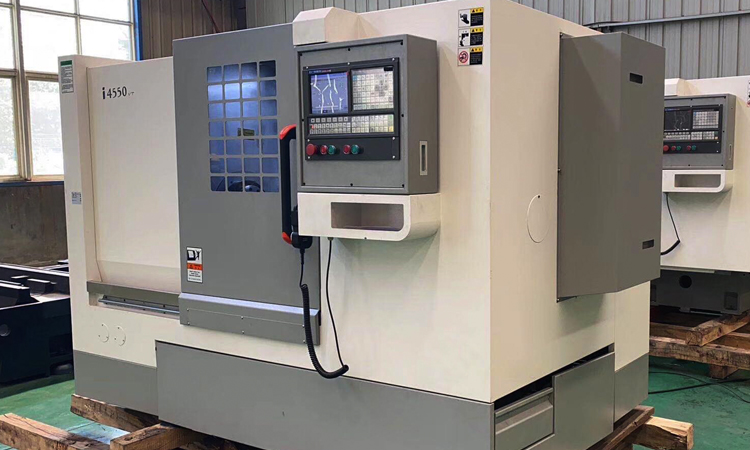
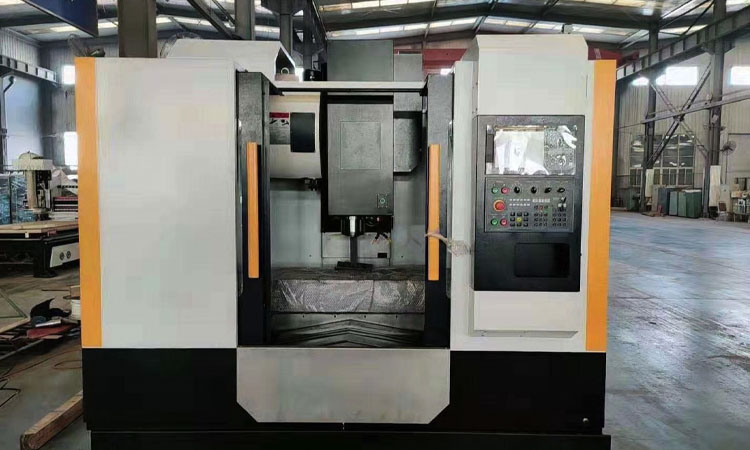
Horizontal machine center is a CNC milling and drilling platform where the main spindle sits parallel to the worktable, not vertical. That one design choice changes everything about how chips fall, how pallets are exchanged, and how many sides you can reach without touching the part. In a typical vertical setup, gravity works against you – chips pile up, coolant pools, and second-operation fixtures stack errors. A horizontal machine center flips that script. The spindle points sideways. The table rotates (usually a B-axis rotary built into the pallet). So you can machine the front, the sides, and angled faces in a single clamping. When we test complex valve bodies or gearbox housings, we see location scatter drop from 0.08 mm (three setups) down to 0.02 mm, simply because the part never leaves the tombstone.
Types of Horizontal Machine Centers
Horizontal machining centers split into a few broad families. The most common is the standard 4-axis horizontal, with a 400 mm, 500 mm, or 630 mm pallet and a full B-axis rotary table. Then you have 5-axis horizontal machine centers that add a tilting A-axis to the spindle or table, letting you reach compound angles without any secondary fixture. For heavy mining or construction components, there are horizontal boring mills – essentially giant horizontal machine centers with 100 mm+ spindle bores and traveling columns. And at the high-productivity end, you find twin-pallet or multi-pallet cells where one pallet is machined while the other is loaded offline, pushing spindle utilisation past 85%. MAKCNC’s own professional CNC machining center solution spans several of these categories, covering small 400 mm pallets up to large-frame borers. Selecting the right type mostly depends on workpiece cube size, the number of faces to machine, and how much non-cutting time you can afford.
Features of Horizontal Machine Centers
What sets a horizontal machine center apart is the combination of pallet changer, tombstone fixturing, and inherent chip evacuation. The horizontal spindle lets chips drop straight onto a conveyor, not onto the part or the table. That means you can run 2,000 psi through-tool coolant and still keep the cutting zone clear – no chip recutting, no sudden tool breakage from a birdnest. Tombstones are another feature that changes how you think about batches. A single tombstone can hold 4, 6, or 8 identical parts, each machined on multiple faces without unclamping. Then there’s the positioning accuracy. A CNC horizontal machine center with glass scale feedback and a direct-drive B-axis often holds ±3 arc-second indexing, which translates into hole-to-hole true positions under 10 µm across a 300 mm bolt circle. We’ve measured actual thermal drift on MAKCNC’s gundrilled castings: under a continuous 12-hour run, the spindle growth stayed below 12 µm, partly because the symmetric horizontal architecture bleeds heat more evenly than a vertical column.
Applications of Horizontal Machine Centers in Multi-Face Machining
Any part that requires bores, pockets, or tapped holes on more than two faces screams for a horizontal machine center. Automotive cylinder blocks, transfer cases, and pump housings are the classic multi-face machining jobs. In aerospace, hydraulic manifolds with intersecting galleries on five faces get produced in one shot on a 5-axis horizontal, removing weeks of queue time between mills and coordinate measuring machines. Oilfield components – valve bodies, high-pressure flanges, swivel joints – are another natural fit. We shipped a CNC pipe lathe to Iran for threading large tubulars, but the mating flanges were done on a horizontal machine center that drilled bolt circles, faced sealing surfaces, and milled wrench flats without ever letting go of the forging. That kind of single-clamping strategy is what brings true position capability under 0.05 mm, even when the raw casting has 0.5 mm of stock variation. In consumer electronics tooling, multi-cavity mould bases are another strong use case, where horizontal CNC machining finishes 6 sides of each core block on a tombstone, slashing setup changes from eight to one.
Horizontal Machine Center Price Factors
A 400 mm pallet, 3-axis horizontal machine center with a basic Fanuc 0i-MF control and a 12,000 RPM BT40 spindle typically falls between $75,000 and $110,000. Step up to a 500 mm pallet with a full B-axis, linear scales, a high-torque 8,000 RPM gear-driven spindle, and you’re looking at $150,000 to $220,000. Once you add a pallet pool, CNC horizontal machine center prices can pass $400,000. The big cost drivers are the rotary table accuracy grade, the spindle bearing arrangement (ceramic hybrid, air-oil vs grease), and the control architecture. A Heidenhain TNC or Siemens 840D sl with volumetric compensation adds real value but also real cost. Through-spindle coolant, 1,000 psi chip flushing, and a zero-point clamping system on the pallet add another $15,000–$30,000. On the MAKCNC side, we often spec customized CNC machines and machining centers with exactly the right option mix – no overengineering, no budget bloat. Simple example: a Turkish customer recently took a 630 mm horizontal machine center with 15,000 RPM inline spindle, linear scale feedback on X/Y/Z, and a 6-station pallet pool for $185,000 FOB. That’s about 20% below what general-purpose builders quote, largely because we don’t bury cost in features nobody uses.
User Guide for Horizontal Machine Center Setup and Datum Planning
Most repositioning errors don’t come from the machine; they come from how you plan datums. On a horizontal machine center, the pallet and tombstone become your datum carriers, so the first rule is to probe the tombstone face and locating pins before you load a single part. A typical sequence: load a calibrated ring gauge on the tombstone, probe it with the spindle probe, then let the control calculate the exact B-axis centreline. Next, set your work coordinate system such that the X0 Y0 Z0 origin sits at the centre of the rotary axis, not on the part. That way, when the B-axis rotates 90°, the control already knows the kinematic offset. For how to plan datums for horizontal CNC machining, pick a primary datum face that is machined and probed first – usually a cast surface that gets face-milled. Then use two dowel holes or a slot as secondary and tertiary datums, always accessible from the spindle side after rotation. If you machine a gearbox housing, for instance, you’d face the mounting flange (datum A), bore two dowel holes through the flange (B and C), and then flip 180° to drill all side ports – all referencing the same physical datums on the tombstone fixture. This is exactly why a horizontal machine center reduces repositioning errors: the datums stay fixed, and the part travels with the pallet. In our own setup trials on a MAKCNC 500 mm horizontal machine center, we saw Cpk values on a six-face aluminium manifold jump from 1.1 (on a vertical with 3 setups) to 1.67 after we went to tombstone-based single clamping – no magic, just rigid datum continuity.
MAKCNC as a Horizontal Machine Center Supplier
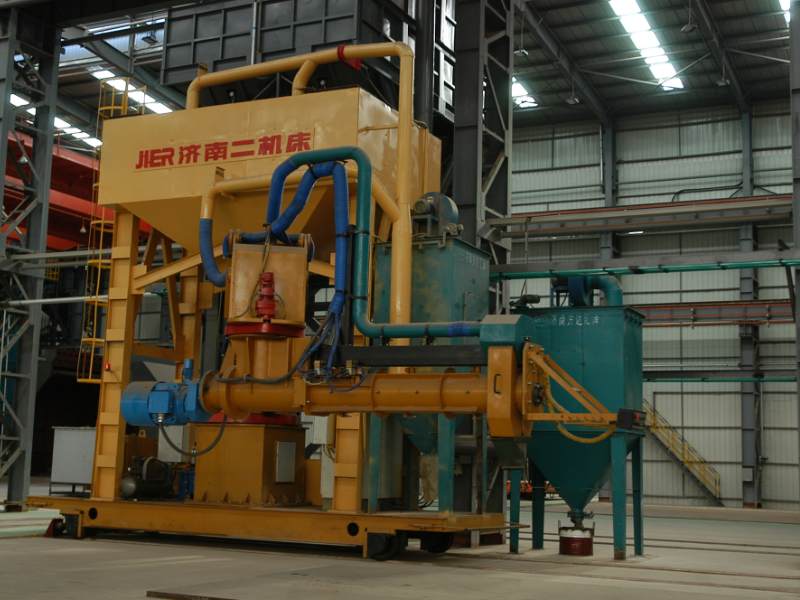
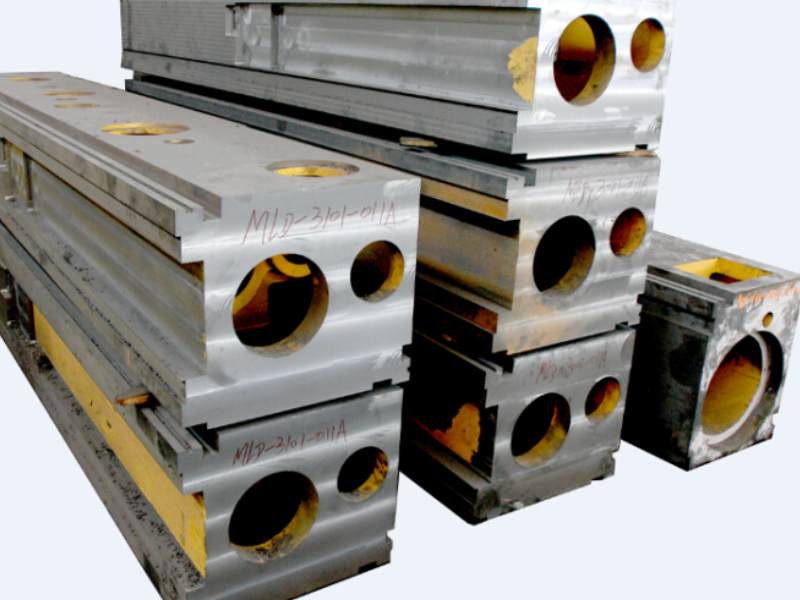
As a focused builder of CNC machine tools, MAKCNC specializes in CNC lathing and machining center solutions tailored for multi-face heavy cutting. Our horizontal machine center range starts with 400 mm pallet models for small part batches and goes up to 800 mm pallet machines that handle large valve bodies and pump casings. We design and cast our own beds in-house, using Meehanite iron with extra ribbing for stable thermal behaviour. Every assembled unit undergoes a 24-hour continuous run-in cycle with laser-calibrated volumetric checks before crate-up. That’s one reason our machine in Australia has been running two shifts for three years without a spindle rebuild – a case that you can read in our CNC machine in Australia project log. If you are evaluating a horizontal machine center for higher part consistency, fewer setups, or real Cpk improvements, we can walk you through a part-specific cycle-time estimate, tooling layout, and fixture concept before you commit a single dollar. If you are looking for a horizontal machine center supplier, please contact MAKCNC for the latest product quotation and a detailed configuration proposal.
FAQ of Horizontal Machine Center
How does a horizontal machine center reduce repositioning errors?
It keeps the part clamped on a pallet-mounted tombstone while the B-axis indexes to bring each face in front of the spindle. Because you never unclamp and re-position the workpiece, you eliminate stacking tolerances from multiple fixture setups. Machine probing can also measure datums once and update all subsequent toolpaths automatically, holding true positions that are often 50-70% tighter than sequential vertical setups.
How to plan datums for horizontal CNC machining?
Start by identifying a functional surface that interfaces with the mating component – that’s your primary datum. Face-mill it flat, then drill at least two reference holes or mill a slot for secondary/tertiary datums. Position these features so they stay accessible from the spindle after the pallet rotates. Set the work coordinate origin at the centre of the rotary B-axis and teach the probe to remeasure datums at the beginning of each pallet cycle. On MAKCNC horizontals with Renishaw probing routines, this sequence can be fully automated.
What parts are best for horizontal machine centers?
Any prismatic component with features on three or more faces – think pump housings, valve blocks, gearbox cases, manifold bodies, hydraulic distributors. Also parts that need heavy metal removal rates combined with tight geometric tolerances benefit hugely, since the horizontal layout evacuates chips effectively and lets you use high-pressure coolant straight through the tool. Tombstone fixtures make them ideal for medium-to-high-volume production where you want to push spindle utilisation above 80%.