Vertical CNC Machining Center Guide for Industrial Buyers
What is a Vertical CNC Machining Center?
A Vertical CNC Machining Center is a computer-controlled machine tool that removes material from a workpiece with its spindle positioned vertically. The workpiece is typically secured to a table, while cutting tools are held in the spindle above it. The control system coordinates spindle movement, feed motion, tool changes, and programmed machining paths. For buyers, this layout can combine milling, drilling, tapping, and other operations in one setup. The vertical arrangement also gives operators a clear view of the work area and allows practical loading for many mould, component, and small-batch production tasks. The term computer numerical control refers to the automated control method behind the machine.
Unlike a basic milling machine, a Vertical CNC Machining Center is built for programmed production and repeatable machining. Its value depends on more than spindle power. Machine structure, guideways, screw systems, control functions, workholding, and operator processes must work together. MAKCNC uses high-strength cast iron structures, including resin-sand castings, with ageing treatment to support long-term accuracy and rigidity. Core transmission components commonly use high-precision Taiwan or German branded screws and guideways. This gives purchasing teams a more useful basis for comparing suppliers than catalogue appearance or a single headline specification.
Types of Vertical CNC Machining Center
Different production conditions require different machine arrangements. A Vertical CNC Machining Center may be selected for mould work, general component machining, prototype production, or varied small-batch orders. The right type depends on workpiece size, required tool access, machining sequence, production quantity, and available floor space. Buyers should first define the parts they plan to process, including material, shape, number of faces, hole patterns, and finishing requirements. A machine intended for one repeat component may differ from one designed for a broad range of changing jobs. MAKCNC provides several vertical models, while its product range also includes horizontal machining equipment and CNC lathes for turning operations.
| Type or model | Typical buying consideration | Useful application direction |
|---|---|---|
| Vertical machining center | Clear table access and vertical spindle arrangement | Moulds, plates, housings, and general components |
| Vertical CNC Machining Center MV1160 | Model selection based on the buyer’s part and process requirements | Mixed production and scheduled machining work |
| Vertical CNC Machining Center MV1270 | Review work envelope, tooling plan, and installation conditions | Production departments requiring a dedicated vertical machine |
| Vertical CNC Machining Center MV1380 | Match the model to part dimensions and planned fixtures | Larger mould and component machining requirements |
The machine type should also fit the rest of the workshop. A vertical model can handle many workpieces that do not require the side access of a horizontal arrangement. When several faces must be machined, buyers should ask whether the process can complete them in one clamping operation. For turning work, a CNC lathe may be more suitable than a machining center. When a part requires both turning and milling, the purchasing team may need a combined process plan using more than one machine category. This practical review helps prevent a low purchase price from creating extra setup work, repeated alignment, or unnecessary movement between machines.
Features of a Vertical CNC Machining Center
A Vertical CNC Machining Center typically combines a rigid casting, linear guide and screw transmission systems, a spindle assembly, automatic tool management, a worktable, a control cabinet, a lubrication system, and a safety enclosure. MAKCNC machines use high-strength cast iron, including resin-sand castings, with ageing treatment intended to maintain accuracy and rigidity over long-term use. The transmission system is equally important. Taiwan or German high-precision screws and guideways can support coordinated movement when correctly matched with the structure, drive, control, and installation process. Buyers should therefore assess the complete machine system rather than choosing a supplier based on one component brand alone.
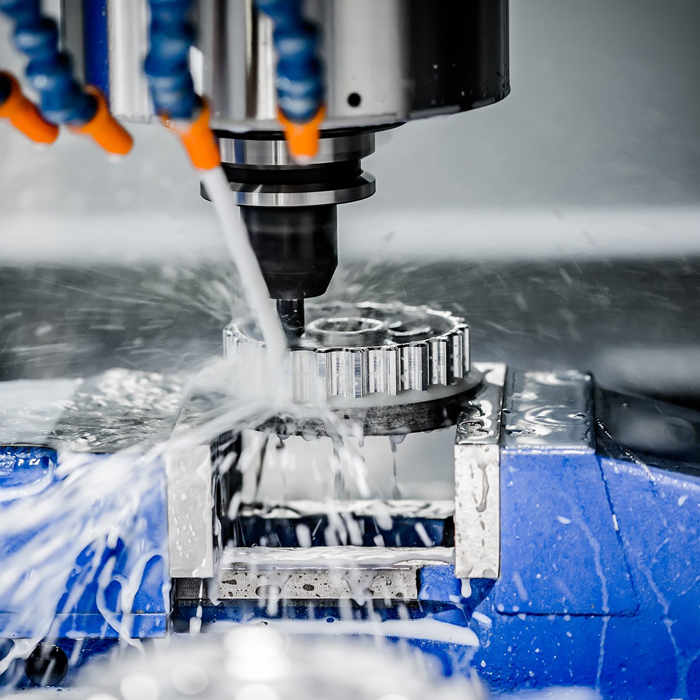
For mould manufacturers, the control package can be a major purchasing factor. Advanced system integration may include intelligent feedforward and over-quadrant sudden-jump compensation. These functions are designed to address common machining marks such as overcut marks, quadrant marks, and vibration lines. The practical benefit is a better chance of achieving a stable surface result when programming and cutting conditions are also suitable. A Vertical CNC Machining Center can also support multiple-face machining in one setup, which is useful for varied small-batch production. One setup may reduce repeated positioning work and help the operator maintain a consistent reference across several surfaces.
Why This Vertical CNC Machining Center Fits Mixed Production
The key differentiator is not simply the vertical spindle direction. The more relevant question is how the machine helps a factory manage surface quality, setup control, and changing orders. The following comparison gives procurement teams a practical view of the value offered by an integrated machine system.
| Buyer concern | Integrated machine response | Business meaning |
|---|---|---|
| Long-term rigidity | High-strength cast iron construction with ageing treatment | Supports stable structure and repeatable machining conditions |
| Movement coordination | High-precision screws and guideways from Taiwan or Germany may be integrated with the drive system | Helps the machine work as a coordinated system rather than as isolated parts |
| Mould surface marks | Intelligent feedforward and over-quadrant sudden-jump compensation | Addresses overcut marks, quadrant marks, and vibration lines during suitable machining processes |
| Changing small orders | Capability for multiple-face machining in one clamping operation | Can reduce repeated setup and repositioning work |
This comparison is useful when reviewing supplier quotations. A quotation should identify the machine configuration, control functions, component brands where applicable, installation scope, training, warranty terms, and service-response arrangements. Buyers should ask how the supplier verifies alignment and machine acceptance, not only which parts are installed. Procurement discussions tend to be more productive when buyers connect each feature to a real production problem. A control function has value when it helps address a surface mark. A rigid structure matters when it supports the planned work sequence.
Vertical CNC Machining Center Application
A Vertical CNC Machining Center is used in mould production, general metal component manufacturing, repair work, prototype machining, and varied small-batch production. Mould shops can use it for shaped cavities, plates, inserts, and related components where surface marks and contour control require close attention. General engineering companies may use it for housings, brackets, blocks, drilling patterns, and milled surfaces. The machine is also suitable for production teams that need several operations completed in a planned sequence without moving the workpiece to separate manual equipment. The final application depends on the part material, tooling, workholding, programmed path, cutting parameters, and inspection method.
Multiple-face machining can be useful when a part has holes, pockets, and milled surfaces on more than one side. Completing several surfaces after one clamping operation may help reduce datum changes and operator handling. This is particularly relevant to many-product, small-batch production, where a factory changes jobs more often than a high-volume line. For round or turned parts, a high quality and durable cnc lathe may be the better first choice. A factory can also combine a machining center with a CNC lathing machine when the completed part requires both turning and milling operations.
Vertical CNC Machining Center Price Factors
The price of a Vertical CNC Machining Center varies according to model, configuration, control system, structure, transmission components, tooling arrangement, workholding requirements, inspection needs, and service package. Buyers should avoid comparing two quotations by machine name alone. The same category may include different castings, guideways, screws, spindle arrangements, software functions, electrical systems, installation scopes, and training commitments. A lower initial quotation may exclude accessories or site services that later become separate costs. A useful comparison should list every included item and identify which items must be purchased locally or supplied by the customer.
Lead time can also influence the buying decision. MAKCNC was established in 2016 and operates multiple production lines with machine samples in stock. The normal delivery period is one to six months, depending on the selected configuration and order conditions. There is no fixed minimum order quantity; a buyer can purchase one machine. For multiple-machine orders, better commercial terms may be available for price, delivery, or after-sales service. Buyers should request a current quotation with the target model, configuration, quantity, destination, electrical requirements, installation plan, and acceptance conditions clearly stated.
Vertical CNC Machining Center User Guide
Before installation, confirm the foundation, workshop access, lifting route, power supply, environmental conditions, and maintenance space. Position and level the machine according to the supplier’s instructions. After installation, the operator should check lubrication, coolant arrangements, tool loading, workholding, emergency functions, and programmed travel before starting production. A trial component can help the team confirm datum setting, tool offsets, fixture access, and surface requirements. The first production run should be monitored by a trained operator who understands the control system and cutting tools used for the job.
Daily use should follow a clear operating routine. Keep the table and workholding area clean, inspect tool condition, confirm offsets, and check that the programmed sequence matches the fixture. Do not assume that a new program is correct simply because it has run on another machine. Review clearance, tool length, workpiece clamping, and possible interference before automatic machining. For mould work, use suitable programming and inspection practices to assess overcut marks, quadrant marks, and vibration lines. Preventive maintenance should follow the equipment manual and agreed service plan. Good operating practices protect both part quality and the long-term condition of the machine.
MAKCNC as a Vertical CNC Machining Center Supplier
MAKCNC supplies CNC Lathing Machine products, CNC Machining Center products, and other CNC Machine solutions for industrial buyers. The company was established in 2016 and has multiple production lines and machine samples in stock. Its manufacturing approach uses high-strength cast iron structures, ageing treatment, and selected high-precision screws and guideways from Taiwan or Germany. For buyers seeking a professional CNC machine manufacturer, the supplier can discuss model selection, machine configuration, order quantity, delivery planning, and project requirements.
Service terms should be reviewed before purchase. The usual warranty is twelve months after complete machine acceptance, followed by lifelong paid service. Some tender projects request a longer arrangement, such as three years of free warranty. A mature service network normally commits to responding within eight hours and reaching the site within forty-eight hours to handle a fault. These terms can vary by project, so they should appear in the commercial agreement. If your factory needs a dedicated machine layout or special process arrangement, you can also review customized CNC machines from MAKCNC.
FAQ of Vertical CNC Machining Center
What should I check before buying a Vertical CNC Machining Center?
Start with the parts rather than the machine name. Prepare drawings or sample parts, identify the largest workpiece, list the operations, and note which surfaces must be machined in one setup. Then review the required table arrangement, tool plan, workholding method, control functions, spindle requirements, guideway and screw configuration, installation conditions, and inspection process. Ask the supplier to confirm what is included in the quotation, including delivery, installation, training, warranty, and service response. If the machine will process moulds, ask how the control system addresses overcut marks, quadrant marks, and vibration lines. This approach gives the purchasing team a practical way to compare offers.
Can one machine handle small-batch and varied production?
Yes, a Vertical CNC Machining Center can be appropriate for varied small-batch work when the machine configuration, tooling, programming, and workholding are planned correctly. Its value in this setting comes from repeatable programmed movement and the possibility of completing multiple faces in one clamping operation. However, the machine does not remove the need for proper fixture design, tool selection, datum planning, and operator checks. Buyers should review several representative parts before selecting a model. A machine that suits one simple component may not suit a deep cavity, a large plate, or a part that needs side access. Process review remains the foundation of the purchase.
What warranty and service support can I request?
MAKCNC normally provides a twelve-month whole-machine warranty after acceptance and lifelong paid service afterward. Some bidding projects may require three years of free warranty, so the final terms should be written into the tender response and contract. Service network arrangements commonly target an eight-hour response and arrival at the site within forty-eight hours for fault handling. Actual commitments depend on the project, location, and agreement. Ask for the service contact method, spare-parts process, remote diagnosis procedure, installation responsibilities, training scope, and acceptance standard. A clear service plan helps managers evaluate ownership risk alongside the initial purchase price.
Can I order one machine instead of several?
Yes. MAKCNC has no fixed mandatory minimum order quantity, so one machine can be purchased. This supports companies that are adding their first machining center, testing a new production process, or replacing an existing machine. For buyers ordering multiple machines, improved commercial terms may be available through price, delivery, or after-sales service arrangements. The exact offer depends on the selected model, configuration, quantity, destination, and project schedule. Request a quotation that states the machine model, included equipment, delivery period, warranty, installation plan, and acceptance requirements. This creates a clear basis for internal approval and supplier comparison.
Choose MAKCNC for Your Next Machine Purchase
For buyers, managers, wholesalers, and engineers, the right machine decision begins with the part, process, and service plan. MAKCNC combines production experience since 2016, multiple production lines, sample machines in stock, high-strength cast iron construction, selected precision transmission components, and control functions intended for mould and mixed small-batch work. Its ISO9001-certified facility supports a structured manufacturing process. If you are looking for a Vertical CNC Machining Center supplier, contact MAKCNC for the latest quotation and discuss your model, quantity, delivery needs, installation conditions, warranty terms, and after-sales requirements.