Vertical Machining Center VMC Complete Guide for Buyers
What Is a Vertical Machining Center VMC?
A Vertical Machining Center VMC is a computer-controlled machine tool with a vertically oriented spindle that moves toward a workpiece secured on a table. It can perform milling, drilling, tapping, boring, and related cutting operations through programmed tool movements. For B2B buyers, the vertical layout offers practical advantages: operators can load workpieces from above, inspect the cutting area more easily, and machine a broad range of parts without changing the basic machine concept. The CNC system controls axis coordinates, spindle actions, feed movements, and tool changes. This provides production teams with a repeatable process for mold components, mechanical parts, fixtures, and small-batch work. When evaluating a machine, buyers should consider the structure, control integration, drive components, service support, and delivery terms rather than judging it by appearance alone.
Types of Vertical Machining Center VMC
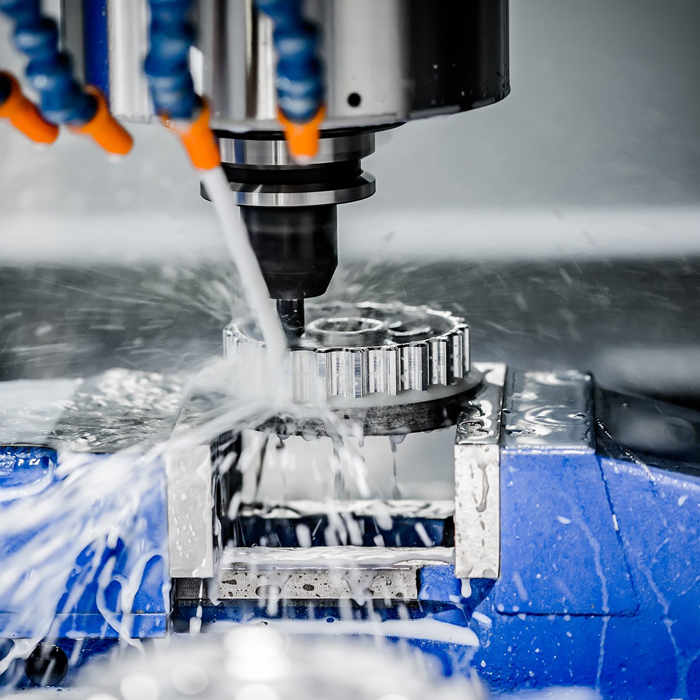
Vertical Machining Center VMC equipment varies mainly by work envelope, table arrangement, spindle configuration, control functions, and intended production tasks. A compact model may suit workshops with limited floor space or smaller workpieces, while a larger model can accommodate bigger fixtures and parts. Some machines are selected for general milling, while others are configured for mold processing, precision contouring, or mixed small-batch operations. Buyers may also compare a vertical machine with a horizontal machining center when chip evacuation, multi-face access, or fixture strategy is especially important. MAKCNC offers models including the vertical machining center MV1270 and other CNC machining center options. The right type depends on part size, material, tooling, process sequence, operator skill, and expected order patterns.
Common Machine Categories
- General-purpose vertical machines for varied milling and drilling work.
- Precision models for mold components and detailed contour machining.
- Compact machines for workshops and small-batch production.
- Larger vertical machines for bigger fixtures and workpieces.
- Multi-face machining solutions that reduce repeated workpiece repositioning.
Features of Vertical Machining Center VMC Equipment
A Vertical Machining Center VMC is defined by the way its structure, motion components, control system, and tooling arrangement work together. MAKCNC machines commonly use high-strength cast iron structures, including resin sand castings, with aging treatment intended to support long-term accuracy and rigidity. Core motion parts such as screws and guideways are commonly selected from high-precision Taiwanese or German brands. This selection does not replace process verification, but it gives buyers a useful starting point when reviewing machine construction. For mold applications, advanced control integration may include intelligent feedforward and over-quadrant jump compensation. These functions are intended to reduce over-cut marks, quadrant marks, and chatter patterns. The machine may also support multiple-face processing after one setup, which can help when a job includes several related surfaces and production volume is limited.
Feature Checklist for Procurement
- High-strength cast iron body with aging treatment.
- High-precision guideways and screw assemblies.
- Control functions for feedforward and quadrant compensation.
- Support for mold machining and multi-face processing.
- Tooling and workholding arrangements matched to the actual part.
- Service response, warranty terms, installation support, and spare-parts planning.
Vertical Machining Center VMC Applications
Vertical Machining Center VMC applications include mold components, fixtures, machine parts, prototypes, and mixed small-batch production. Mold shops often need controlled contour movement because visible machining marks can affect polishing, fitting, and final part quality. In these applications, compensation functions and stable machine construction deserve close attention. General engineering workshops may use a vertical machine for drilling, milling, tapping, and boring related features on a single component. Production teams handling many part numbers can benefit from a setup that reduces repeated handling, especially when one workpiece requires machining on multiple faces. The right application decision begins with part drawings and process plans. Review the material, workpiece dimensions, clamping method, cutting tools, surface requirements, and inspection method before selecting a model. A machine should be chosen around the work, not a catalogue label alone.
Vertical Machining Center VMC Price Factors
Vertical Machining Center VMC price varies according to machine size, configuration, control system, tooling package, workholding equipment, inspection requirements, automation choices, shipping conditions, and after-sales arrangements. Buyers should request a complete quotation that separates the machine price from optional accessories, packing, transport, installation, training, and service items. Purchase quantity may also affect commercial terms. MAKCNC has no mandatory minimum order quantity, so one machine can be purchased for a trial, replacement, or workshop expansion. Buyers ordering multiple units may receive improved terms related to price, delivery, or after-sales service. Standard delivery is commonly arranged within 1 to 6 months, depending on configuration and order conditions. A fair comparison therefore involves more than the initial machine price. Ask what is included, which options are necessary, and how the supplier handles technical support after acceptance.
Questions to Include in a Price Request
- Which machine configuration matches the drawings and fixture plan?
- Are installation, operator training, and commissioning included?
- What is the expected delivery period for the selected configuration?
- Which spare parts and service items are included?
- Can multiple-machine purchasing improve commercial terms?
- What warranty and paid service arrangements apply after acceptance?
Angle and Intent for Vertical Machining Center VMC Buyers
The buying decision for a Vertical Machining Center VMC should connect machine capability with the buyer’s actual production goals. A mold manufacturer may prioritize contour quality, compensation functions, and stable motion. A general machining workshop may focus on flexibility, workholding, and programming simplicity. A distributor may need model coverage, sample-machine availability, delivery support, and clear commercial terms. The table below gives purchasing teams a direct comparison to help them avoid selecting a machine based on one feature alone. MAKCNC has multiple production lines and sample machines in stock, which may support discussions about model selection and availability. Strong enquiries typically include drawings, material information, target processes, and expected order quantity from the outset.
| Buyer intent | Primary evaluation angle | Questions to ask |
|---|---|---|
| Mold and precision work | Contour movement, compensation functions, rigidity, and surface requirements | Can the control support the planned mold process and reduce visible machining marks? |
| General job-shop production | Versatility, workholding, programming, and changeover needs | Can one setup cover the required operations and several part families? |
| Small-batch manufacturing | Setup reduction, multi-face access, and operator practicality | Can the process reduce repeated repositioning of the workpiece? |
| Distributor or batch buyer | Model range, delivery, quantity terms, and service coverage | Can multiple units receive improved price, delivery, or service conditions? |
Vertical Machining Center VMC User Guide
Before operating a Vertical Machining Center VMC, confirm the foundation, power supply, working area, lifting plan, coolant arrangement, chip-handling method, and operator access requirements. The installation team should check machine level, axis movement, tooling, workholding, control settings, and safety functions before production begins. Operators should verify the program, tool offsets, work coordinate system, clamping force, and clearance above the workpiece before starting a cutting cycle. A dry run or controlled test can help identify incorrect coordinates and potential interference. For multi-face work, record the setup sequence and inspection points so the same process can be repeated by different operators. MAKCNC can discuss configuration and installation requirements before shipment. The final user guide should always follow the machine manual, local safety rules, approved tooling practices, and the customer’s internal production procedures.
Practical Operating Steps
- Review the drawing, process plan, material, and inspection requirements.
- Confirm that the machine, fixture, cutting tools, and program are suitable.
- Secure the workpiece and set the work coordinate system carefully.
- Check tool offsets, spindle direction, feed settings, and clearance.
- Run a controlled test before full production.
- Inspect the first part and record any required process adjustments.
- Keep the work area clean and follow the approved maintenance schedule.
Choosing a Vertical Machining Center VMC Supplier
When choosing a Vertical Machining Center VMC supplier, review manufacturing experience, technical communication, available models, sample-machine stock, quality management, delivery planning, warranty terms, and service response. MAKCNC was established in 2016 and operates multiple production lines. The company provides CNC lathing machines, CNC machining centers, and CNC machines for industrial buyers. Its facility is ISO9001-certified, and its machine structures commonly use high-strength cast iron with aging treatment. Core screws and guideways are commonly sourced from high-precision Taiwanese or German brands. Standard warranty is commonly 12 months after complete machine acceptance, followed by lifelong paid service. Some tender projects require three years of free warranty, so those requirements should be stated before quotation. Service arrangements commonly target an 8-hour response and on-site arrival within 48 hours when field support is needed. Buyers can review about MAKCNC and discuss a project through its customized equipment service.
For buyers comparing related equipment, MAKCNC also provides a professional CNC machining center solution and other machine categories. A workshop that needs turning as well as milling can review the CNC lathing machine range. These options can be useful when a procurement plan covers more than one process. A supplier should be able to explain why a specific model fits the workpiece instead of simply sending a standard price list. Ask for technical clarification, configuration details, delivery planning, and service terms in one enquiry. If you are looking for a Vertical Machining Center VMC supplier, contact MAKCNC for the latest product quotation and project-specific recommendations.
FAQ of Vertical Machining Center VMC
What materials can a Vertical Machining Center VMC process?
A Vertical Machining Center VMC can be configured for different materials when the machine, tooling, cutting parameters, coolant method, and workholding plan are matched correctly. The supplier should review the actual material grade, part geometry, stock condition, required surface finish, and production quantity before recommending a configuration. Buyers should not assume that one machine setup is suitable for every material or cutting strategy. Request a technical discussion based on drawings and process information. The review should cover tool selection, spindle requirements, chip evacuation, clamping, inspection, and the expected cycle sequence. MAKCNC can use the customer’s application information to discuss a suitable CNC machining center configuration without making unsupported performance promises. Final cutting parameters should be verified by the customer’s engineering team during commissioning and first-part testing.
How long does delivery usually take?
Delivery for a Vertical Machining Center VMC is commonly arranged within 1 to 6 months, depending on the selected configuration, production schedule, inspection plan, shipping arrangements, and order conditions. Buyers should request the expected delivery period in the formal quotation and confirm when that period begins. A single-machine order can be accepted because there is no hard minimum order quantity. Customers purchasing multiple machines may receive improved terms related to price, delivery, or after-sales service. If a project has a fixed installation date, provide that date before finalizing the order. This allows the supplier to review production, packing, transport, commissioning, and site-readiness requirements together rather than treating delivery as a separate issue.
What warranty and service support are available?
The usual warranty for a Vertical Machining Center VMC is 12 months after complete machine acceptance, followed by lifelong paid service. Contract requirements can differ, particularly for tender projects that request three years of free warranty. Buyers should confirm what the warranty covers, when acceptance starts, which parts are excluded, and how remote or on-site support is arranged. Service networks may promise an 8-hour response and arrival at the customer site within 48 hours for fault handling, subject to location and service conditions. These terms should be written into the commercial agreement rather than assumed from a general discussion. MAKCNC can review project-specific warranty, installation, training, and service requirements before order confirmation.
MAKCNC as Your Vertical Machining Center VMC Supplier
MAKCNC supports industrial buyers seeking a Vertical Machining Center VMC for mold work, general machining, fixtures, and small-batch production. Founded in 2016, the company operates multiple production lines and maintains sample-machine inventory for selected models. Its approach combines high-strength cast iron structures, aging treatment, precision motion components, and control integration aimed at practical machining needs. The company accepts single-machine purchases without a hard minimum order quantity, while batch orders may receive improved commercial terms. Standard warranty is commonly 12 months after acceptance, with lifelong paid service available afterward. If you are comparing models, planning a new workshop, replacing equipment, or preparing a tender, send your part details and requirements to MAKCNC. Contact the team for the latest quotation, delivery discussion, and a suitable CNC machine recommendation.